Fitness Training Essentials
Exercise Physiology
Your Body Under Stress
When you exercise, you're putting your body under a controlled form of stress. Every system, from your muscles to your heart and lungs, kicks into high gear to meet the demand. Understanding how your body responds is the first step to training smarter, not just harder. It’s a conversation between your effort and your body’s incredible ability to adapt.
Exercise physiology examines how the body responds to physical activity, focusing on systems like the cardiovascular, muscular, and respiratory systems.
The Engine and Its Fuel
Think of your muscles as the engines that create movement. Each muscle is made of bundles of fibers. Inside these fibers are even smaller structures called actin and myosin filaments. When a signal comes from your brain, these filaments slide past one another, causing the muscle to shorten, or contract. This is what pulls on your bones and makes you move. It’s a simple sliding action that, when repeated billions of times, allows you to walk, run, or lift.
But this sliding action isn't free. It requires energy. The body's universal energy currency is a molecule called Adenosine Triphosphate, or ATP. Every single muscle contraction uses ATP. Your body has to constantly produce it to keep moving, and it does so through three different energy systems.
ATP
noun
Adenosine Triphosphate. A high-energy molecule that serves as the main source of energy for cellular processes, including muscle contraction.
The energy system your body uses depends on the intensity and duration of the activity. For a very short, explosive movement like a single jump, it uses the ATP-PC system. For slightly longer, high-intensity efforts like a 200-meter sprint, it relies on the glycolytic system. For long-duration activities like jogging, the oxidative system takes over, using oxygen to produce ATP much more efficiently.
| Energy System | Duration | Intensity | Primary Fuel |
|---|---|---|---|
| ATP-PC (Phosphagen) | 0–10 seconds | Very High | Stored ATP & Creatine Phosphate |
| Glycolytic (Anaerobic) | 10 seconds – 2 minutes | High | Carbohydrates (Glucose) |
| Oxidative (Aerobic) | > 2 minutes | Low to Moderate | Carbohydrates & Fats |
The Delivery Network
Your muscles can't work in isolation. They need a steady supply of oxygen and nutrients, and they need waste products cleared away. This is the job of your cardiovascular and respiratory systems, a sophisticated delivery network that keeps the engine running.
When you start exercising, your heart immediately responds by beating faster. This is your heart rate. Each beat also pushes out more blood than when you're at rest. This amount of blood per beat is called stroke volume. Together, they determine your cardiac output, which is the total amount of blood your heart pumps per minute.
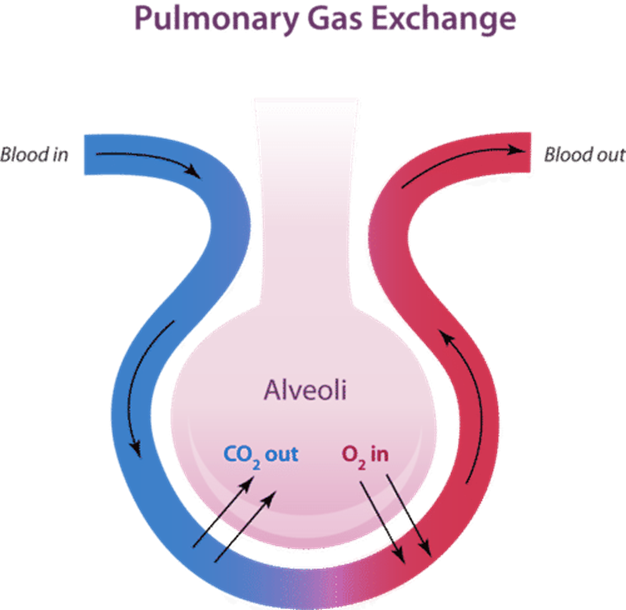
This increase in cardiac output ensures that more oxygen-rich blood reaches your working muscles. To get that oxygen into the blood in the first place, your breathing rate and depth increase. This allows for more efficient gas exchange in the lungs, where carbon dioxide is offloaded from the blood and a fresh supply of oxygen is picked up.
Blood doesn't just flow randomly. Your body cleverly redirects it. During exercise, blood vessels leading to your working muscles widen, while vessels leading to less active areas like your digestive system constrict. This shunts blood to where it's needed most, maximizing oxygen delivery and performance.
What is the primary role of Adenosine Triphosphate (ATP) in the body during exercise?
An athlete is running a 200-meter sprint, an intense effort lasting about 20-30 seconds. Which energy system is predominantly being used?