Fitness for the Over-40 Body
Physiological Changes After 40
The Body's Blueprint After 40
Crossing the 40-year threshold brings many changes, and some of the most significant happen within the body. These shifts are a natural part of aging, not a sign of decline. Understanding them is the first step in navigating the decades to come with strength and vitality.
The Slow Fade of Muscle
Have you ever noticed that tasks requiring strength feel a bit harder than they used to? This isn't just in your head. Starting around age 30, adults can lose 3-5% of their muscle mass per decade. After 40, this process, known as sarcopenia, can accelerate.
sarcopenia
noun
The age-related, involuntary loss of skeletal muscle mass and strength.
This loss happens for a few reasons. The nerve cells that send signals from your brain to your muscles can become less effective, and your body's ability to synthesize protein for muscle repair slows down. The result is not just less strength, but also a change in how your body uses energy.

Bones and Hormones
Your skeleton isn't a static frame. It’s living tissue that is constantly being broken down and rebuilt in a process called remodeling. In your younger years, you build more bone than you lose. But after about age 30, this balance tips. The rate of bone breakdown starts to outpace the rate of bone formation, leading to a gradual loss of bone density.
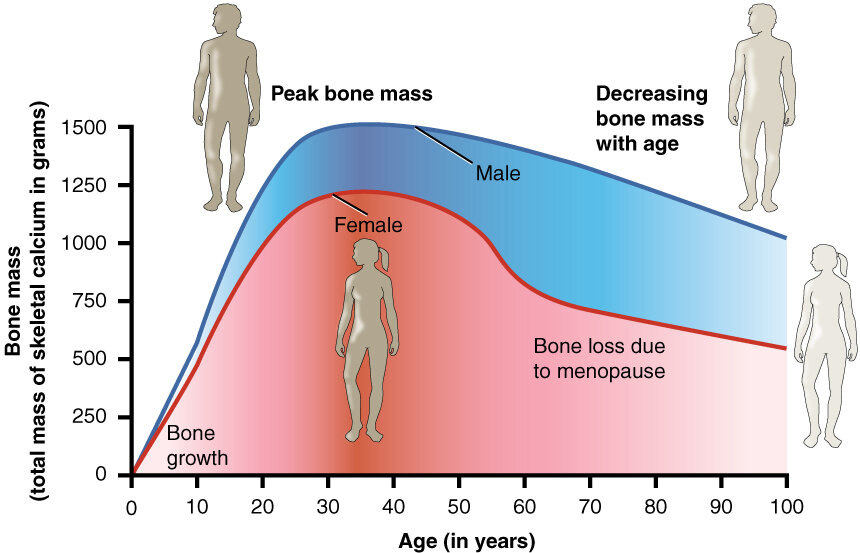
Hormonal changes play a huge role here, especially for women. The decline in estrogen during perimenopause and menopause significantly speeds up bone loss. This increases the risk of osteoporosis, a condition where bones become weak and brittle.
Bone density starts to decline in our 30s, but it speeds up during perimenopause as we lose the protection of oestrogen.
Men experience hormonal shifts, too. Testosterone, which helps maintain bone density, begins a slow and steady decline around age 40. While the process is more gradual than the drop in estrogen women experience, it still contributes to weaker bones over time.
Metabolism and Body Composition
As muscle mass decreases, so does your basal metabolic rate (BMR). This is the number of calories your body burns at rest. Muscle is metabolically active tissue, meaning it burns more calories than fat, even when you're not moving. With less muscle, your body's furnace doesn't run as hot, and it becomes easier to gain weight.
Changes in hormones like insulin, cortisol, and thyroid hormones can also influence how your body stores fat and uses energy. For many, this leads to an increase in visceral fat, the type that accumulates around your abdominal organs.
A slower metabolism isn't just about weight. It affects energy levels and how efficiently your body processes nutrients.
Your cardiovascular system also ages. Blood vessels may become stiffer and the heart muscle may have to work harder to pump blood. Likewise, joints can lose flexibility. The cartilage that cushions them thins over time, and the connective tissues, like ligaments, become less elastic. This can lead to stiffness and a reduced range of motion.
These changes are all interconnected. Less muscle affects metabolism, hormonal shifts impact bone density, and stiffer joints can make activity more challenging. Knowing what's happening under the surface is key to adapting and thriving in this new chapter of life.
Ready to check your understanding of how the body changes after 40?