First Principles Thinking
Introduction to First Principles Thinking
Thinking from the Ground Up
Most of us navigate the world by analogy. We see something that works and we copy it, maybe with a small improvement. A competitor launches a new feature, so we launch a similar one. A recipe calls for an ingredient we don't have, so we substitute something close. This is reasoning by analogy, and it's an efficient way to get through daily life.
But it's not how breakthroughs happen. For that, you need a different approach: first principles thinking.
First principles thinking is the practice of breaking down a complex problem into its most basic, essential elements and then reassembling them from the ground up.
Instead of looking at the finished product and tweaking it, you go back to the fundamental truths—the “first principles”—that cannot be deduced from any other proposition or assumption. From there, you build a new path forward.
First Principle
noun
A foundational proposition or assumption that stands alone and cannot be deduced from any other proposition or assumption.
An Idea with Deep Roots
This isn't a new business fad. The concept goes back over two thousand years to the ancient Greek philosopher Aristotle. He believed that the path to true knowledge was to understand the “first cause” of things—the foundational basis from which a thing is known.
Throughout history, this method has been the engine of scientific and philosophical progress. Thinkers who challenged the status quo did so by questioning the assumptions everyone else took for granted. They didn't just accept “the way things are.” They asked what things were made of at their most fundamental level.
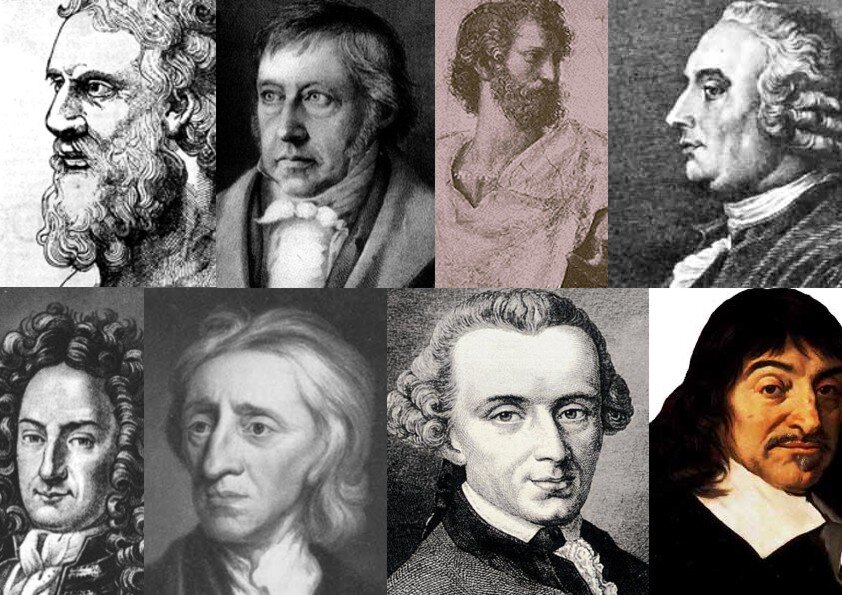
By returning to the basics, they could see possibilities that were invisible to those who only reasoned by analogy.
Why It Matters
Reasoning by analogy is limiting. It keeps you tethered to existing solutions and incremental improvements. You might make a faster horse, but you'll never invent the car.
First principles thinking frees you from the weight of history and convention. When you break a problem down to its core components, you can re-imagine how those components fit together. This is where true innovation comes from. It's not just about improving what is, but creating what could be.
A famous historical example is Johannes Gutenberg. Before him, books were made by scribes copying manuscripts by hand. To make more books, the analogical solution was simple: hire more scribes.
Gutenberg went back to first principles. What is a book? It's text on a page. What is text? A collection of letters. What if each letter was a movable block? By breaking the concept of a page down into its smallest unit—the letter—he was able to invent the printing press, a machine that could arrange those units in infinite ways. This was a monumental leap, not a small step.
This article introduces the core concept of first principles thinking. In the next steps, we'll explore how modern innovators apply this timeless technique and how you can start using it yourself.