Fire Safety Essentials
Introduction to Fire Safety
What Is Fire?
Fire feels elemental, like water or air. But it's not a substance. It's an event—a rapid chemical reaction called combustion.
For this reaction to happen, three things need to come together: heat, fuel, and an oxidizing agent (usually oxygen from the air). This trio is often called the fire triangle. Remove any one side, and the fire goes out. It's the simple, powerful logic that all firefighting is built on.
Learning about the fire triangle is essential because it provides a foundational understanding of how fires ignite and sustain themselves.
Fuel can be anything that burns, from wood and paper to gasoline and natural gas. Heat is the energy needed to get the fuel to its ignition temperature. And oxygen allows the fuel to combust and release more heat, creating a self-sustaining reaction.
This process releases light and more heat, which is what we see and feel as fire. It's a chain reaction. The heat from the fire warms up nearby fuel, causing it to release flammable gases, which then ignite and make the fire bigger.
How Fire Moves
Fire doesn't stay put. It spreads by transferring heat in three main ways: conduction, convection, and radiation.
-
Conduction is heat transfer through direct contact. If you leave a metal poker in a campfire, the handle eventually gets hot. The heat travels directly through the solid metal. In a house fire, heat can travel through walls, pipes, and beams to ignite materials in other rooms.
-
Convection is heat transfer through the movement of liquids or gases. Hot air is less dense than cool air, so it rises. This is why smoke and hot gases from a fire rise to the ceiling, spreading heat upwards and outwards. This can quickly ignite the upper levels of a building.
-
Radiation is heat transfer through electromagnetic waves, like the heat you feel from the sun. You don't have to touch a fire to feel its warmth. This radiant heat can travel through the air and ignite objects without any direct contact.
Understanding these three mechanisms is key to predicting how a fire might spread and what areas are at risk.
Fire by the Numbers
It's easy to think a serious fire is something that happens to other people. But the statistics tell a different story. Understanding the frequency and causes of fires highlights why awareness is so critical for everyone.
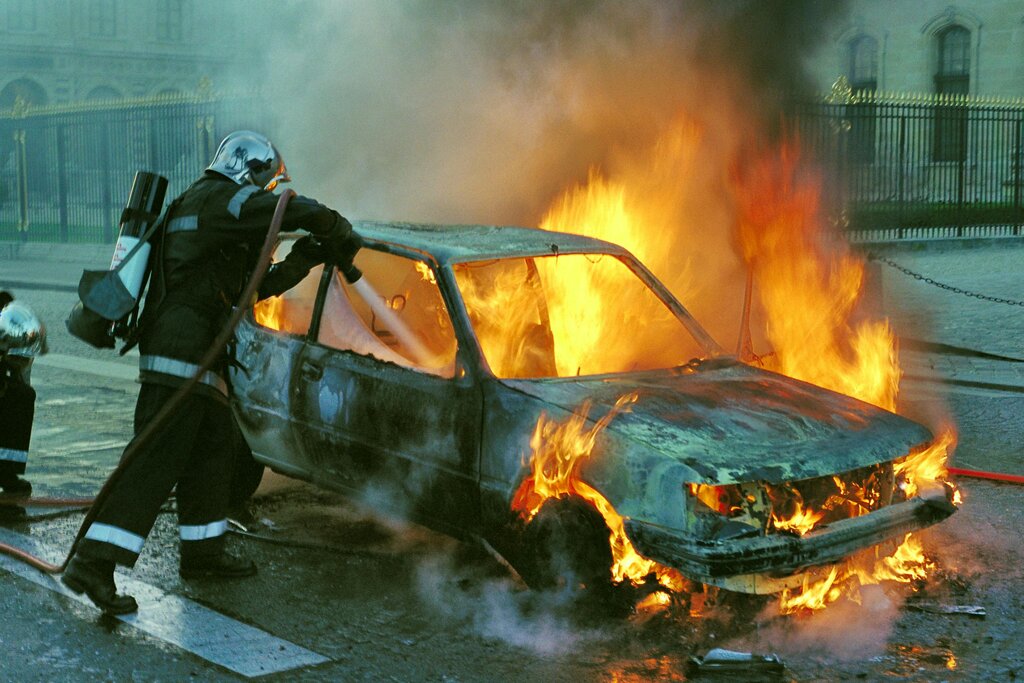
Fires have a significant impact on lives and property every year. While statistics vary by region, the patterns are often similar.
| Incident Type | Key Statistic (U.S. Annual Averages) |
|---|---|
| Home Fires | Leading cause of fire deaths. |
| Cooking | The primary cause of home fires and injuries. |
| Heating | A major cause of home fire deaths, especially in winter. |
| Intentional Fires | A serious problem, causing hundreds of deaths. |
A fire department responds to a fire somewhere in the U.S. every 23 seconds.
These numbers aren't meant to scare you, but to show that fire is a common hazard. The good news is that most fires are preventable. Awareness of how fires start and spread is the first step toward safety.
What is fire, scientifically speaking?
Which of the following are the three essential components of the "fire triangle" needed for combustion to occur?
By learning the fundamentals of fire behavior, you've built a solid foundation for understanding how to stay safe.