Fire Detection Systems Installation and Maintenance Mastery
Introduction to Fire Detection
The Anatomy of a Fire
Before we can detect a fire, we need to understand what it is. Fire isn't a substance; it's a chemical reaction called combustion. For this reaction to occur, three things must be present: fuel, heat, and oxygen. Think of it as a three-legged stool. If you remove any one leg, the stool collapses. The same is true for fire.
Combustion
noun
A rapid chemical process that produces heat and light.
These three elements form what's known as the fire triangle. Fuel is anything that can burn, from wood and paper to flammable gases. Oxygen is typically supplied by the air around us. Heat is the energy needed to raise the fuel to its ignition temperature.
Modern fire science often adds a fourth element: the chemical chain reaction. This is the process that allows the fire to sustain itself and grow. With this addition, the fire triangle becomes the fire tetrahedron, a three-dimensional pyramid.
Why Every Second Counts
A small flame can become a life-threatening blaze in under 30 seconds. The speed of fire growth is staggering. It's not just the flames that are dangerous; the byproducts of combustion, like thick smoke and toxic gases, can quickly fill a room, obscuring vision and causing incapacitation.
This is why early detection is critical. The primary goal of a fire detection system isn't to put out the fire, but to alert occupants as quickly as possible. An early warning provides precious time to escape safely. It also allows for a faster response from emergency services, which can significantly limit property damage.
In a fire, your first line of defense is time. The more you have, the better your chances of survival.
Inside a Detection System
Fire detection systems might seem complex, but they all operate on the same basic principles and share three core types of components: initiating devices, notification appliances, and a control panel.
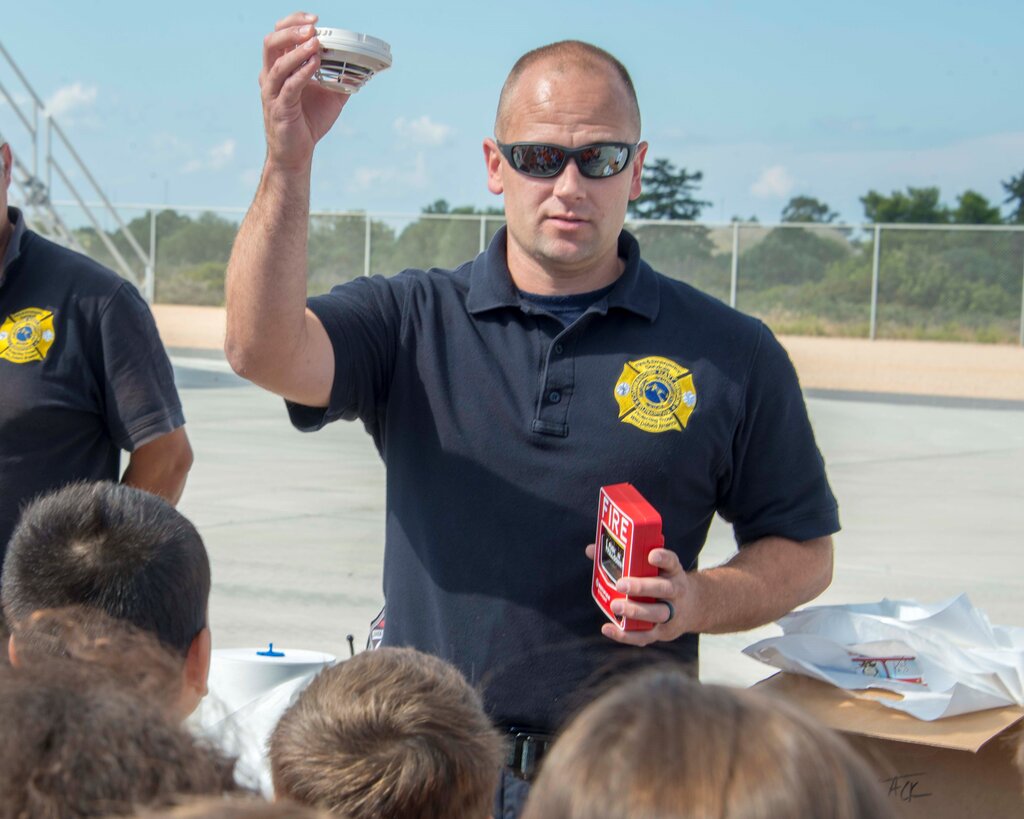
Initiating Devices are the system's sensors. They are designed to detect the signs of a fire. The most common types are smoke detectors, which sense airborne particles, and heat detectors, which react to a rapid rise in temperature or a fixed high temperature. Other types can detect flames (UV/IR radiation) or specific gases produced by combustion.
Notification Appliances are the devices that alert people to the danger. These are the alarms we are all familiar with. They include audible alarms like bells and horns, as well as visual alerts like strobing lights, which are essential for individuals who are deaf or hard of hearing.
The Fire Alarm Control Panel is the brain of the system. It receives signals from the initiating devices, processes the information, and then activates the notification appliances. It also monitors the system for any faults and can be programmed to automatically contact emergency services.
Together, these components form a network dedicated to one goal: detecting a fire at the earliest possible stage and providing a clear, unmistakable warning to get people to safety.
What are the three essential elements required for a fire to start, as described by the fire triangle?
Modern fire science adds a fourth element to create the fire tetrahedron. What is this fourth element?