Fintech Mechanics and Ecosystems
Payment Infrastructure Rails
The Plumbing of Global Finance
Payment rails function like the “plumbing” of global financial systems.
Every financial transaction, from a simple coffee purchase to a multi-billion dollar corporate acquisition, relies on a hidden infrastructure. These are the payment rails, the networks that move money from point A to point B. For anyone in finance, understanding this plumbing is no longer optional; it's the key to grasping how modern value transfer actually works.
The process isn't a single event. It's a two-step dance: clearing and settlement.
Clearing is the process of transmitting, reconciling, and in some cases, confirming payment instructions prior to settlement. It's the 'promise to pay.' The system gathers all the transaction information, verifies that the funds are available, and figures out who owes what to whom.
Settlement is the final step where the actual money moves between banks. This is the moment the transaction becomes final and irrevocable. The distinction is critical because the time between clearing and settlement creates risk. A lot can happen between the promise and the payment.
Legacy Rails
For decades, the financial world has run on a set of reliable, if sometimes slow, payment rails. These systems were revolutionary for their time and still handle trillions of dollars in transactions daily.
The most common system for domestic, low-value payments in the U.S. is the (ACH). Think of direct deposits and automatic bill payments. ACH transactions are processed in batches, not individually. This makes them cheap but also slow. A payment initiated on Monday might not settle until Wednesday.
For international transfers, the dominant player is (Society for Worldwide Interbank Financial Telecommunication). It's crucial to understand that SWIFT doesn't actually move money. It's a secure messaging system that sends payment orders between banks. The actual settlement happens through a network of correspondent banks, which can add time and cost to the process.
Finally, card networks like Visa and Mastercard operate their own massive, proprietary rails. When you swipe your card, the authorization is instant, but the final settlement between your bank, the merchant's bank, and the network can take 1-3 days.
| Rail | Primary Use | Speed | Cost |
|---|---|---|---|
| ACH | Domestic (US) | 1-3 days | Low |
| SWIFT | International | 1-5 days | High |
| Card Networks | Point-of-Sale / E-commerce | Instant (Authorization) | Medium |
Modern and Emerging Rails
The demand for instant gratification has pushed the financial industry to develop new rails. These modern systems are built for the digital age, prioritizing speed and 24/7 availability.
Real-Time Payments (RTP) networks, like The Clearing House's RTP® system and the Federal Reserve's Service, are changing the game. These rails offer immediate clearing and settlement, 24/7/365. When a payment is sent, the funds are available in the recipient's account within seconds. This is a fundamental shift from the batch-based world of ACH. Europe has a similar system called SEPA Instant Credit Transfer.
Beyond traditional banking, blockchain technology is emerging as a new type of payment rail. Networks like Ethereum allow for the transfer of digital assets, most notably (like USDC or USDT) and potentially Central Bank Digital Currencies (CBDCs). These transactions are settled on a decentralized ledger, offering a different model of trust and finality. While still maturing, blockchain rails provide global, programmable, and near-instant settlement without traditional intermediaries.
The Transaction Lifecycle
Regardless of the rail, every transaction follows a lifecycle, managed by a series of standardized messages. The old standard was a mix of proprietary formats, but the world is converging on a single, universal language: ISO 20022.
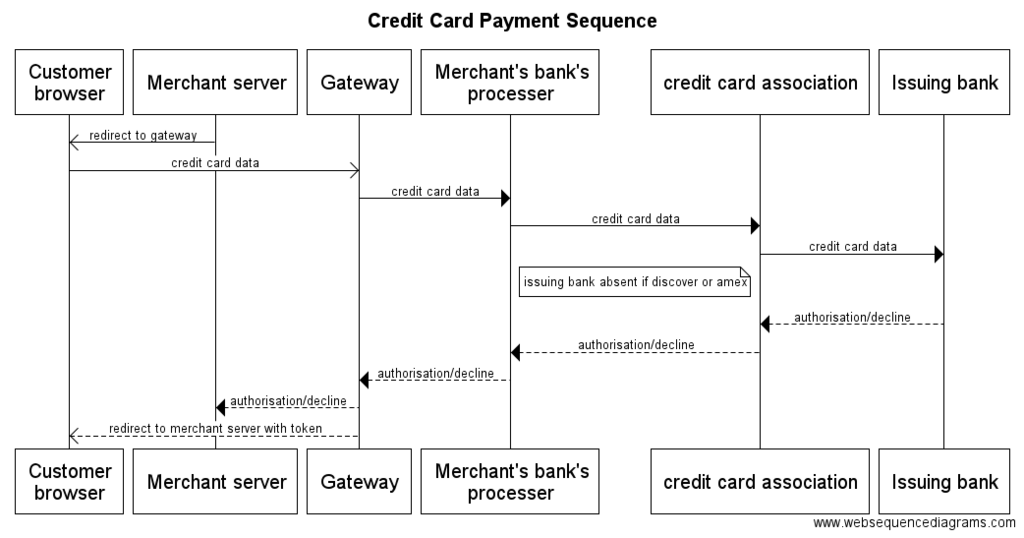
Think of ISO 20022 as the grammar of modern payments. It's a highly structured XML-based format that allows for much richer data to be sent with a payment. Instead of just the amount and account numbers, an ISO 20022 message can carry detailed invoice information, remittance advice, and other contextual data. This makes reconciliation easier for businesses and opens the door for new automated financial products.
Legacy systems like SWIFT are migrating to ISO 20022, and new systems like FedNow and RTP were built on it from the ground up. This standardization is a critical step, enabling different payment systems to communicate with each other more seamlessly, a concept known as interoperability.
ISO 20022 transforms a payment from a simple instruction to move money into a rich data package that can be automatically processed and analyzed.
Understanding these rails—their mechanics, trade-offs, and the messaging standards that unite them—is the starting point for innovating in fintech. Every product that moves money is built upon these foundational layers.