Fine-Tuning Large Language Models
Introduction to LLMs
What is a Large Language Model?
A Large Language Model, or LLM, is a type of artificial intelligence designed to understand and generate human-like text. Think of it as a very advanced autocomplete, but instead of just suggesting the next word, it can write paragraphs, answer complex questions, and even create computer code.
Large language models (LLMs) are AI systems that understand and create human language, doing tasks like summarizing articles, answering questions, writing code, and more.
The "large" in their name refers to two things: the immense amount of text data they are trained on (often a significant portion of the internet) and the huge number of parameters they contain. A parameter is like a knob or a dial that the model can tune during training. The best LLMs have hundreds of billions of them, allowing them to capture the incredible nuance of human language.
The Architecture Inside
At the heart of nearly every modern LLM is an architecture called the Transformer. Before the Transformer, models processed text word by word in sequence, which made it hard to track relationships between distant words in a long sentence. The Transformer solved this with a mechanism called self-attention.
Self-attention allows the model to weigh the importance of different words in the input text when processing any given word. It learns which words are most relevant to which other words, no matter how far apart they are.
For example, in the sentence, "The robot picked up the red ball because it was the only one on the floor," self-attention helps the model understand that "it" refers to the "ball," not the "robot" or the "floor." It dynamically figures out these connections for every word.
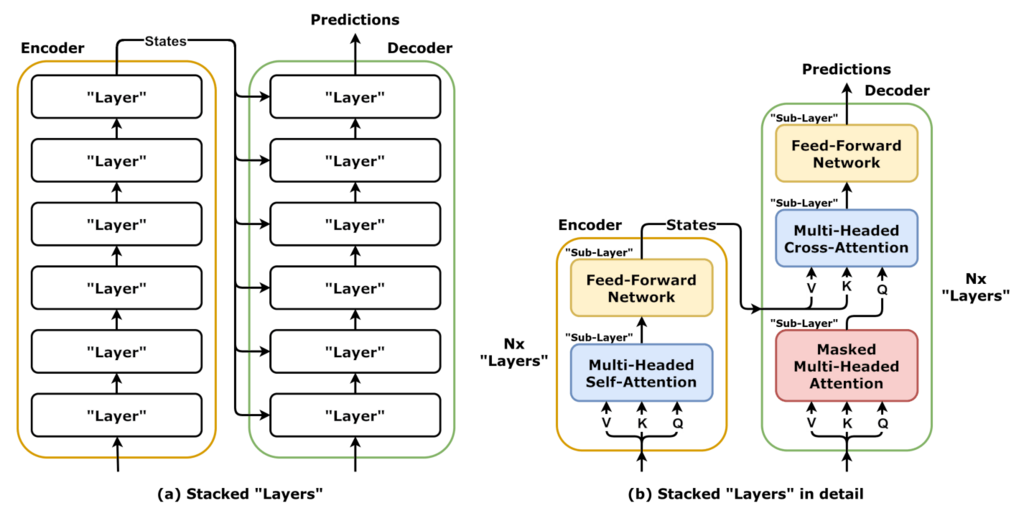
An LLM is built by stacking many of these Transformer layers on top of each other. Each layer builds on the understanding of the one below it, allowing the model to recognize simple patterns first, then phrases, then complex ideas and reasoning.
How LLMs Learn
An LLM's education happens in two main stages: pre-training and fine-tuning.
Pre-training is the foundational step. Here, the model is exposed to a vast and diverse dataset containing trillions of words from books, articles, websites, and other sources. Its only job is to read this text and learn to predict the next word in a sequence. By repeating this simple task billions of times, the model implicitly learns grammar, facts about the world, reasoning skills, and even different writing styles. This phase requires enormous computational power and can take months to complete.
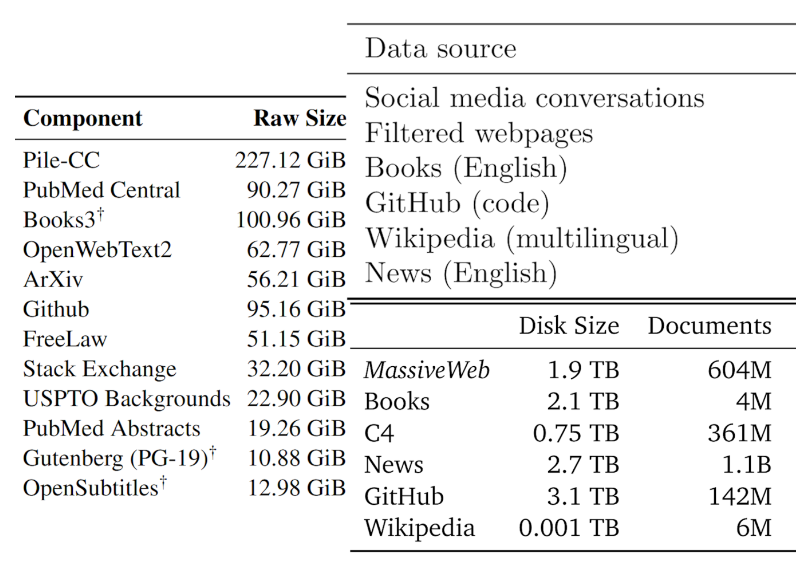
After pre-training, we have a powerful, general-purpose model. The second stage, fine-tuning, adapts this model for a specific application. This involves continuing the training on a much smaller, high-quality dataset tailored to a particular task. For example, to create a helpful chatbot, the model would be fine-tuned on a dataset of high-quality conversations. To build a code assistant, it would be fine-tuned on examples of code and programming problems. This step refines the model's capabilities and aligns its behavior with the desired use case.
What Can LLMs Do?
The applications of LLMs are broad and growing rapidly. Their ability to process and generate language makes them useful in many different fields.
| Application | Description |
|---|---|
| Content Creation | Writing articles, emails, marketing copy, and even poetry. |
| Summarization | Condensing long documents, articles, or conversations into key points. |
| Question Answering | Acting as sophisticated search engines that provide direct answers. |
| Code Generation | Writing, debugging, and explaining code in various programming languages. |
| Translation | Translating text between languages with high accuracy and nuance. |
| Chatbots | Powering conversational agents for customer service and personal assistance. |
As these models become more capable, they are being integrated into more products and services, changing how we interact with information and technology.
What is the primary function of a Large Language Model (LLM)?
In the context of LLMs, the term "large" refers to the physical size of the servers they run on.
From understanding language structure to performing specific tasks, LLMs are a foundational technology in modern AI.