Fine-Tuning Large Language Models
Introduction to Large Language Models
What Are Large Language Models?
A Large Language Model, or LLM, is a type of artificial intelligence that can understand and generate human-like text. Think of it as a computer program that has been trained by reading a colossal amount of information from the internet, books, and other sources. Its main goal is to process the text you give it and predict what should come next, word by word.
This predictive ability allows LLMs to perform a wide range of language tasks, from answering questions to writing essays.
The "large" in their name refers to two things: the immense size of the dataset they learn from and the massive number of parameters they contain. A parameter is like a knob the model can tune during training to improve its predictions. The more parameters, the more nuanced and complex the patterns in language it can learn.
A Large Language Model (LLM) is a type of artificial intelligence program designed to understand, generate, and work with human language.
This training process gives LLMs a broad understanding of grammar, facts, reasoning abilities, and even different styles of writing.
The Engine Inside: Transformers
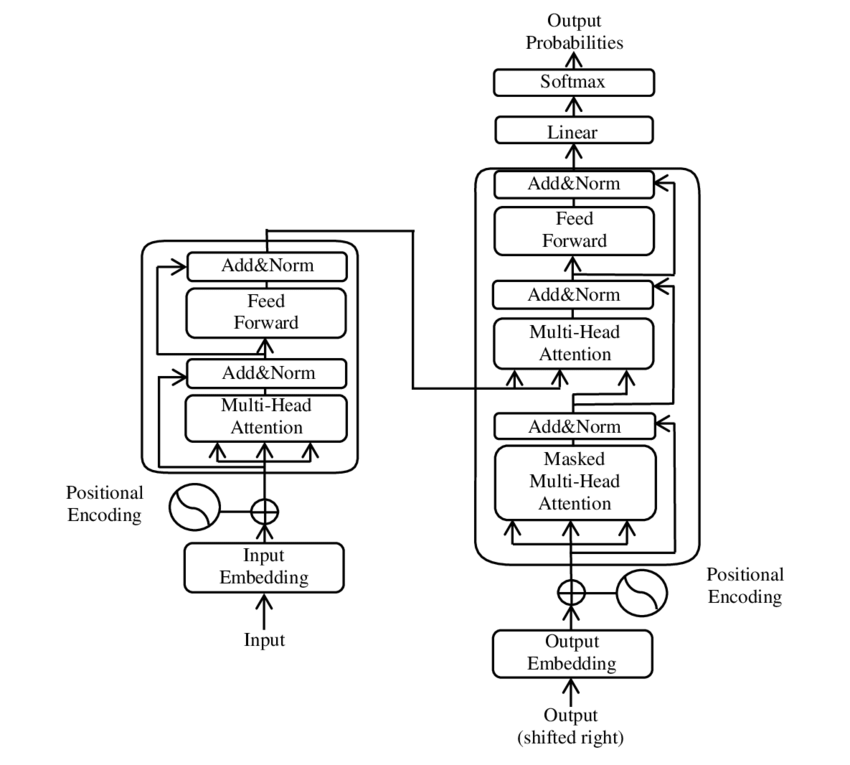
The breakthrough technology behind most modern LLMs is an architecture called the Transformer. Before Transformers, older models processed text sequentially, word by word, which could make it difficult to remember the context of long sentences. It was like trying to read a long paragraph through a tiny pinhole, seeing only one word at a time.
The Transformer architecture, introduced in 2017, changed everything. Its key innovation is the attention mechanism. This allows the model to look at all the words in an input sentence at once and weigh their importance relative to each other. When processing the sentence "The cat sat on the mat," the model learns that "cat" is strongly related to "sat" and "mat," but less so to "the."
This ability to understand context is what makes LLMs so powerful. The Transformer is typically split into two main parts:
| Part | Purpose |
|---|---|
| Encoder | Reads and understands the input text. |
| Decoder | Generates the output text, one word at a time. |
The encoder creates a numerical representation of the input's meaning, and the decoder uses that representation to produce a coherent response.
What Can LLMs Do?
Because they are so versatile, LLMs have a wide array of applications. They are not programmed for one specific task but can be adapted to many different ones through the prompts they are given.
Common uses include:
- Content Creation: Writing emails, articles, marketing copy, or even poetry and scripts.
- Information Synthesis: Summarizing long documents, reports, or articles to extract key points.
- Question Answering: Acting as a conversational search engine, providing direct answers to user questions.
- Code Generation: Writing code snippets in various programming languages based on natural language descriptions.
- Language Translation: Translating text from one language to another with improved accuracy and nuance.
In essence, LLMs are powerful tools for any task that involves understanding or generating human language.
Now, let's test your understanding of these core concepts.
What does the "large" in Large Language Model (LLM) primarily refer to?
What is the key innovation of the Transformer architecture that significantly improved LLM performance over older models?
This introduction covers the basics of what LLMs are, the architecture that powers them, and what they're capable of doing.