Fine-Tuning Large Language Models
Introduction to LLMs
What Are Large Language Models?
Large Language Models, or LLMs, are a type of artificial intelligence designed to understand and generate human-like text. Think of them as incredibly advanced prediction engines. While your phone's keyboard might suggest the next word in your sentence, an LLM can write an entire essay, answer a complex question, or even generate computer code.
Large language models (LLMs) are AI systems that understand and create human language, doing tasks like summarizing articles, answering questions, writing code, and more.
They achieve this by being trained on enormous amounts of text data from books, articles, websites, and more. This training allows them to learn the patterns, grammar, context, and even some reasoning abilities embedded in human language. Their primary goal is to process a piece of text—a prompt—and predict what should come next, token by token. A token is a common sequence of characters, often just a word or a part of a word.
The Architecture Inside
Modern LLMs are built on a powerful architecture called the Transformer, first introduced in 2017. Before the Transformer, models struggled to keep track of long-range dependencies in text. For example, a word at the beginning of a paragraph might be crucial for understanding a word at the end, but older models would often lose that connection.
The Transformer's key innovation is a mechanism called self-attention. Self-attention allows the model to weigh the importance of every other word in the input text when processing a single word. It can learn which words are most relevant to understanding the context of another.
Consider the sentence: "The bee landed on the flower because it wanted nectar." The self-attention mechanism helps the model determine that "it" refers to the "bee," not the "flower."
This ability to dynamically assess relationships between words allows LLMs to handle complex sentences and grasp nuanced meaning far more effectively than their predecessors.
How LLMs Learn
The training process is what turns this architecture into a functioning language tool. It starts with pre-training, where the model is exposed to a massive and diverse dataset of text and code. During this phase, the model's objective is simple: predict the next word in a sequence. By doing this billions of times, it learns grammar, facts about the world, reasoning skills, and stylistic nuances.
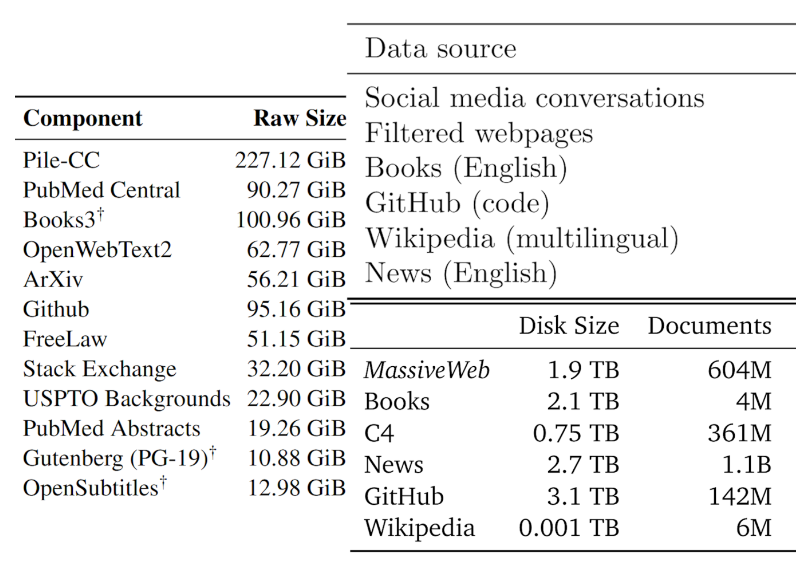
After pre-training, the result is a powerful, general-purpose model. However, for most real-world applications, general-purpose isn't enough. This is where fine-tuning comes in.
Fine-tuning involves using a Large Language Model as a base and further training it with a domain-based dataset to enhance its performance on specific tasks.
Fine-tuning adapts the pre-trained model to a specific task or domain using a smaller, curated dataset. For instance, a general LLM can be fine-tuned on a dataset of medical research papers to become an expert assistant for doctors, or on a company's internal support tickets to power a customer service chatbot. This specialization makes the model significantly more accurate and useful for its intended purpose.
Applications and Importance
The capabilities of LLMs have unlocked a wide range of applications across many industries. They are the technology behind advanced chatbots, content creation tools, sophisticated search engines, and code generation assistants. They can summarize long documents, translate languages, and help scientists analyze complex data.
| Application Area | Example Use Case |
|---|---|
| Content Creation | Writing marketing copy, emails, or blog posts. |
| Customer Support | Powering intelligent chatbots that can solve user issues. |
| Software Development | Generating code, finding bugs, and writing documentation. |
| Healthcare | Summarizing patient notes and analyzing medical literature. |
| Education | Creating personalized tutoring and learning materials. |
Understanding these foundational concepts—what LLMs are, how they're built, and the way they learn—is the first step toward harnessing their power. The process of fine-tuning is what transforms a generalist model into a specialist tool, tailored to solve specific, real-world problems.
What is the primary function of a Large Language Model (LLM)?
What key innovation of the Transformer architecture allows LLMs to effectively understand context and long-range dependencies in text?