Fine-Tuning Large Language Models
Introduction to Large Language Models
What Are Large Language Models?
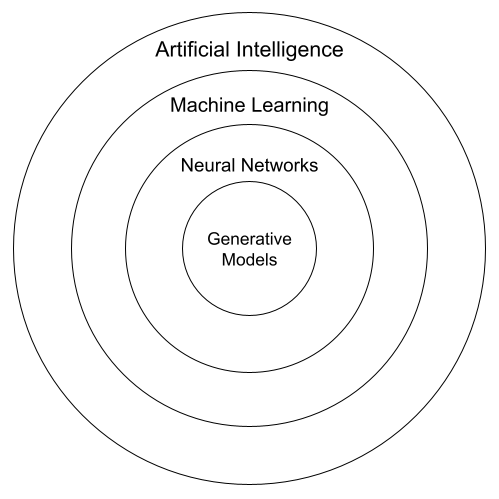
Large Language Models, or LLMs, are a type of artificial intelligence designed to understand and generate human language. Think of them as incredibly advanced autocomplete systems, trained on a massive library of text and code from the internet, books, and other sources.
A large language model (LLM) is an AI model trained on massive amounts of text data that can understand and generate human-like text, recognize patterns in language, and perform a wide variety of language tasks without task-specific training.
This vast training allows them to grasp grammar, facts, reasoning abilities, and even some nuances of human conversation. Unlike older programs that relied on rigid, hand-coded rules, LLMs learn these patterns on their own, directly from the data they process. This ability has made them powerful tools for a huge range of tasks.
The Transformer Architecture
The breakthrough that made modern LLMs possible is an architecture called the Transformer. Before the Transformer, AI models processed text sequentially, one word at a time, like reading a sentence from left to right. This approach made it difficult to track long-range dependencies and complex relationships within the text. If a sentence was long, the model might forget the beginning by the time it reached the end.
The Transformer model processes all the words in a sentence at the same time. This parallel processing allows it to capture the entire context of the text at once, leading to a much deeper understanding of meaning and relationships between words.
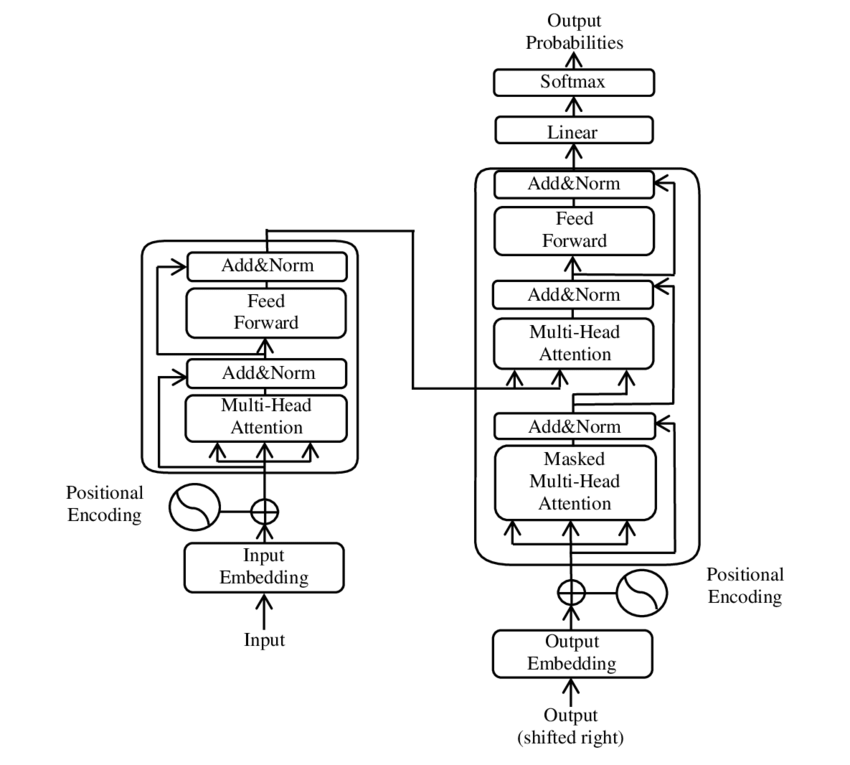
This parallel approach is made possible by the Transformer's key innovation: the attention mechanism.
The Power of Attention
The attention mechanism is what allows the Transformer to weigh the importance of different words when processing any single word in a sentence. It helps the model understand that not all words are created equal in terms of context.
For example, in the sentence, "The cat, which was sitting on the roof, lazily licked its paw," the word "its" refers to the "cat," not the "roof." An attention mechanism can learn this connection. When processing the word "its," it pays more "attention" to "cat," recognizing it as the most relevant word for understanding the pronoun's meaning. It essentially creates a map of connections between every word in the input, figuring out how they all relate to each other.
By calculating these attention scores for all words simultaneously, the model builds a rich, context-aware representation of the entire text. This is what allows LLMs to handle complex sentences, subtle meanings, and tricky language puzzles.
How LLMs Learn
The process of creating an LLM involves two main stages: pre-training and fine-tuning.
Pre-training
noun
The initial, unsupervised training phase where an LLM learns general language patterns, grammar, and world knowledge from a massive, diverse dataset of text and code.
In the pre-training stage, the model is fed a gigantic corpus of text from the internet. Its task is simple but powerful: predict the next word in a sequence. For example, given the phrase "The sky is," the model learns to predict "blue." By doing this billions of times with countless variations, it develops a sophisticated statistical understanding of how language works. This is how it learns grammar, facts, and even styles of writing.
After this foundational pre-training, the model is a generalist. It knows a lot about language but isn't specialized for any particular task.
That's where fine-tuning comes in. Fine-tuning adapts the pre-trained model to perform a specific task, such as translation, summarization, or answering questions. This is done by training it further on a smaller, curated dataset specifically designed for that task. For instance, to create a translation model, you would fine-tune the general LLM on a dataset of high-quality sentence translations. This process refines the model's capabilities, making it an expert in a specific domain without having to retrain it from scratch.
This two-step process makes LLMs incredibly versatile. The same foundational model can be adapted to power a wide variety of applications, from creative writing assistants and code generators to sophisticated customer service chatbots.
What is the primary goal of the pre-training stage for a Large Language Model?
The key innovation of the Transformer architecture that allows it to process text in parallel is the __________.
Understanding these core concepts—the Transformer architecture, attention, and the training process—is the first step to appreciating the power and potential of Large Language Models.