Finding Your Tech Startup Co-Founder
Understanding the Role of a Commercial Co-Founder
The Business Brain
In a tech startup, it's easy to focus on the product. The code, the features, the design—these are the tangible things being built. But a brilliant product that no one knows about, or that doesn't solve a real market need, is just a clever invention. This is where the commercial co-founder comes in. They are the business-focused leader of the founding team.
While the technical co-founder builds the product, the commercial co-founder builds the company around the product.
Their responsibilities are broad but all point toward one goal: creating a viable, growing business. This includes everything from figuring out who the customer is and how to reach them, to building a financial model and pitching investors. They are the voice of the market in product discussions and the face of the company in boardrooms.
| Key Responsibility | Description |
|---|---|
| Business Strategy | Defines the company's long-term vision, mission, and goals. |
| Market Analysis | Researches customers, competitors, and industry trends to find product-market fit. |
| Sales & Marketing | Creates and executes the plan to attract, convert, and retain customers. |
| Financial Management | Handles fundraising, budgeting, and financial forecasting to ensure the company stays solvent. |
| Partnerships | Builds strategic relationships with other companies to accelerate growth. |
A Balanced Partnership
The most successful tech startups often have a balanced founding team. Think of it like a band: you need a brilliant guitarist, but you also need a frontman who can connect with the crowd and a manager who can book the gigs. A technical founder and a commercial co-founder form a similar partnership, each bringing a critical and distinct set of skills to the table.
The technical founder is obsessed with the "what" and the "how." What can this product do? How can we build it better, faster, and more reliably? Their world is one of code, architecture, and user experience.
The commercial co-founder is obsessed with the "who" and the "why." Who are we building this for? Why will they pay for it? Their world is one of customer interviews, sales pipelines, and market positioning.
This division of labor prevents critical blind spots. A purely technical team might build a beautiful piece of technology that nobody wants. A purely commercial team might sell a vision they can't actually build. Together, they create a powerful feedback loop: market insights from the commercial side inform product development, while product innovations from the technical side create new market opportunities.
The role of the business founder in a technology startup involves virtually everything except product development and design.
Fueling Growth and Success
A commercial co-founder's impact is felt directly in the startup's ability to survive and grow. In the early days, their most important job is to validate the idea by finding the first few customers who are willing to pay for the product. This initial traction is everything. It proves that the problem the startup is solving is real and valuable.
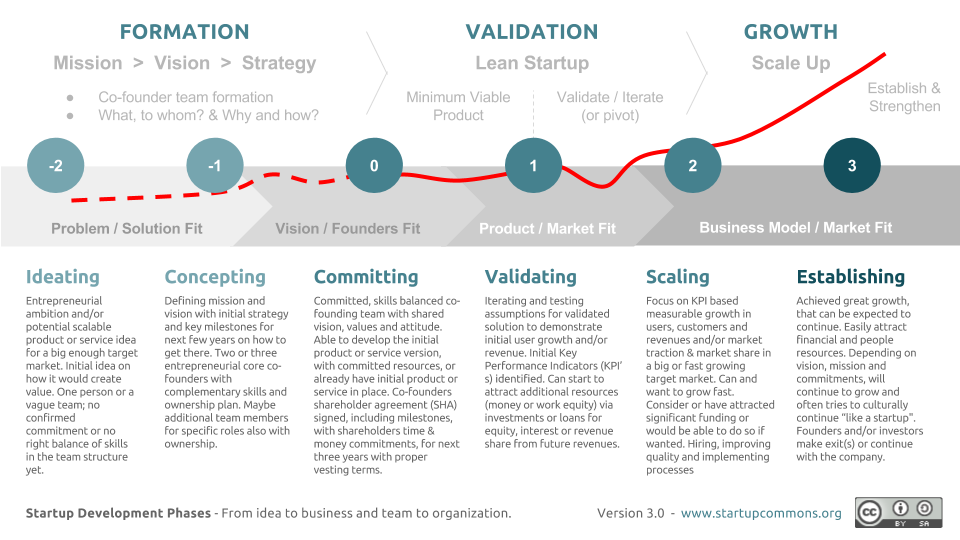
As the company matures, the commercial co-founder's focus shifts to building scalable systems for growth. This means creating a repeatable sales process, developing a marketing engine that consistently generates new leads, and building a financial plan that attracts investment. Without this business infrastructure, even the best product will struggle to expand beyond its initial user base.
Ultimately, the partnership between technical and commercial co-founders is about turning an idea into a successful business. One provides the engine, the other provides the map and the fuel. Both are essential for reaching the destination.
What are the two primary questions a commercial co-founder is obsessed with answering?
According to the text, a major risk of a purely technical founding team is building a product that...