Financial Reporting Analysis Fundamentals
Introduction to Financial Statements
The Three Core Financial Reports
Financial statements are like a company's report card. They tell you how a business is doing by summarizing its financial activities. While there are many reports, three are essential for understanding a company's health: the balance sheet, the income statement, and the cash flow statement. Let's break down each one.
Understand the Core Components: Grasp the balance sheet, income statement, and cash flow statement to assess financial position, profitability, and liquidity.
The Balance Sheet
The balance sheet is a snapshot of a company's financial position at a single point in time. It shows what the company owns, what it owes, and the difference between the two. Think of it as a picture of your personal finances on a specific day: you have some cash and assets, but you might also have a car loan or credit card debt.

This statement is built on a fundamental equation that must always balance:
Let's look at the components:
- Assets: These are the resources a company owns that have economic value. This includes cash, inventory, equipment, and buildings.
- Liabilities: These are a company's financial obligations or debts. Examples include loans from a bank, money owed to suppliers, and employee wages.
- Equity: This is what's left over for the owners after all liabilities are paid. It represents the owners' stake in the company. If a company sold all its assets and paid off all its debts, the remaining amount would be its equity.
| Category | Example Items |
|---|---|
| Assets | Cash, Inventory, Machinery |
| Liabilities | Bank Loans, Accounts Payable |
| Equity | Common Stock, Retained Earnings |
The Income Statement
If the balance sheet is a snapshot, the income statement is a video. It shows a company's financial performance over a period of time, such as a quarter or a year. It's often called the Profit and Loss (P&L) statement because it tells you whether the company made money.

The main goal is to calculate the company's net income, or profit. The structure is straightforward:
Here’s what each part means:
- Revenues: This is the money a company earns from its primary business activities, like selling products or services. It's the top line of the income statement.
- Expenses: These are the costs incurred to generate those revenues. This includes everything from the cost of goods sold and employee salaries to rent and marketing costs.
- Net Income: Also known as the "bottom line," this is the profit remaining after all expenses have been subtracted from revenues. A positive number means the company was profitable during that period, while a negative number indicates a loss.
The Cash Flow Statement
Profit isn't the same as cash. A company can be profitable on paper but still run out of money. The cash flow statement tracks the actual movement of cash into and out of a company over a period. It shows where the cash came from and where it went, providing a clear picture of the company's ability to generate and manage cash.
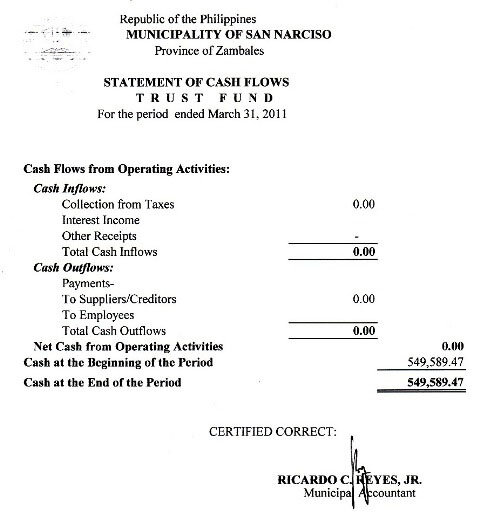
This statement is divided into three main categories:
1. Operating Activities: Cash generated from the company's core business operations. This is often the most important section, as it shows if the main business is generating enough cash to sustain itself.
2. Investing Activities: Cash used for investments, such as buying or selling assets like equipment or property.
3. Financing Activities: Cash from interactions with owners and lenders. This includes activities like issuing stock, paying dividends, or taking out loans.
By analyzing these three areas, you can see how a company is funding its operations and growth. For instance, is it generating cash from its products, selling off assets, or borrowing money?
Ready to check your understanding?
Which financial statement provides a snapshot of a company's assets, liabilities, and equity at a specific point in time?
The term "bottom line" on an income statement refers to what?
Together, these three statements provide a comprehensive view of a company's financial health. Each one tells a different part of the story, and understanding all three is the first step in smart financial analysis.