Financial Institution Governance Explained
Introduction to Financial Institutions
The Financial World's Middlemen
A financial institution is a company that deals with money. Think of them as the middlemen in the world of finance. Their main job is to connect people who have money (savers) with people who need money (borrowers). This simple connection is the engine of our economy.
Imagine the economy's money is like water. Financial institutions are the pipes, pumps, and reservoirs that move this water from where it's plentiful to where it's needed most, helping things grow.
Without these institutions, a person wanting to start a business would have to find someone willing to lend them the exact amount they need. A family buying a house would face the same challenge. Financial institutions solve this problem by gathering funds from many savers and making them available to many borrowers.
The Main Players
Financial institutions come in several flavors, each with a specific role. The ones you probably interact with most are depository institutions, like banks and credit unions. They take deposits from customers and use that money to make loans.
Depository Institution
noun
A financial institution, such as a commercial bank or credit union, that is legally allowed to accept monetary deposits from consumers.
- Commercial Banks: These are for-profit businesses owned by investors. They serve individuals and businesses with services like checking accounts, savings accounts, and loans.
- Credit Unions: These are non-profit cooperatives owned by their members. They often offer similar services to banks but may have better interest rates because they return profits to their members.
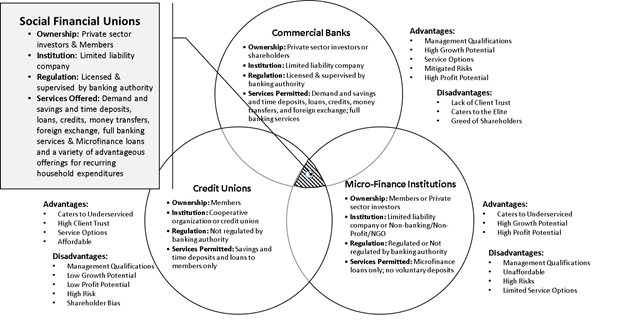
Beyond banks, there are two other major categories.
Investment Institutions These institutions help individuals and companies invest their money. This group includes investment banks, which help companies raise money by issuing stocks and bonds, and asset management firms, which manage investment portfolios for clients.
Insurance Companies Insurance companies manage risk. You pay them a regular fee, called a premium, and in return, they agree to cover large, unexpected expenses. This could be for a car accident, a house fire, or a medical emergency. They pool the premiums from many people to pay for the losses of a few.
Connecting a Global System
All these institutions are part of a vast, interconnected global financial system. This system allows money to flow not just within a town or a country, but across the entire planet. A person's savings in Japan could help fund a new tech startup in California or a major infrastructure project in Brazil.
This global network of institutions performs several critical functions for the economy: it facilitates payments, moves savings into productive investments, and helps allocate capital to where it can be used most effectively.
When you swipe a credit card, transfer money from an app, or receive your paycheck via direct deposit, you're using the payment systems that financial institutions provide. When a company builds a new factory or the government builds a new bridge, the funding often comes from capital that was pooled by these institutions.
By directing money towards promising ventures and away from less productive ones, these institutions play a key role in driving economic growth and innovation.
What is the primary function of a financial institution in an economy?
If a company wants to raise a large amount of money by issuing stocks for the first time, which type of institution would it most likely work with?
Understanding these basic roles is the first step to seeing how the entire financial world operates.