Financial English for B1 Learners
Financial Terminology Foundation
The Language of Business
Every business, big or small, tells a story with its numbers. To understand this story, you need to learn its language. We won't be talking about the money in your wallet. Instead, we'll focus on the specific words companies use to describe their financial health. The most important starting point is a document called the balance sheet.
A balance sheet provides a snapshot of a company's financial position at a single point in time. It shows what a company owns and what it owes.
On one side of the balance sheet, we list everything of value the company owns. These are its assets.
Asset
noun
A resource with economic value that a company owns with the expectation that it will provide a future benefit.
On the other side, we list what the company owes to others. These are its liabilities.
Liability
noun
A company's financial debts or obligations that arise during its business operations.
The difference between what a company owns (assets) and what it owes (liabilities) is called equity Equity represents the owners' stake in the company. These three parts are connected by a fundamental rule.
Measuring Performance
While the balance sheet is a snapshot in time, the income statement tells a story over a period, like a quarter or a year. It shows how profitable a company is.
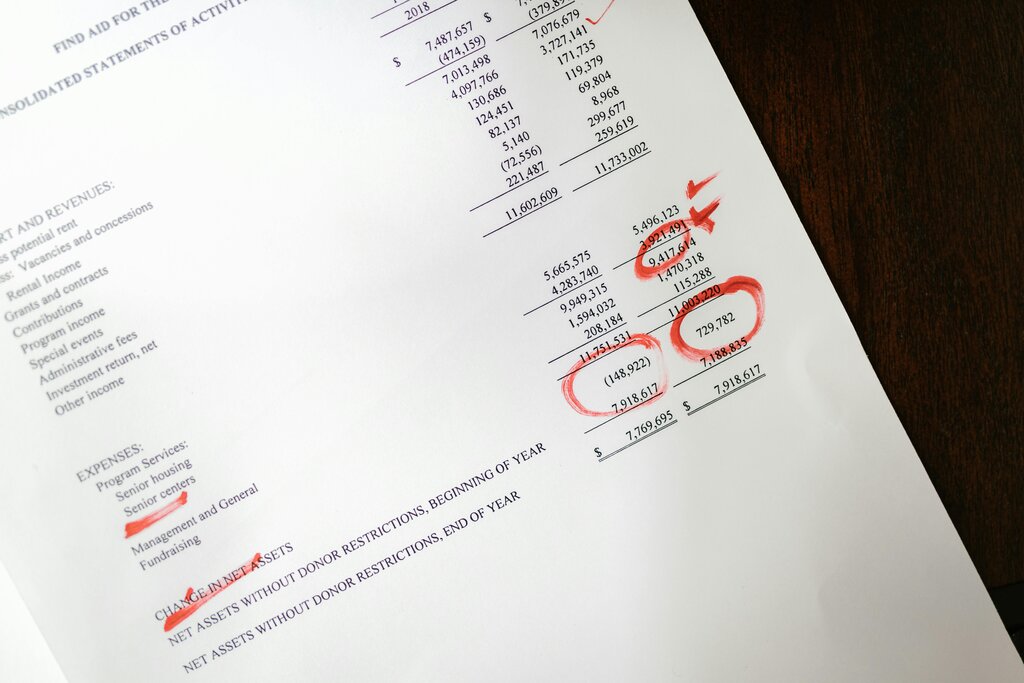
The income statement starts with revenue. This is all the money a company earns from its business activities, like selling products or services.
Revenue
noun
The total amount of income generated by the sale of goods or services related to the company's primary operations.
From revenue, we subtract all the costs of doing business. These are the company's expenses. This includes everything from salaries and marketing costs to the cost of raw materials. The result is the company's net income, or profit.
Expense
noun
The cost required for something; the money spent on something in order to run a business.
Following the Money
The third key financial statement is the statement of cash flows. It tracks the movement of cash into (inflows) and out of (outflows) the company. It's crucial because a company can be profitable on paper but still fail if it runs out of cash. This statement breaks down cash movement into three areas.
| Activity Type | Description | Example |
|---|---|---|
| Operating | Cash from the main business activities. | Cash received from customers. |
| Investing | Cash used to buy or sell long-term assets. | Buying new machinery or property. |
| Financing | Cash from investors or banks, or paid to them. | Taking out a loan or paying dividends. |
Professionals use specific verbs when discussing these financial activities. They don't just say 'get money' or 'use money'. Instead, they use precise language.
For example, a company might secure a loan (Financing), acquire another company (Investing), or generate revenue (Operating). An analyst might project future earnings or assess a company's financial risk. Learning these verbs is key to sounding like a professional.
Making Sense of the Numbers
Just looking at the raw numbers on financial statements isn't enough. To truly understand a company's health, analysts use financial ratios to compare different pieces of information. A ratio takes two numbers from the financial statements and creates a single, more meaningful value.
For example, the current ratio (Current Assets / Current Liabilities) helps measure a company's ability to pay its short-term debts. A higher ratio is generally better.
There are dozens of ratios, each telling a different part of the story. They help answer questions like: Is the company profitable? Is it using its assets efficiently? Can it pay its bills? By combining these terms, statements, and ratios, you can start to build a complete picture of any business.
Which of the following equations represents the fundamental rule of the balance sheet?
An income statement provides information about a company's financial performance over a specific period, while a balance sheet offers a snapshot at a single point in time.