Financial Acumen for Energy and Water Leaders
Financial Statements
The Language of Business
To understand a company's health, you need to speak its language. That language is accounting, and its core vocabulary is found in three key documents: the Balance Sheet, the Income Statement, and the Cash Flow Statement. Think of them as a regular check-up for a business. Together, they tell a detailed story about where a company stands, how it's performing, and where its money is actually going.
Balance sheets, income statements, and cash flow statements provide a comprehensive view of financial health.
The Balance Sheet
The Balance Sheet is a snapshot. It shows a company's financial position at a single moment in time, like a photograph taken at the close of business on the last day of the year. It's built on a fundamental equation that must always, as the name implies, balance:
Let's break that down.
- Assets are everything the company owns that has value. This includes cash in the bank, machinery, buildings, and inventory.
- Liabilities are everything the company owes to others. This includes loans, bills from suppliers, and other debts.
- Equity is the net worth of the company. It's the value that would be left for the owners if all assets were sold and all liabilities were paid off.
Asset
noun
A resource with economic value that an individual, corporation, or country owns or controls with the expectation that it will provide a future benefit.
Imagine a small coffee shop. Its balance sheet might look something like this:
| Assets | Liabilities & Equity | ||
|---|---|---|---|
| Cash | $10,000 | Bank Loan | $20,000 |
| Espresso Machine | $15,000 | Bills to Suppliers | $5,000 |
| Inventory (beans, milk) | $5,000 | Total Liabilities | $25,000 |
| Owner's Equity | $5,000 | ||
| Total Assets | $30,000 | Total Liabilities & Equity | $30,000 |
Notice how both sides equal $30,000. This snapshot tells us exactly what the shop owns and owes on that particular day.
The Income Statement
If the Balance Sheet is a photo, the Income Statement is a video. It shows how profitable a company was over a period of time, like a month, a quarter, or a year. It's sometimes called a Profit and Loss (P&L) statement for a simple reason: it subtracts costs from earnings to find the bottom line.
If the balance sheet is a snapshot, then the income statement is a motion picture, capturing the company's performance over a period, typically a quarter or a year.
The formula is straightforward:
Revenue - Expenses = Net Income
- Revenue is the total amount of money generated from sales of goods or services.
- Expenses are the costs incurred to generate that revenue, such as employee wages, rent, and the cost of raw materials.
- Net Income is what's left over. It's the profit, or loss, for the period.
For our coffee shop, a monthly income statement might look like this:
| Item | Amount |
|---|---|
| Revenue | |
| Coffee Sales | $10,000 |
| Pastry Sales | $2,000 |
| Total Revenue | $12,000 |
| Expenses | |
| Cost of Beans & Milk | $3,000 |
| Employee Wages | $4,000 |
| Rent & Utilities | $2,000 |
| Total Expenses | $9,000 |
| Net Income | $3,000 |
This statement tells us the shop was profitable for the month, earning $3,000.
The Cash Flow Statement
Profit isn't the same as cash. A company can be profitable on paper but run out of money if its customers don't pay their bills on time. The Cash Flow Statement bridges this gap. It tracks the actual movement of cash into and out of the company over a period.
The purpose of a cash flow statement is to provide insight into the company’s liquidity and its ability to generate cash to meet obligations.
This statement is crucial for understanding a company's ability to pay its bills, employees, and suppliers. It breaks cash movements into three categories:
- Operating Activities: Cash generated from the main business operations, like selling coffee and paying for supplies.
- Investing Activities: Cash used to buy or sell long-term assets, such as purchasing a new oven or selling an old delivery van.
- Financing Activities: Cash from investors or banks, like taking out a new loan, or cash paid out, like repaying loan principal or distributing dividends to owners.
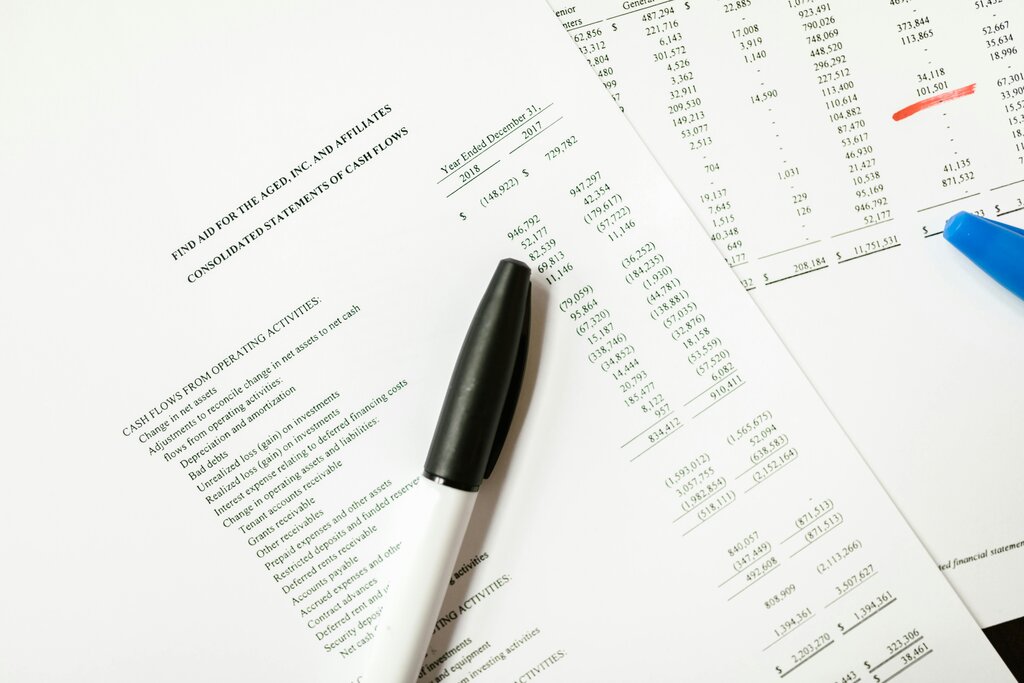
The final line of this statement shows the net increase or decrease in cash over the period. When you add this to the starting cash balance, you get the ending cash balance, which must match the cash amount reported on the Balance Sheet. This link is what makes the three statements a cohesive, interlocking system for understanding a business.
Which of the following represents the fundamental equation for the Balance Sheet?
The Income Statement is often described as a video of a company's performance, while the Balance Sheet is like a snapshot. Is this statement accurate?
Each statement provides a different lens for viewing a company's financial health. By using them together, you get a complete picture.