Finance LLM Evaluation Business Simulation
Introduction to LLMs
What Is a Large Language Model?
A Large Language Model, or LLM, is a type of artificial intelligence trained to understand and generate human-like text. At its core, an LLM is a pattern-recognition machine. After analyzing trillions of words from books, articles, and websites, it learns the statistical relationships between them.
A Large Language Model (LLM) is a type of artificial intelligence program designed to understand, generate, and work with human language.
This allows it to perform a surprisingly simple task: predict the next word in a sequence. If you give it the phrase "The sky is," it knows from its training that "blue" is a highly probable next word. By stringing these predictions together, one word at a time, an LLM can write essays, answer questions, and even generate computer code.
How LLMs Are Built
Modern LLMs are built on an architecture called the Transformer, introduced in 2017. Its key innovation is the attention mechanism. This allows the model to weigh the importance of different words in the input text when generating a response. For example, in the sentence, "The robot picked up the red ball because it was its favorite color," the attention mechanism helps the model understand that "it" refers to the robot, not the ball.
Building an LLM involves two main stages:
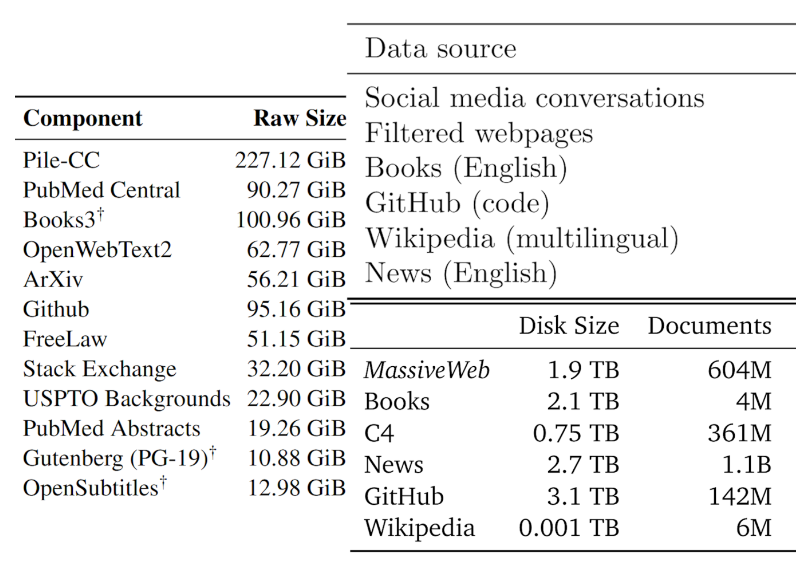
- Pre-training: The model is trained on an enormous, diverse dataset of text and code. This is where it learns grammar, facts, reasoning abilities, and different styles of writing. This process is computationally expensive, requiring massive amounts of processing power and data.
- Fine-tuning: After pre-training, the general model can be further trained on a smaller, more specific dataset to optimize it for a particular task, such as customer support, medical question answering, or summarizing legal documents.
Capabilities and Limitations
LLMs have a wide range of capabilities that make them powerful tools. They can generate creative text, translate languages, summarize long documents, and act as a conversational partner. Their ability to process and connect information from their vast training data allows them to answer complex questions and explain difficult topics in simple terms.
However, they are not without limitations. LLMs don't "understand" text in the way humans do. They are predicting patterns, which can sometimes lead them to make up facts or generate nonsensical responses. This phenomenon is often called "hallucination."
An LLM might confidently state that Abraham Lincoln invented the telephone. It sounds plausible because the model has associated Lincoln with historical inventions, but the statement is completely false.
Furthermore, because LLMs learn from human-generated text, they can inherit and amplify biases present in the data related to gender, race, and culture. Careful fine-tuning and oversight are necessary to mitigate these issues.
| Strengths | Weaknesses |
|---|---|
| Broad general knowledge | Can "hallucinate" or invent facts |
| Fluent and coherent text generation | May reproduce biases from training data |
| Can be adapted to many different tasks | Lacks true common sense and understanding |
| Able to process and summarize large texts | Can struggle with complex, multi-step reasoning |
Now that you've learned about the fundamentals of LLMs, let's test your knowledge.
What is the fundamental task a Large Language Model (LLM) is trained to perform?
The key innovation of the Transformer architecture, which is central to modern LLMs, is its ability to weigh the importance of different words in the input text. What is this innovation called?
Understanding both the power and the pitfalls of LLMs is the first step in using them effectively and responsibly.