Film Entrepreneurship in South Africa
Introduction to Entrepreneurship
What Is Entrepreneurship?
At its core, entrepreneurship is about solving problems. It's the process of identifying a need, creating a business to meet that need, and taking on the financial risks in the hope of making a profit. It’s not just about starting a company; it's about creating value where it didn’t exist before.
entrepreneurship
noun
The activity of setting up a business or businesses, taking on financial risks in the hope of profit.
An entrepreneur is someone who sees an opportunity and builds an organization to pursue it. This could be a new product, a better service, or a more efficient way of doing something. They are the drivers of change in the economy, spotting trends and creating the businesses of the future.
Entrepreneurs are problem-solvers first and foremost. They look at the world, see what’s missing or what could be better, and then they build it.
The Entrepreneurial Mindset
While anyone can learn the mechanics of starting a business, successful entrepreneurs often share a certain mindset. It’s a way of thinking and approaching challenges that sets them apart.
Key characteristics often include:
- Creativity: The ability to see things differently and come up with novel solutions.
- Passion: A deep belief in their vision that fuels them through long hours and difficult setbacks.
- Resilience: The capacity to bounce back from failure, learn from mistakes, and keep moving forward.
- Decisiveness: The confidence to make tough decisions, often with incomplete information.

This mindset isn't about being fearless. It’s about understanding the risks, believing in your ability to navigate them, and having the persistence to see your idea through to reality.
Innovation and Calculated Risks
Two concepts are central to entrepreneurship: innovation and risk-taking. Innovation is the engine of entrepreneurship. It can mean inventing a brand-new technology, but it can also be as simple as applying an existing business model to a new market or dramatically improving a customer's experience.
Innovation doesn't always mean inventing something from scratch. It often means combining existing ideas in a new and powerful way.
Hand-in-hand with innovation comes risk. Starting any new venture is inherently risky. There's no guarantee of success, and the possibility of failure is always present. However, successful entrepreneurship isn't about reckless gambling. It’s about taking calculated risks.
An entrepreneur carefully researches their market, tests their assumptions, and creates a plan to minimize potential downsides. They might start with a small-scale pilot project before investing heavily, or seek feedback on a prototype before going into full production. They weigh the potential rewards against the potential losses and make an informed decision to move forward.
The Entrepreneurial Journey
The path from an idea to a thriving business can be broken down into a few key stages. While every journey is unique, it generally follows a consistent process.
1. Idea Generation This is the creative spark. It starts with identifying a problem or an unmet need. Entrepreneurs get ideas by observing the world around them, talking to people, and drawing from their own experiences. The goal isn't just to have an idea, but to find one that has the potential to become a viable business.
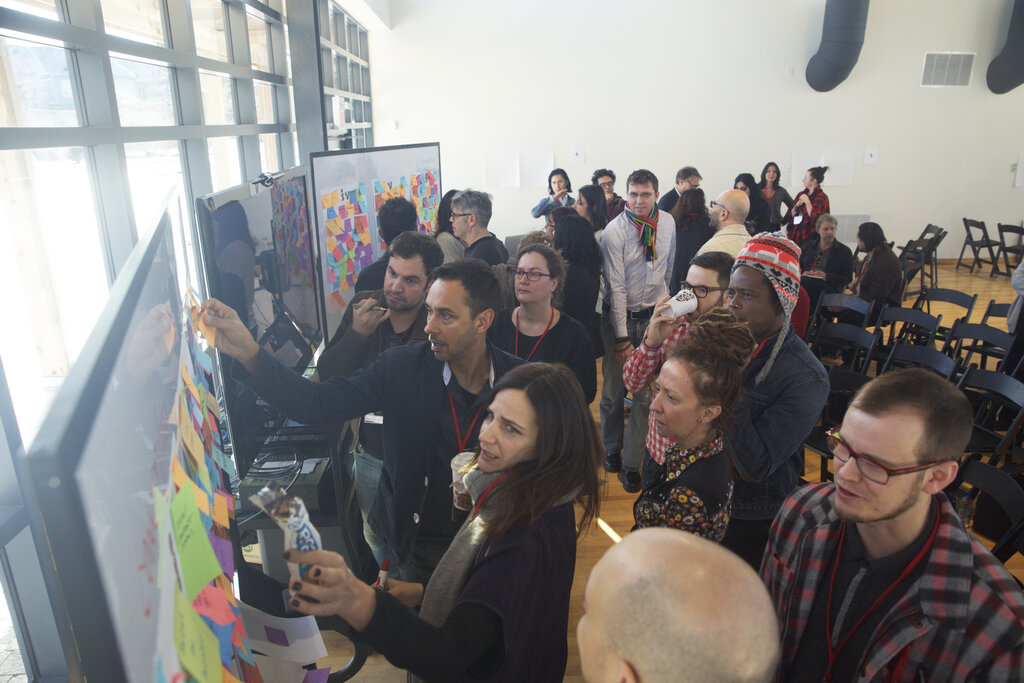
2. Business Planning An idea is not a business. The planning stage is where you turn your concept into a concrete strategy. This involves researching your target market, analyzing competitors, figuring out your business model (how you'll make money), and creating financial projections. A solid business plan acts as a roadmap, guiding your decisions and helping you secure funding if needed.
3. Execution This is where the real work begins. Execution involves building your product or service, developing your brand, marketing to customers, and managing day-to-day operations. It's about turning the plan into action, adapting to unexpected challenges, and continuously working to grow the business.
Let's review the key terms from this section.
Ready to test your knowledge?
At its core, what is entrepreneurship primarily about?
An entrepreneur's new app receives negative feedback about its user interface. Instead of giving up, they use the feedback to redesign the app and relaunch it. Which entrepreneurial mindset characteristic does this best demonstrate?
Understanding these core principles is the first step on any entrepreneurial path. It provides the foundation you need to identify opportunities and build something new.