Field Lubrication Essentials
Introduction to Lubrication
The Slippery Science of Lubrication
Rub your hands together quickly. Feel that heat? That's friction in action. Now imagine two metal parts in a machine doing the same thing, thousands of times a minute. Without something to ease the friction, they would quickly overheat, wear down, and fail. This is where lubrication comes in.
Lubrication
noun
The process of applying a substance (a lubricant) to reduce friction and wear between two moving surfaces.
The main goal of lubrication is to introduce a thin film of a substance, like oil or grease, between moving parts. This film separates the surfaces, preventing them from grinding directly against each other. This simple act has several powerful benefits.
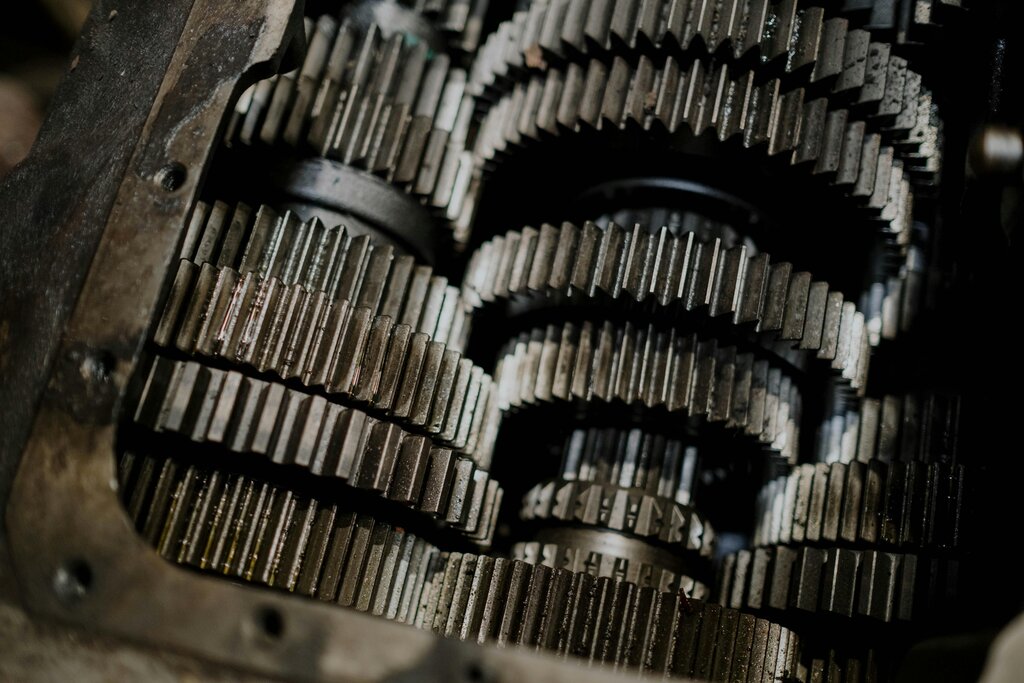
Key Functions of a Lubricant:
- Reduces Friction & Wear: The slippery film makes movement easier and prevents surfaces from scraping away at each other.
- Transfers Heat: Lubricants carry heat away from high-friction areas, acting as a coolant.
- Prevents Corrosion: A layer of lubricant can protect metal surfaces from rust and other forms of corrosion.
- Cleans Components: It can carry away tiny particles and contaminants, keeping the machinery clean.
Three Styles of Separation
Not all lubrication is the same. The way the lubricant behaves depends on the speed of the moving parts and the load they are under. We can think of this in terms of three distinct states, or "regimes."
1. Boundary Lubrication This occurs when machines start up, shut down, or operate at very low speeds with heavy loads. The lubricant film is extremely thin, and the microscopic high points of the metal surfaces (called asperities) actually touch. Friction is high, and this is where most wear occurs. The chemical additives in lubricants are most critical in this regime, as they form a protective layer directly on the metal.
2. Mixed Lubrication As speed increases, a partial fluid film begins to form. In this transitional phase, the load is supported by a combination of the lubricant film and the contacting asperities. It's a mix of boundary and full-film lubrication. Many machine components operate in this regime for significant periods.
3. Full-Film (Hydrodynamic) Lubrication The ideal state. At high speeds, the motion of the surfaces pulls the lubricant between them, creating enough pressure to completely separate the two parts. There is no metal-to-metal contact, friction is minimal, and wear is almost non-existent. Think of a car hydroplaning on a wet road; the tires are lifted off the pavement by a film of water.
Hydrodynamic Lubrication: A lubricant (oil, grease, or even self-lubricating materials) forms a thin film between the shaft and bearing surface.
Understanding these regimes is crucial because it helps explain why different machines and different operating conditions require specific types of lubricants. The goal is always to achieve full-film lubrication whenever possible, as this is what keeps machinery running smoothly and extends its life.
Now, let's test your understanding of these core concepts.
What is the primary goal of lubrication in machinery?
In which lubrication regime do the microscopic high points (asperities) of metal surfaces come into direct contact, leading to the highest amount of wear?
Getting a handle on these ideas is the first step to understanding how we keep complex machinery, from your car engine to massive industrial equipment, in perfect working order.