Fibonacci and the Golden Ratio in Art
Introduction to Fibonacci Sequence
The Famous Sequence
Some mathematical ideas pop up in the most unexpected places. The Fibonacci sequence is one of them. At its core, it's a simple list of numbers with a special rule.
It starts with 0 and 1. To get the next number, you just add the previous two together.
0 + 1 = 1 1 + 1 = 2 1 + 2 = 3 2 + 3 = 5
And so on. The sequence begins: 0, 1, 1, 2, 3, 5, 8, 13, 21, 34...
Each number in the Fibonacci sequence is the sum of the two numbers that came before it.
This relationship is what makes the sequence special. We can describe this rule with a tidy mathematical expression called a recursive formula. If we call a Fibonacci number at position n as , the rule is:
This formula works for any number in the sequence from the third term onwards (where ). To get it started, we need two "seed" values: and . With those starting points, we can generate the entire, infinite sequence.
A Bit of History
The sequence gets its name from an Italian mathematician, Leonardo of Pisa. He was known by the nickname Fibonacci.
The Fibonacci series was named for the 13th century Italian mathematician, Leonardo Pisano, whose popular nickname was Fibonacci.
Fibonacci introduced the sequence to the Western world in his 1202 book, Liber Abaci (Book of Calculation). He used it to solve a famous problem about the ideal population growth of rabbits. But he didn't invent it.
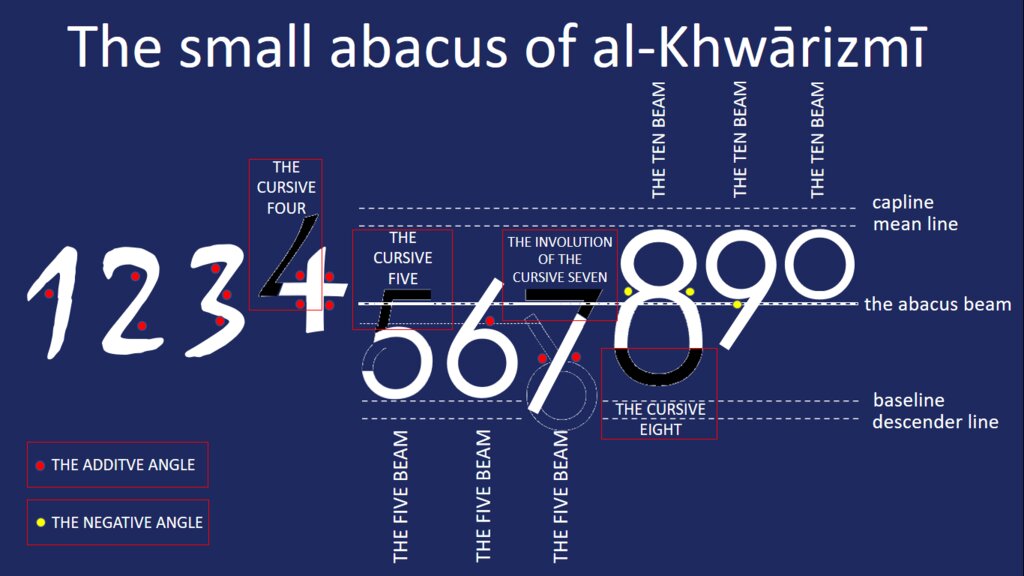
The pattern appeared centuries earlier in India. Indian mathematicians discovered it while studying Sanskrit poetry, analyzing the different ways to combine long and short syllables in poetic meters. This connection shows how mathematical patterns can emerge from art and language, not just numbers.
A Direct Formula
The recursive formula is great for explaining the sequence, but it's slow if you want to find a specific term. To find , you'd first need to calculate all 99 numbers before it. That's a lot of work.
Luckily, there's a more direct way. It's a closed-form expression called Binet's formula, which lets you calculate any Fibonacci number, , without knowing the ones before it.
This formula might look intimidating, but it just involves two special numbers, (phi) and (psi), and the number's position in the sequence, . These special numbers are related to the golden ratio and have fixed values:
Even though the formula uses irrational numbers, it always produces the correct whole numbers for the Fibonacci sequence. It's a powerful shortcut that reveals a deeper structure hidden within this simple pattern of addition.
What is the rule for generating the next number in the Fibonacci sequence?
The Fibonacci sequence begins 0, 1, 1, 2, 3, 5, 8, 13, ... What is the next number?