Fiber Up for Weight Loss
Understanding Dietary Fiber
What Is Dietary Fiber?
Dietary fiber is a type of carbohydrate found in plants. Unlike other carbs like sugars and starches, your body can't digest or absorb it. Instead, it passes relatively intact through your stomach, small intestine, and colon, and out of your body.
Fiber
noun
A type of carbohydrate that the body cannot digest, found in plant-based foods like fruits, vegetables, whole grains, and legumes.
Think of it as the structural parts of plants — the stuff that gives them shape and sturdiness. While it doesn't provide nutrients in the traditional sense, it plays a critical role in keeping our digestive system healthy.
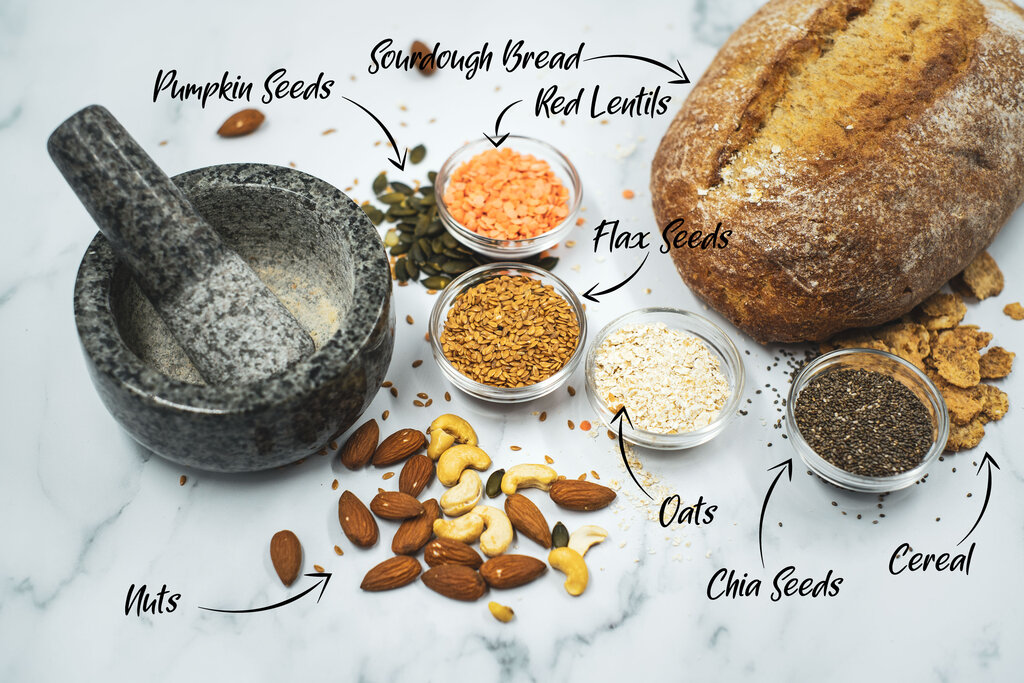
Two Types of Fiber
Fiber isn't just one thing. It's usually categorized into two main types based on how it behaves in water: soluble and insoluble.
Soluble fiber dissolves in water to form a gel-like substance. Insoluble fiber does not dissolve and adds bulk to stool.
Most plant foods contain a mix of both types, but they often have more of one than the other. Each type has distinct jobs in the body.
| Feature | Soluble Fiber | Insoluble Fiber |
|---|---|---|
| Action in Water | Dissolves, forms a gel | Does not dissolve |
| Main Role | Slows digestion | Speeds up passage of food |
| Common Sources | Oats, peas, beans, apples, citrus | Whole-wheat flour, nuts, cauliflower |
This difference in how they interact with water is key to their unique health benefits.
Soluble dietary fibers are mainly responsible for reducing blood cholesterol and reducing the absorption of glucose in the small intestine and act as a potential prebiotic constituent (48, 49), whereas insoluble fibers increase water absorption in the intestinal tract and regulate the other intestinal activities (50).
How Fiber Helps Your Health
Both types of fiber are essential for a healthy body, contributing in several ways.
First, they are crucial for digestive health. Insoluble fiber increases the weight and size of your stool and softens it. A bulkier stool is easier to pass, which helps maintain regularity. Think of it as a broom for your digestive system, sweeping everything along smoothly.
Dietary fiber works primarily by bulking up watery stool, thereby decreasing the fluidity of the stool itself and thus making it easier for patients to remain continent.
Fiber also plays a big role in managing blood sugar. When soluble fiber forms its gel in your digestive tract, it slows down the absorption of sugar. This helps prevent sharp spikes in blood glucose after a meal.
Make fiber your friend: Fiber slows down digestion, thus reducing blood glucose or sugar spikes seen with refined foods that are low in fiber.
Soluble fiber has another superpower: it can help lower cholesterol levels. It binds with substances like cholesterol and bile acids in the small intestine and helps carry them out of the body before they can be absorbed.
Soluble fiber in particular binds cholesterol in the digestive system, helping the body to excrete it naturally, explains Jaclyn Fodor, a Greater Boston-based registered dietitian and the owner of Nutrition Counseling of New England.
Finally, certain types of fiber act as prebiotics. This means they feed the beneficial bacteria living in your gut. A healthy community of gut bacteria, known as the microbiome, is linked to numerous health benefits, including a stronger immune system and better overall gut health.
Fiber-rich diets maintain a healthy, diverse microbiome and lead to beneficial metabolites such as short-chain fatty acids (SCFAs), which promote mucus and antimicrobial peptides production as well as maintain intestinal barrier integrity and robust immunity.
Let's review what we've learned about this important nutrient.
What is the primary characteristic of dietary fiber that distinguishes it from other carbohydrates?
Which type of fiber is known for forming a gel-like substance in the digestive tract, which helps slow down sugar absorption and lower cholesterol?