Female Hair Growth Cycle Explained
Hair Anatomy
The Anatomy of Hair
When we look at our hair, we're only seeing part of the story. Each strand has two main components: the hair shaft, which is the visible part above the skin, and the hair follicle, the anchor beneath the surface where the growth happens.
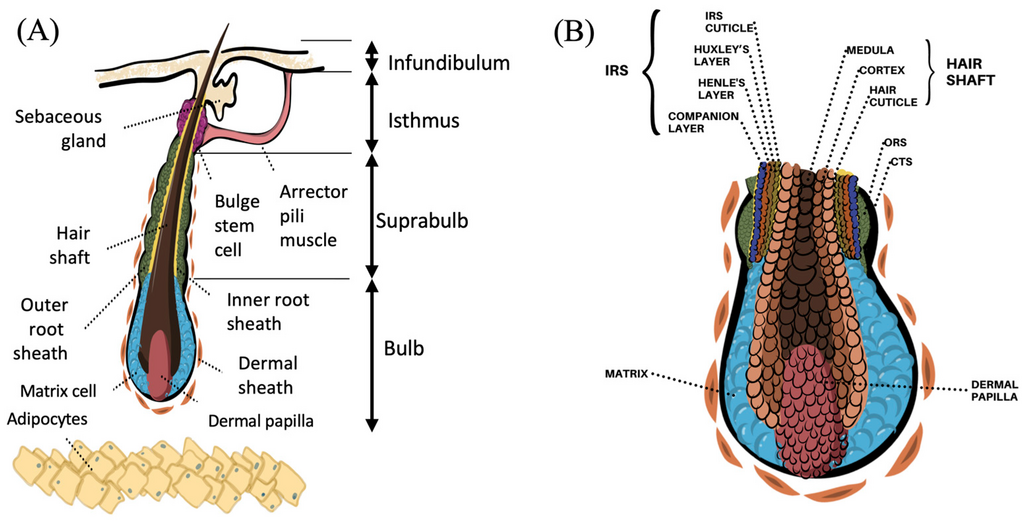
Let's break down these two areas to see how they work together.
The Hair Shaft
The hair shaft is composed of a strong protein called keratin. While it may look alive, the shaft itself is made of dead cells, which is why getting a haircut doesn't hurt. It consists of three distinct layers.
- Cuticle: The outermost layer. It's made of overlapping scales, like shingles on a roof. A smooth, intact cuticle makes hair look shiny and healthy, while a damaged cuticle can lead to frizz and dullness.
- Cortex: The middle and thickest layer. The cortex provides strength, color, and texture to the hair. It contains the melanin pigments that determine your hair color.
- Medulla: The innermost core. This soft, spongy layer isn't always present, especially in people with very fine or naturally blonde hair. Its exact function is not fully understood.
The Hair Follicle
Beneath the skin lies the hair follicle, the living factory for each strand of hair. It's a tube-like structure that extends from the epidermis down into the dermis, the deeper layer of skin. The base of the follicle is where the magic happens.
Hair Bulb: This is the bulb-shaped structure at the very bottom of the follicle. It houses the parts responsible for hair growth.
Dermal Papilla: Located at the base of the hair bulb, the papilla contains a network of tiny blood vessels. These vessels deliver the oxygen and nutrients needed to produce new hair.
Hair Matrix: Within the bulb and surrounding the papilla are the matrix cells. These are some of the fastest-dividing cells in the body. They multiply rapidly to form the new hair shaft.
As new cells emerge, the old, divided cells harden into hair through a process called keratinization.
Associated Glands
Attached to each hair follicle is a tiny gland with a big job: the sebaceous gland. This gland produces an oily, waxy substance called sebum.
Sebum
noun
An oily, waxy substance produced by the body's sebaceous glands.
Sebum travels up the hair follicle and coats the hair shaft as it emerges from the skin. This natural oil helps to lubricate and waterproof your hair and skin, keeping them from drying out. It's a key part of your body's built-in conditioning system.
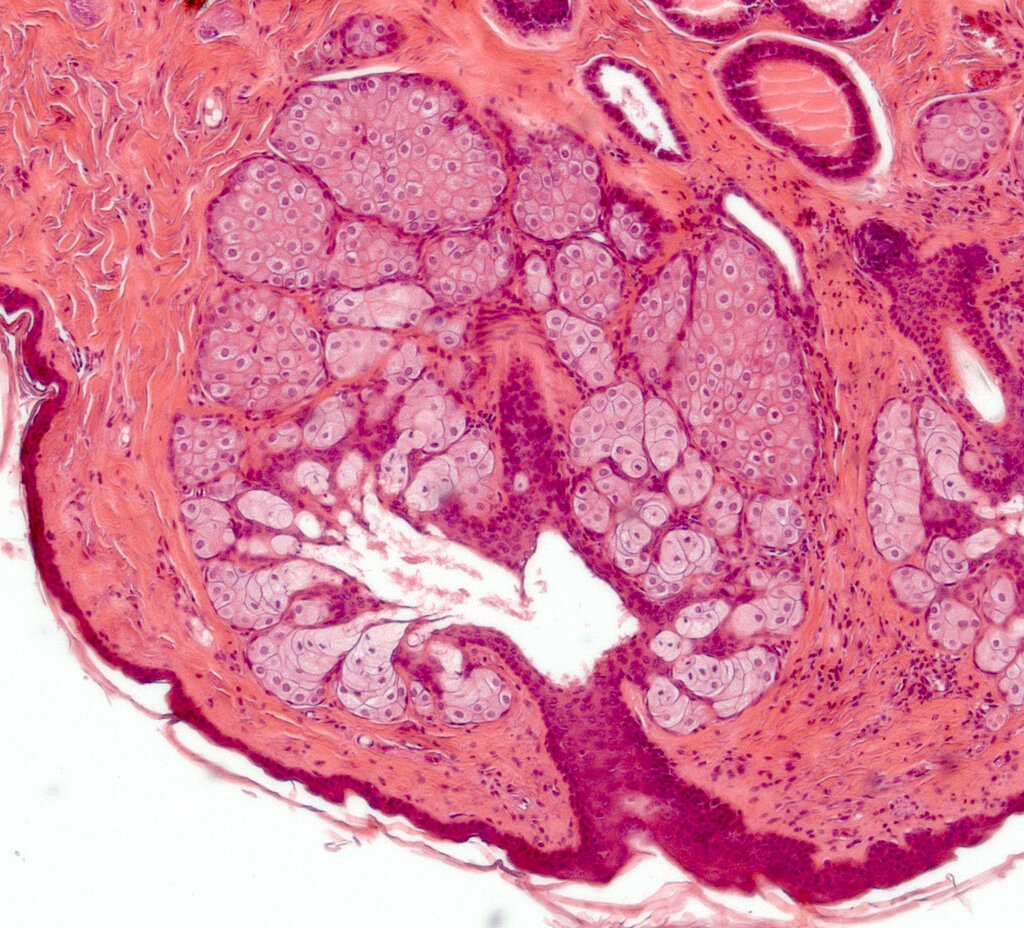
Now that you understand the basic anatomy of a hair strand and its follicle, you can see how this intricate system works to produce the hair on your head.
Let's check your understanding of these new concepts.
A single strand of hair is composed of two main parts: the part we see above the skin and the anchor beneath the surface. What are these two parts called?
The visible part of your hair, the hair shaft, is composed of dead cells, which is why getting a haircut is painless.
Understanding this structure is the first step. Next, we'll explore the dynamic cycle of how hair grows, rests, and sheds.