Federal Reserve Interest Rate Cuts Explained
Monetary Policy Basics
What is Monetary Policy?
Monetary policy is how a country's central bank manages the supply of money and credit to achieve its economic goals. Think of it as the central bank's way of either stepping on the gas or tapping the brakes of the economy.
In the United States, this job belongs to the Federal Reserve, often just called "the Fed." The Fed's decisions influence how much it costs for you to get a car loan, for a business to expand, and for the government to borrow money. Its primary goal is to keep the U.S. economy healthy and stable.
The Fed's Goals
The Federal Reserve operates under what's known as a "dual mandate" given to it by Congress. This means it has two primary, co-equal objectives:
-
Maximum Employment: This doesn't mean zero unemployment. A healthy economy will always have some level of people moving between jobs. Instead, it means the highest level of employment the economy can sustain without causing inflation to rise too quickly.
-
Stable Prices: This means keeping inflation low and predictable. The Fed generally considers an inflation rate of 2% per year to be the sweet spot for a healthy economy. This avoids the problems of rapidly rising prices, but also the dangers of deflation (falling prices), which can discourage spending and investment.
These two goals can sometimes be in conflict. Stimulating the economy to create jobs can sometimes lead to higher inflation, while fighting inflation can sometimes slow the economy and cost jobs. The Fed's task is to strike a delicate balance between the two.
The Fed has a dual mandate to implement monetary policy that achieves both maximum employment and stable prices.
The Fed's Toolbox
To achieve its goals, the Fed uses several tools to influence the amount of money and credit in the economy. While it has a few options, one tool stands out as the most important.
Federal Funds Rate
noun
The target interest rate at which commercial banks borrow and lend their excess reserves to each other overnight.
The federal funds rate is the Fed's primary policy tool. While the Fed doesn't directly set the rate for your mortgage or credit card, the federal funds rate acts as a benchmark. Changes to it create a ripple effect, influencing other interest rates throughout the entire economy.
When you hear news reports about "the Fed raising rates," they are almost always talking about the target for the federal funds rate.
So how does the Fed actually nudge this rate toward its target? It uses open market operations. This involves buying and selling government securities (like Treasury bonds) on the open market.
- To lower the federal funds rate, the Fed buys securities from banks. This increases the money supply in the banking system, making it cheaper for banks to borrow from one another.
- To raise the federal funds rate, the Fed sells securities. This reduces the money supply, making it more expensive for banks to borrow.
Other tools include the discount rate, which is the interest rate at which banks can borrow directly from the Fed, and reserve requirements, which dictate the amount of money banks must hold on hand rather than lend out. However, these tools are used much less frequently today.
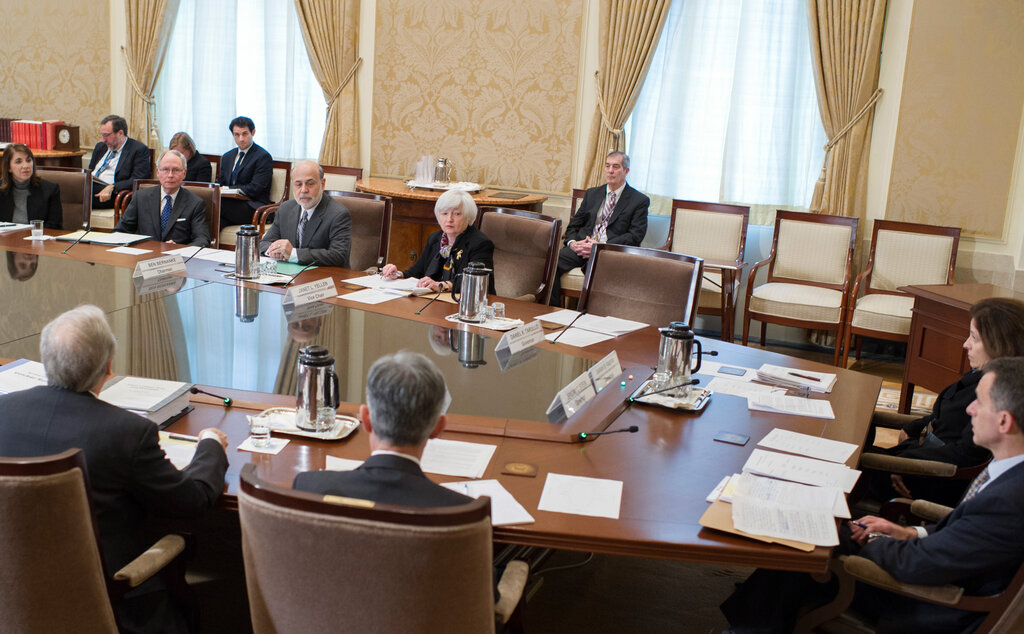
How It All Connects
The Fed's actions have a direct impact on the key indicators of economic health. By adjusting its policy tools, the Fed can influence economic activity.
Fighting Inflation When the economy is growing too fast and prices are rising rapidly (high inflation), the Fed can implement "contractionary" or "tight" monetary policy. By raising the federal funds rate, the Fed makes borrowing more expensive. This discourages consumer spending and business investment, cooling down the economy and easing the pressure on prices.
Boosting Employment and Growth Conversely, when the economy is sluggish and unemployment is high, the Fed can use "expansionary" or "loose" monetary policy. By lowering the federal funds rate, it makes borrowing cheaper. This encourages businesses to invest, expand, and hire more workers. It also stimulates consumer spending on big-ticket items like cars and houses, which helps the economy grow.
By lowering this rate, the Fed can help spur borrowing and spending to manage inflation and influence the economy.
This constant adjustment is the essence of monetary policy: a continuous effort to guide the economy toward the sweet spot of strong growth, high employment, and stable prices.
What are the two primary objectives of the U.S. Federal Reserve's 'dual mandate'?
If the economy is sluggish and unemployment is high, what type of monetary policy would the Federal Reserve likely implement?