Federal Reserve and Money Supply
Introduction to the Federal Reserve
The US Central Bank
The Federal Reserve, often called the Fed, is the central bank of the United States. Think of it as the bank for banks and the government's bank. Congress created it in 1913 to provide the nation with a safer, more flexible, and more stable financial system. Before the Fed, the U.S. financial system was prone to panics and bank runs, which could cause widespread economic chaos.
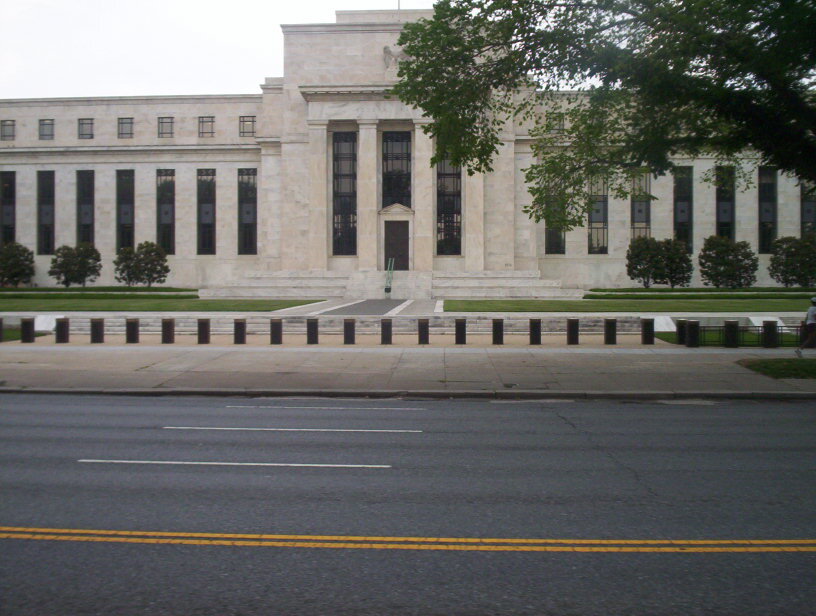
The Fed isn't one single entity but a system with both public and private characteristics. Its structure is designed to be independent of short-term political pressures, allowing it to make economic decisions based on evidence and long-term goals. This independence is crucial for its credibility and effectiveness.
The Dual Mandate
Congress has given the Fed two primary objectives, known as the "dual mandate": to promote maximum employment and to maintain stable prices.
The Fed's job is to keep the economy humming: lots of people working, without prices rising too fast.
Maximum Employment: This means that everyone who wants a job can find one. It doesn't mean a 0% unemployment rate, as some level of unemployment is natural as people move between jobs. The Fed aims for the lowest level of unemployment that the economy can sustain without causing inflation to rise.
Stable Prices: This means keeping inflation low and predictable. When prices are stable, people and businesses can make better long-term financial plans. The Fed generally considers a 2% inflation rate to be consistent with price stability.
How the Fed is Organized
The Federal Reserve System has a unique decentralized structure that balances national oversight with regional input. It's made up of three key parts: the Board of Governors, twelve regional Federal Reserve Banks, and the Federal Open Market Committee (FOMC).
Decentralized
adjective
Control and decision-making are distributed or delegated away from a central authority.
Let's look at each component.
The Board of Governors This is the main governing body of the Federal Reserve System. It is an independent agency of the federal government, based in Washington, D.C. The Board consists of seven members, called "governors," who are appointed by the President and confirmed by the Senate. They serve staggered 14-year terms to ensure their independence from political influence.
The Board of Governors oversees the entire Federal Reserve System. It provides general guidance, sets bank supervision policies, and analyzes economic and financial conditions.
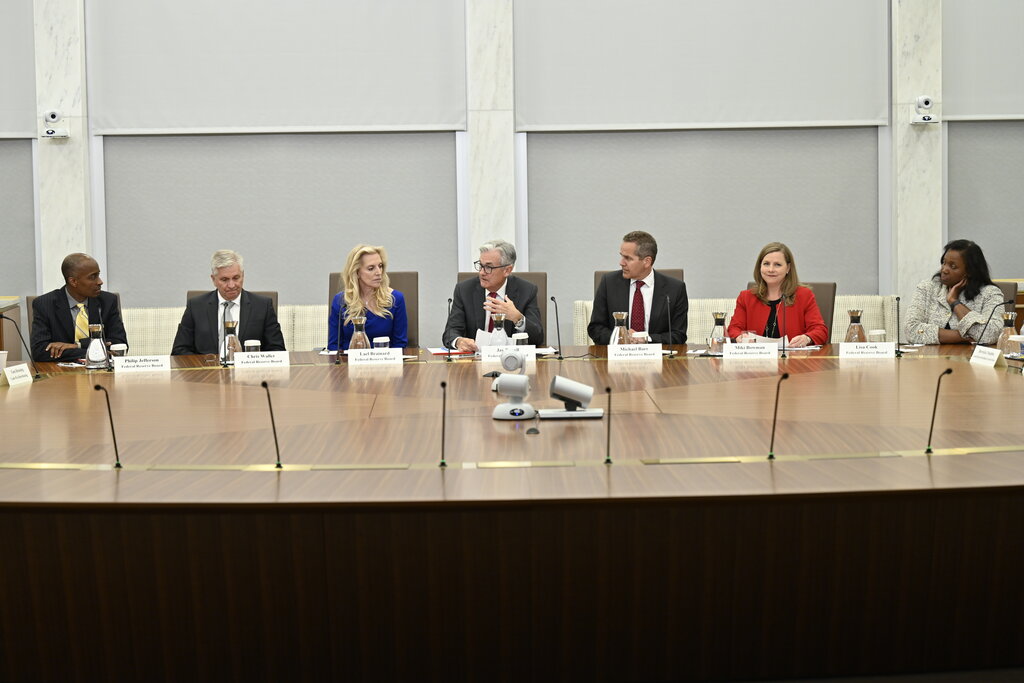
The Federal Reserve Banks The U.S. is divided into 12 Federal Reserve Districts, each with its own regional Reserve Bank. These banks are the operating arms of the central bank. They serve commercial banks within their district, handle the U.S. Treasury's payments, and conduct research on their regional economies.
This regional structure helps the Fed gather economic information from all over the country, ensuring that diverse local perspectives are considered in national policymaking.
The Federal Open Market Committee (FOMC) The FOMC is the Fed's main body for making monetary policy decisions. Its primary goal is to manage the nation's money supply to help achieve the dual mandate of maximum employment and stable prices.
The FOMC has 12 voting members: the seven members of the Board of Governors, the president of the Federal Reserve Bank of New York, and the presidents of four other Reserve Banks, who serve on a rotating basis. All 12 Reserve Bank presidents attend FOMC meetings and participate in discussions, but only five can vote at any given time.
The FOMC typically meets eight times a year in Washington, D.C., to review economic and financial conditions and decide on the appropriate stance of monetary policy. These meetings are closely watched by financial markets around the world.
What are the two primary objectives of the Federal Reserve, often referred to as its "dual mandate"?
The Federal Reserve System consists of a single, centralized bank located in Washington, D.C.
Together, these three components form a system that is both centralized in its oversight and decentralized in its operations, allowing it to respond to the complex needs of the U.S. economy.