Federal Regulation vs. State Sovereignty in Sports Betting
Introduction to Federalism
What is Federalism?
Federalism is a system of government where power is divided between a central, national government and various regional governments, which we call states. Think of it like a large household where the parents set the main rules for everyone (like bedtime or major chores), but each child is responsible for managing their own room. The national government handles issues that affect the entire country, while state governments manage their own local affairs.
Federalism
noun
A system of government in which power is divided between a national (federal) government and various regional governments (states).
This structure was a deliberate choice by the framers of the Constitution. They wanted a central government strong enough to unite the country and handle national issues, but not so powerful that it could trample on the rights of states and individuals. Federalism was their solution: a balance of power.
The Constitutional Blueprint
The U.S. Constitution is the rulebook for this division of power. It specifically lists the powers of the federal government, such as the power to declare war and regulate commerce between states. Any powers not given to the federal government, nor denied to the states, are left for the states to handle.
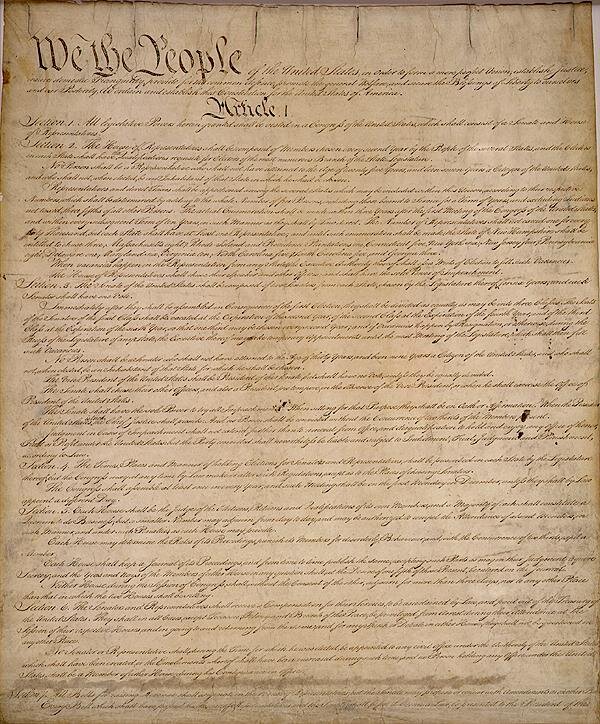
This principle is cemented in the Tenth Amendment, a cornerstone of American federalism. It acts as a constitutional guarantee of states' rights and powers.
"The powers not delegated to the United States by the Constitution, nor prohibited by it to the States, are reserved to the States respectively, or to the people."
Essentially, if the Constitution doesn't say the federal government can do something, that power belongs to the states or the people themselves. This creates a dynamic where states can act as laboratories of democracy, trying out different policies and laws.
Dividing the Power
The division of governmental authority can be broken down into three main categories. Understanding these categories is key to seeing how federalism works in practice.
| Power Type | Jurisdiction | Examples |
|---|---|---|
| Enumerated Powers | Federal Government | Coining money, declaring war, raising an army, regulating interstate commerce. |
| Reserved Powers | State Governments | Establishing schools, conducting elections, marriage laws, regulating intrastate commerce. |
| Concurrent Powers | Shared | Levying taxes, borrowing money, establishing courts, making and enforcing laws. |
Enumerated powers are those explicitly granted to the federal government in the Constitution. Reserved powers are those kept by the states, as confirmed by the Tenth Amendment. Concurrent powers are those that both the federal and state governments can exercise simultaneously.
This layered system creates a constant negotiation between federal authority and state sovereignty. When a state law conflicts with a federal law, the Constitution's Supremacy Clause generally means the federal law prevails, as long as it's within the federal government's constitutional authority.
This framework of shared power is fundamental to the American political system, influencing everything from education policy to business regulation. The balance is not always static and has been debated and redefined throughout history.
Which statement best defines federalism?
The Tenth Amendment to the Constitution is a cornerstone of federalism because it...