Feasibility in Implementation vs. Health Economics
Introduction to Feasibility in Implementation Science
Can We Actually Do This?
Imagine you have a brilliant new idea. It’s an evidence-based program proven to help students improve their reading skills. In a controlled lab setting, it worked perfectly. But now, you want to bring it into a real school. Suddenly, you face a wave of practical questions.
Do the teachers have enough time in their day to run the program? Does the school have the necessary tablets and software? Are the classrooms quiet enough? Answering these questions is the core of assessing feasibility.
Feasibility
noun
The extent to which a new intervention or innovation can be successfully used or carried out within a specific real-world setting.
Feasibility isn't about whether the idea is good. It's about whether the idea can work here, now, with the resources we have. It’s a reality check that happens before you invest significant time and money into a full-scale implementation. Without it, even the best interventions can fail before they even start.
Feasibility bridges the gap between a great idea on paper and a successful program in practice.
What Makes an Idea Feasible?
Feasibility depends on the context. A program that’s perfectly feasible in a large, well-funded urban hospital might be impossible to implement in a small, remote clinic. Several key factors come into play when evaluating whether an intervention is likely to succeed in a particular environment.
Feasibility is centred on how a product can be realistically developed given the available resources, technologies, and constraints.
Let's break down some of those constraints and considerations.
| Factor | Key Question |
|---|---|
| Resources | Do we have the staff, funding, and time required? |
| Skills & Expertise | Does our team have the knowledge to deliver the intervention, or will they need training? |
| Technology & Materials | Do we have the necessary equipment, software, and physical space? |
| Organizational Alignment | Does this intervention fit with our organization's existing priorities and workflow? |
| Acceptability | Are the stakeholders (staff, clients, leadership) willing to adopt this new practice? |
Think of it like building a piece of furniture. You might have the instructions (the intervention) and know that the finished product is sturdy and useful (it's evidence-based). But a feasibility assessment asks: Do you have all the screws and panels (materials)? Do you own a screwdriver (technology)? Do you have the afternoon free to build it (time)? And does it even fit in your living room (organizational alignment)?
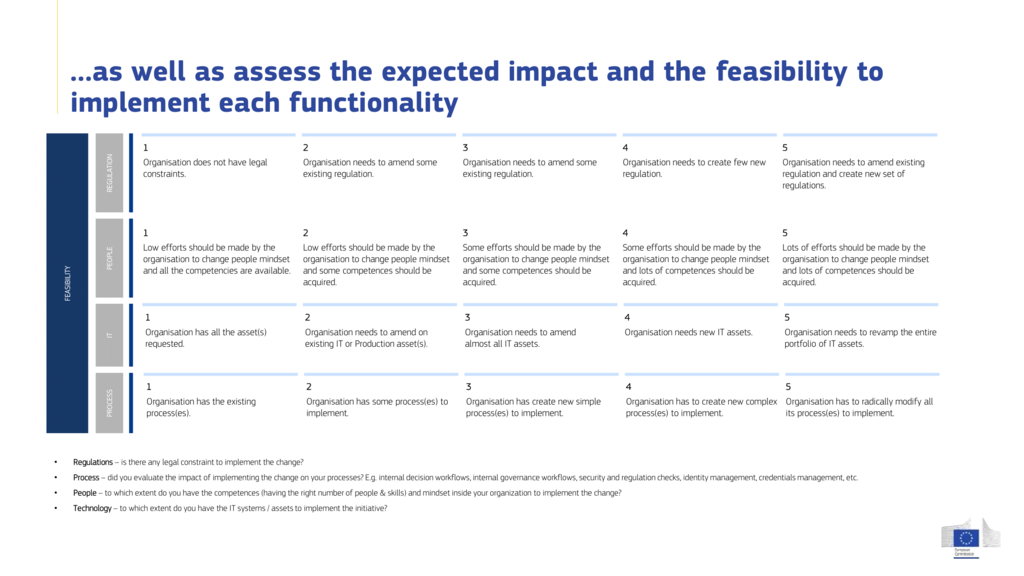
By asking these tough questions upfront, organizations can identify potential barriers early. This allows them to either adapt the intervention to better fit their context, allocate more resources to overcome the barriers, or decide that the intervention, while promising, simply isn't a good fit at this time. This proactive step is crucial for the successful adoption and long-term sustainability of new practices.
What is the primary purpose of a feasibility assessment?
The provided text uses building furniture as an analogy. In this analogy, what does having enough time in the afternoon to build it represent?