Fascia Scraping Techniques
Introduction to Fascia
What is Fascia?
Think of your body as a complex piece of machinery. The bones are the frame, and the muscles are the engines that create movement. But what holds everything together in its proper place? The answer is fascia.
Fascia is a web of connective tissue that runs throughout your entire body. It’s primarily made of strong collagen fibers, stretchy elastin fibers, and a gel-like substance called the extracellular matrix. This composition gives it both strength and flexibility, allowing it to adapt to your body's every move.
fascia
noun
A sheet of connective tissue, primarily collagen, beneath the skin that attaches, stabilizes, encloses, and separates muscles and other internal organs.
For a long time, fascia was dismissed as simple “packing material.” Anatomists would often cut it away to get a better look at the muscles and organs underneath. We now understand that it’s a dynamic and crucial system that plays a major role in how we function.
Fascia works in a similar way: it’s a continuous, all-encompassing network that wraps around and connects everything in the body, from muscles and nerves to blood vessels and organs.
The Layers of the Web
This body-wide web isn’t just one uniform sheet. It's organized into distinct layers, each with a specific job.
Superficial Fascia: This is the layer just beneath your skin. It's a loose, fatty layer that stores fat and water, provides insulation, and allows the skin to move independently from the structures underneath. It also contains nerves and blood vessels.
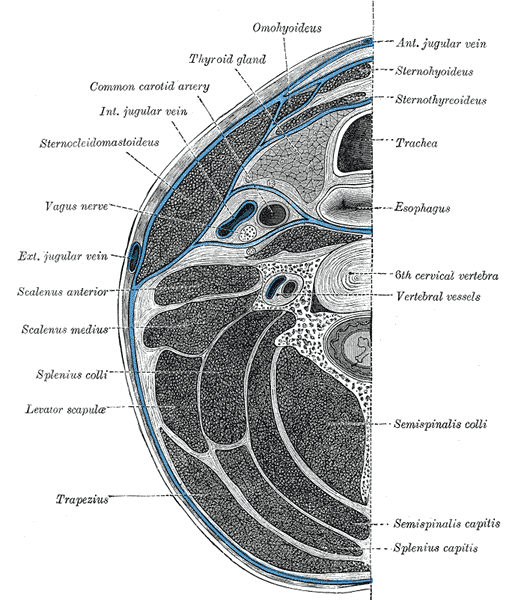
Deep Fascia: This is a much denser and stronger layer. It wraps around individual muscles, groups of muscles, bones, and nerves like a tight stocking. This encasement helps give muscles their shape and provides a pathway for nerves and blood vessels to travel without being compressed by muscle contractions.
Visceral Fascia: As the name suggests, this layer surrounds your internal organs in your main body cavities, such as the heart, lungs, and stomach. It suspends them in place, providing both support and a degree of movement.
More Than Just Packaging
Fascia’s role goes far beyond simply holding things together. It’s an active and responsive system that is fundamental to our health and movement.
One of its key functions is to transmit force. When you contract a muscle, the force doesn't just pull on the bone it's attached to. The force is also distributed through the fascial web to surrounding muscles. This creates a stable, coordinated system where muscles can work together efficiently.
Think of it like the rigging on a sailboat. The mast (your bones) and sails (your muscles) are essential, but it’s the network of ropes (your fascia) that holds everything in position and transfers force, allowing the boat to move powerfully and gracefully.
This interconnectedness means that tightness or restriction in one area of fascia can affect movement and create tension in a completely different part of the body.
Fascia is also a major sensory organ. It is filled with nerve endings, making it almost as sensitive as your skin. This network of nerves provides your brain with a constant stream of information about your body’s position in space, a sense known as proprioception. It tells your brain how your limbs are moving and how much tension is in your muscles, allowing for fluid, coordinated action.
Finally, healthy fascia is well-hydrated, which allows different structures to glide smoothly against one another with minimal friction. This lubrication is essential for a full and pain-free range of motion.
Normal muscular function requires that its surrounding fascia be hydrated to allow normal tissue gliding.
Understanding this complex web is the first step in appreciating its impact on everything from your posture and stability to your athletic performance. It’s a unified system that connects your body from head to toe.