Far-Field Wireless Power
Introduction to Wireless Power Transfer
Power Without Wires
Imagine a world without tangled cables and the constant search for a free outlet. This is the promise of wireless power transfer (WPT), a technology that sends electricity through the air. Instead of plugging your phone into a wall, you could just place it on a table. Electric cars could recharge while waiting at a traffic light. The core idea is simple: moving energy from one place to another without a physical connection.
This isn't just about convenience. WPT can make technology more reliable and safer, especially in environments where cables are impractical or hazardous, like in medical implants or wet conditions. By removing the need for physical connectors, which can wear out or break, devices can become more durable and robust.
A Spark of an Idea
The dream of wireless power is over a century old. Its most famous visionary was Nikola Tesla, an inventor who imagined a global system for transmitting electricity without wires. In the late 1800s, he conducted spectacular experiments, creating massive electrical arcs and powering lights from a distance.
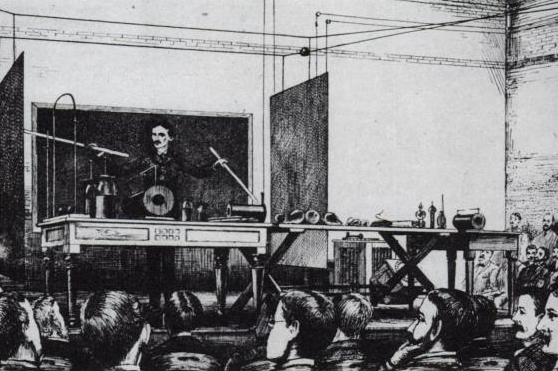
Tesla's grand vision of a worldwide wireless grid never came to fruition, largely due to technical and financial hurdles. His ideas, however, were not forgotten. They laid the conceptual groundwork for the wireless technologies we use today, from radio communication to the charging pads for our smartphones.
Three Ways to Send Power
Modern wireless power transfer isn't one single technology; it's a family of methods, each suited for different distances and applications. Let's look at the three main approaches.
- Inductive Coupling
This is the most common method, used in things like electric toothbrush chargers and smartphone charging pads. It works over very short distances, usually just a few millimeters. The system uses two coils of wire: a transmitter coil in the charging base and a receiver coil in the device. When electricity flows through the transmitter coil, it creates a magnetic field. This field, in turn, induces an electric current in the nearby receiver coil, charging the device's battery.
Its main advantage is efficiency; very little energy is lost. The downside is that the device must be placed very precisely on the charger and kept very close to it.
- Resonant Inductive Coupling
This method extends the range of inductive coupling to several meters. Like the first method, it uses two coils. However, these coils are designed to resonate at the same specific frequency. Think of it like a singer shattering a glass with their voice. The singer's voice (the transmitter) has to match the natural vibrating frequency of the glass (the receiver) for the energy transfer to be effective.
This resonance allows power to be transferred efficiently even when the coils are farther apart or not perfectly aligned. It's a promising technology for creating truly wireless environments where you could charge a laptop just by having it in the same room as the transmitter. While more flexible, it's generally less energy-efficient than direct inductive coupling.
- Radiative (Far-Field) Transfer
For sending power over long distances, from meters to kilometers, we turn to radiative or far-field methods. This approach uses electromagnetic waves, such as radio waves or microwaves, to carry energy. A transmitter converts electrical power into these waves and beams them toward a receiver.
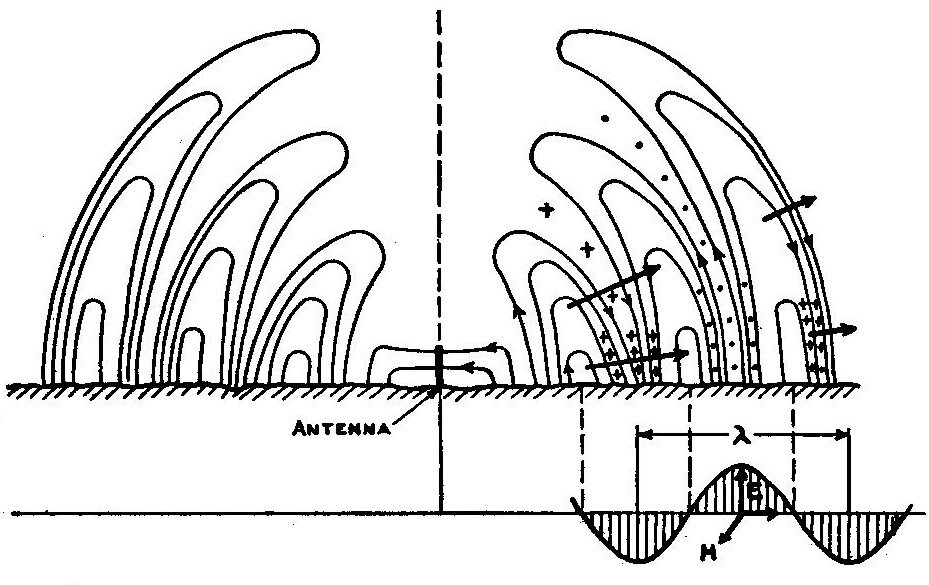
The receiver captures the waves and converts them back into electricity. This is the same principle used to send information for radio, television, and Wi-Fi, but with a focus on delivering usable power. The major challenge with this method is efficiency. The energy beam spreads out as it travels, and much of the power can be lost. There are also safety concerns with beaming high levels of energy through the air that must be carefully managed.
| Method | Range | Efficiency | Key Feature |
|---|---|---|---|
| Inductive Coupling | Very Short (mm) | High | Requires precise alignment |
| Resonant Inductive Coupling | Medium (meters) | Moderate | Coils tuned to the same frequency |
| Radiative (Far-Field) | Long (km) | Low | Uses electromagnetic waves |
Each of these methods opens up different possibilities, from the simple convenience of a charging pad to the futuristic concept of powering remote sensors from a central base. Understanding their trade-offs is the first step in harnessing the potential of a wireless world.