Facebook Marketing Strategic Implementation
Meta Ads Infrastructure
Beyond Boosting: Building Your Ad Infrastructure
To move from basic social media promotion to professional ad management, you need to step away from the 'Boost Post' button. Effective advertising relies on a solid technical foundation. It's about creating an environment where Meta's algorithm has enough high-quality data, or 'signal,' to find your ideal customers and drive results. This setup involves more than just a Facebook Page; it requires a structured approach using professional tools.
Business Suite vs. Ads Manager
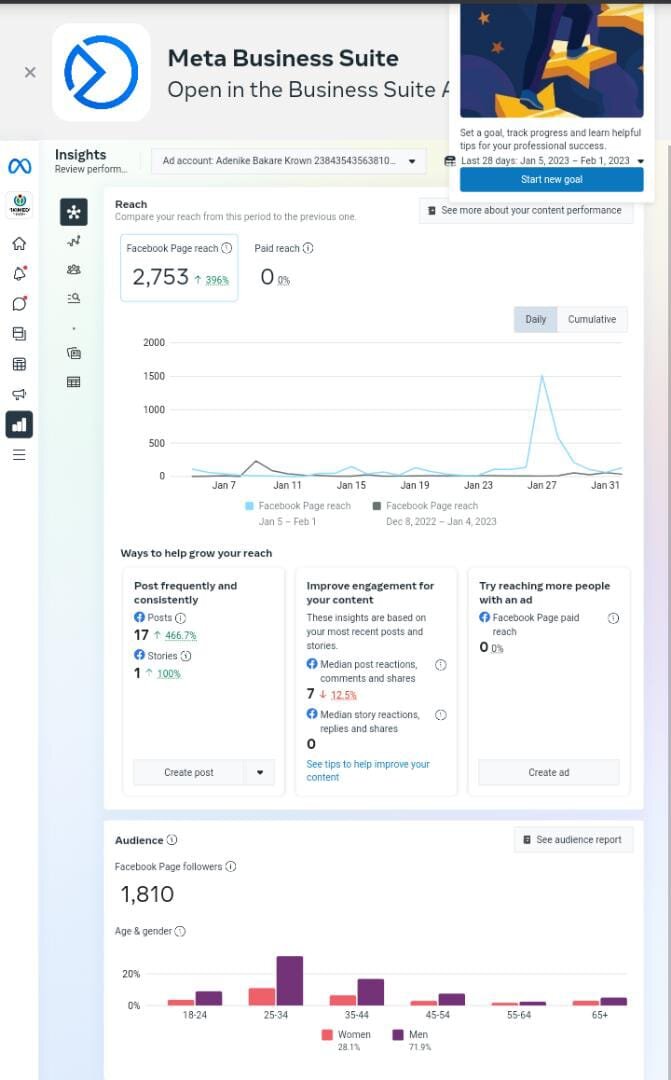
First, let's clarify the hierarchy. The Meta Business Suite is the top-level container for all your business assets. Think of it as a master toolbox. Inside, you'll find your Facebook Page, Instagram account, product catalogs, and, most importantly, your Ad Account.
Ads Manager is a specialized tool within that toolbox. It's the workbench where you build, manage, analyze, and optimize your ad campaigns. While you can launch simple ads from the Business Suite dashboard, all serious campaign construction and detailed performance analysis happens in Ads Manager. Organizing your assets under one Business Suite is crucial for scalability and secure access management.
The Dual Pillars of Tracking
Modern advertising runs on data. To optimize your campaigns effectively, Meta needs to see what actions users take on your website after clicking an ad. This is accomplished through two complementary tracking methods: the and the .
The Pixel is a code snippet that lives on your website and sends data from the user's browser back to Meta. It tracks events like page views, items added to a cart, and purchases. However, its effectiveness is diminishing due to ad blockers and browser privacy restrictions like Apple's iOS 14.5 updates, which can block the Pixel from firing.
This is where the Conversions API (CAPI) comes in. It creates a direct, server-to-server connection between your website's backend and Meta's servers. Because it doesn't rely on the user's browser, it's not affected by the same restrictions that hamper the Pixel. CAPI can share the same types of events, providing a more reliable data stream.
Using both the Pixel and CAPI creates a redundant tracking system. Meta's systems can then 'deduplicate' these events, combining the data from both sources to form a single, accurate picture of user behavior. This 'signal-heavy' setup is critical for the algorithm's learning phase and for long-term campaign success.
Implement the Conversion API alongside the Facebook Pixel to create a more reliable tracking system that supports better optimization and higher ROI.
Configuration for Data Integrity
With the rise of privacy-focused policies, a few configuration steps are now mandatory for effective tracking. The first is domain verification. This process proves to Meta that you own your website, which is a prerequisite for configuring conversion events.
Once your domain is verified, you must configure (AEM). This protocol allows you to measure up to eight prioritized conversion events for users on iOS 14.5 and later. You must rank these events in order of importance, from highest (e.g., Purchase) to lowest (e.g., View Content). If a user opts out of tracking, only the highest-priority event they complete in a session will be reported.
Finally, focus on your Event Match Quality score. This metric, visible in Events Manager, indicates how well the customer information you send via CAPI and the Pixel matches with existing Meta accounts. Higher scores mean Meta can more accurately attribute conversions to your ads. To improve your EMQ score, pass as much customer data as possible with each event, such as email address, phone number, name, and location, ensuring it's hashed for privacy.
By correctly setting up your Business Suite, verifying your domain, and implementing both the Pixel and CAPI with prioritized events, you create a robust data infrastructure. This signal-heavy environment is the necessary foundation for running sophisticated, high-performing ad campaigns.