F5 Security Essentials
Network Security Basics
The Goal of Network Security
Think of a computer network like a house. It has doors and windows that allow people and things to come and go. Network security is the practice of installing locks, alarms, and security guards to ensure only the right people get in and that everything inside stays safe. Its main purpose is to protect the network and the data flowing through it from unauthorized access and misuse.
In short, network security is about making sure digital information is kept safe and is only accessible to authorized users.
To achieve this, security professionals focus on three core principles, often called the CIA triad.
Confidentiality, Integrity, and Availability
The CIA triad is the foundation of information security. These three principles guide how organizations protect their data.
Confidentiality
noun
Ensuring that information is not disclosed to unauthorized individuals, entities, or processes. It's about keeping secrets.
Imagine sending a private letter. You put it in a sealed envelope so only the intended recipient can read its contents. In the digital world, encryption acts as that envelope, scrambling data so it's unreadable to anyone without the proper key.
Integrity
noun
Maintaining the consistency, accuracy, and trustworthiness of data over its entire lifecycle. Data must not be changed in transit.
This is like the safety seal on a bottle of medicine. If the seal is intact, you trust that the contents haven't been tampered with. In networking, mechanisms like checksums and cryptographic hashes ensure that the data you receive is the exact same data that was sent.
Availability
noun
Ensuring that information is accessible by authorized users when needed. The systems and networks must be up and running.
This simply means the network and its services are working and accessible. Think of a bank. If its doors are locked during business hours, customers can't access their money. Availability ensures the digital doors are always open for legitimate users.
| Principle | Goal | Analogy |
|---|---|---|
| Confidentiality | Keep data secret | A sealed envelope |
| Integrity | Prevent data tampering | A safety seal on a product |
| Availability | Ensure access | A store open for business |
Common Threats to Your Network
When the principles of the CIA triad are broken, it's often due to a security threat. While there are countless ways a network can be attacked, most fall into a few common categories.
Unauthorized Access: This is the digital equivalent of a break-in. An attacker gains access to a system or data they are not supposed to see. This directly violates confidentiality.
Data Breaches: A data breach occurs when sensitive, protected, or confidential data is copied, transmitted, or stolen by an unauthorized person. This is a severe failure of confidentiality and often integrity.
Denial-of-Service (DoS) Attacks: Instead of trying to steal information, a DoS attack aims to make a network or website unusable for its intended users. The attacker floods the target with so much traffic that it becomes overwhelmed and can't respond to legitimate requests. This is a direct attack on availability.
Your First Lines of Defense
Protecting a network requires a layered approach, but two of the most fundamental tools are firewalls and intrusion detection systems.
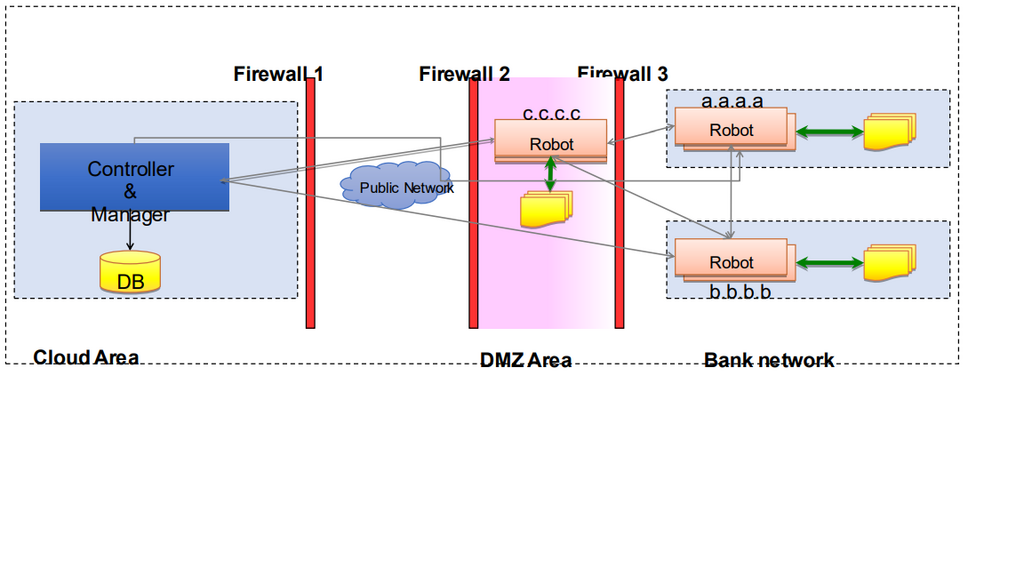
A firewall is a security device that acts as a gatekeeper. It monitors all incoming and outgoing network traffic and decides whether to allow or block specific traffic based on a defined set of security rules. You can think of it as a bouncer at a club, checking IDs at the door to make sure only authorized guests get in.
An Intrusion Detection System (IDS) is like a security camera or alarm system. It doesn't necessarily stop an attack on its own, but it monitors network traffic for suspicious activity or policy violations. When it spots a potential threat, it sends an alert to a system administrator. The IDS watches for signs of a break-in and notifies you when something is wrong, allowing you to take action.
Understanding these core principles and basic defenses is the first step toward building a secure network. They are the essential building blocks for protecting valuable digital assets from an ever-evolving landscape of threats.
What is the primary purpose of the 'Confidentiality' principle in the CIA triad?
A ____ is like a bouncer at a club, monitoring incoming and outgoing traffic and blocking anything that doesn't meet the security rules.