F-16 vs Tejas Fighter Jets
Introduction to Fighter Aircraft
The Swift Sword of the Skies
Fighter aircraft are the tip of the spear in modern air forces. Their primary job, historically, has been to control the skies by shooting down other aircraft. This is known as achieving air superiority. If you control the air, your ground forces can operate more freely and safely.
But the mission of a modern fighter is rarely that simple. Today’s jets are multi-role platforms, designed for a wide range of tasks. They can shift from an air-to-air combat role to an air-to-ground attack role on the same mission. This means they not only fight other planes but also act as bombers, striking targets on the ground like buildings, tanks, and command centers.
Other specialized missions include reconnaissance, where they use advanced sensors and cameras to gather intelligence, and electronic warfare, where they jam enemy radars and communications to disrupt their operations.
A modern fighter is a flying bundle of compromises. It must be fast enough to intercept enemies, agile enough to win a dogfight, and versatile enough to attack targets on the ground.
A History of Speed and Stealth
To understand fighter design, it helps to look at their evolution. Analysts group fighter jets into “generations” based on major leaps in technology. While the lines can be blurry, this framework gives us a clear picture of how they’ve developed.
First Generation (late 1940s - mid 1950s): These were the first jets, like the F-86 Sabre. They were subsonic, armed with machine guns or cannons, and had simple electronics. Their designs were a direct evolution from propeller-driven fighters of World War II.
Second Generation (mid 1950s - early 1960s): Speed was the focus here. These jets routinely broke the sound barrier. They were the first to carry air-to-air missiles and rudimentary radars. The idea was to intercept high-flying bombers, so maneuverability was often sacrificed for raw speed and altitude.
Third Generation (1960s - 1970s): Technology matured. Avionics and radars became much more sophisticated. Designers started to bring back maneuverability, realizing that dogfighting wasn't obsolete. Multi-role capabilities became more common, with jets like the F-4 Phantom II serving as both a fighter and a bomber.
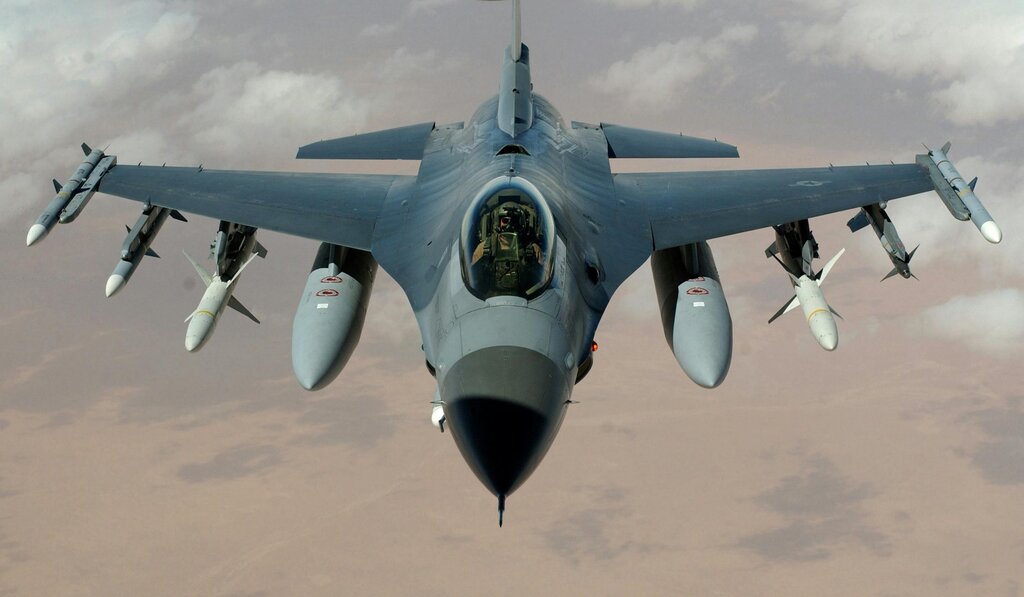
Fourth Generation (1970s - mid 1990s): This generation saw the arrival of computer-assisted controls, or “fly-by-wire,” which made jets incredibly agile. Advanced radars could look down and spot targets against the ground clutter, a huge advantage. The F-16 Fighting Falcon is a classic example from this era.
Fifth Generation (mid 1990s - present): The defining feature is stealth, or low observability. These aircraft are designed to be nearly invisible to radar. They also feature highly integrated avionics (sensor fusion) that give the pilot unprecedented situational awareness. The F-22 Raptor and F-35 Lightning II are the prime examples.
The Anatomy of a Fighter
Despite huge differences across generations, all fighter jets are built around a few key design principles. They are a careful balance of aerodynamics, propulsion, and electronics.
Airframe and Aerodynamics: The shape of a fighter is all about performance. Swept wings or delta wings are common for high-speed flight. Canards—small wings near the cockpit—can improve maneuverability. Modern designs often incorporate features that reduce their radar cross-section, making them stealthier. The materials have evolved too, from simple aluminum to lightweight and strong composites like carbon fiber.
Propulsion: The jet engine is the heart of the fighter. Modern fighters use afterburning turbofan engines. A turbofan is efficient for normal cruising, but when the pilot needs a massive burst of speed, they can engage the afterburner. This injects raw fuel into the engine's exhaust, creating a spectacular flame and a huge increase in thrust.
Avionics: This refers to all the electronics inside the aircraft. It’s the jet's brain and senses. The key component is the radar, used to detect and track other aircraft. Other systems include navigation aids, communication equipment, and the displays in the cockpit. In modern jets, a heads-up display (HUD) projects critical information onto a glass screen in the pilot’s line of sight, so they never have to look down at their instruments in a fight.
These three elements—airframe, engine, and avionics—are constantly evolving. Each new generation of fighter pushes the boundaries of what’s possible, creating faster, smarter, and stealthier aircraft to control the skies.
What is the primary technological leap that defines Fifth Generation fighter jets?
Which generation of fighter jets saw a renewed emphasis on maneuverability after it had been sacrificed for raw speed and altitude?