Exploring Vibe Coding
Introduction to Vibe Coding
What Is Vibe Coding?
Instead of writing every line of code from scratch, imagine describing what you want your program to do in plain English. You give the general idea, or the "vibe," and an AI partner writes the code for you. You then test it, give feedback, and refine the result through conversation. This new approach is called vibe coding.
vibe coding
noun
An AI-assisted software development method where a developer provides high-level instructions or describes an outcome in natural language to a large language model (LLM), which then generates and refines the source code.
At its core, vibe coding relies on Large Language Models (LLMs), the same technology behind advanced AI chatbots. These models are trained on vast amounts of text and code, allowing them to understand instructions and generate functional software. The developer's role shifts from a meticulous author of code to a director or guide, focusing on the big picture and steering the AI toward the desired goal through iterative feedback.
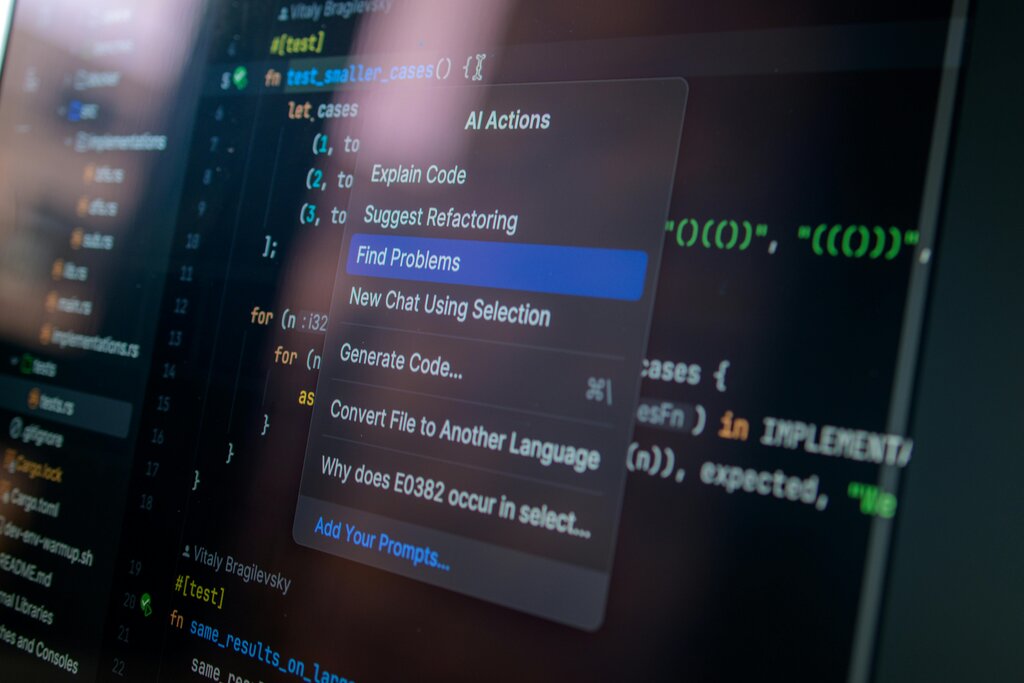
The term itself is relatively new and captures the intuitive, experimental feel of this process.
The term "vibe coding" was introduced by computer scientist Andrej Karpathy in February 2025. It quickly gained traction to describe this emerging style of conversational programming.
How It Compares to Traditional Coding
Traditional coding is a precise, structured process. A developer thinks through the logic, designs an algorithm, and then carefully writes code using a strict syntax. Every parenthesis and semicolon matters. If there's an error, the program won't run, and the developer must debug the code line by line.
Vibe coding is more fluid. It starts with a high-level concept rather than a detailed plan. The initial code generated by the LLM might not be perfect, but it provides a starting point. The process is less about getting the syntax right on the first try and more about refining the AI's output until it matches the developer's vision.
This shifts the core skillset for a developer. Memorizing complex syntax becomes less critical than the ability to write clear, effective prompts. The most valuable skills in vibe coding are creative problem-solving, critical evaluation of AI-generated code, and guiding a non-human partner through a complex task.
A New Role for the Developer
With vibe coding, developers can spend less time on tedious, repetitive tasks like writing boilerplate code or searching for syntax errors. Instead, they can focus more on the creative aspects of software development: designing user experiences, exploring new ideas, and solving business problems.
This approach makes it possible to build and test ideas much faster than before. A developer can create a functional prototype in hours rather than days, allowing for rapid experimentation. It also lowers the barrier to entry, enabling people with less formal training to bring their ideas to life by focusing on the "what" instead of the low-level details of the "how."
Vibe coding is a way of building software where you express intent in natural language, let an AI (usually a large language model) generate runnable code, and iterate on the live behavior rather than painstakingly authoring every line yourself.
Now that you have a sense of what vibe coding is, let's test your understanding.
What is the central concept of 'vibe coding'?
According to the description, the developer's role in vibe coding shifts from a meticulous author of code to a...
Vibe coding represents a significant change in how we build software, turning the process into a collaborative dialogue between human creativity and artificial intelligence.