Exploring Vibe Coding
Introduction to Vibe Coding
What is Vibe Coding?
Instead of writing code line by line, imagine describing what you want your software to do in plain English. You explain the goal, the features, and the general “vibe,” and an AI assistant translates your ideas into functional code. This is the essence of vibe coding.
Vibe coding is an AI-assisted software development method where a coder provides high-level instructions to a large language model (LLM), allowing it to generate and iteratively refine code.
The term was coined by computer scientist Andrej Karpathy in February 2025. It describes a collaborative process where a human guides an AI, shifting the focus from writing precise syntax to clearly communicating intent. It's less about memorizing commands and more about having a productive conversation with a machine.
The AI Behind the Vibe
The technology that makes vibe coding possible is the large language model, or LLM. These are the same powerful AI systems behind chatbots and text generators. An LLM is trained on vast amounts of text and code from the internet, allowing it to understand relationships between words and programming concepts.
When you give an LLM a prompt like, “Build a simple website with a blue button that says ‘Hello World’,” it uses its training to predict the most likely combination of HTML and CSS code to achieve that result. It acts as a bridge between human language and machine language.
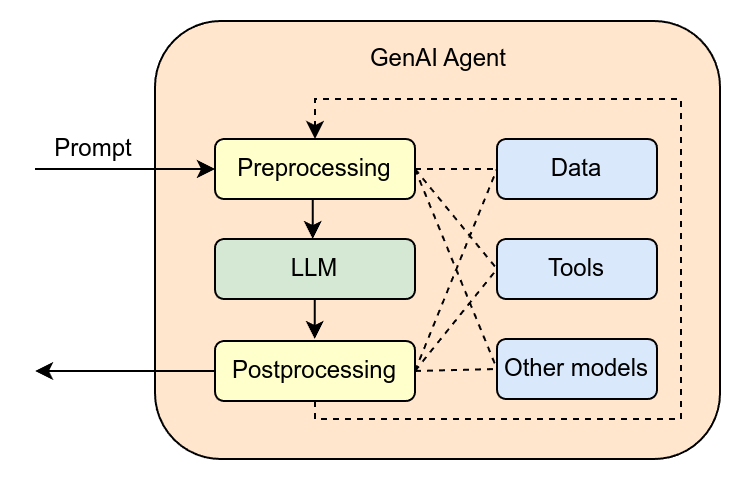
The developer’s prompt is the input, the LLM processes it, and the output is code. This cycle of prompting, generating, and reviewing is the core loop of vibe coding.
A New Role for Developers
Vibe coding doesn't make developers obsolete, but it does change their job description. The focus shifts from being a manual builder to being an architect and a quality inspector. Instead of laying every brick, you're now directing a team of very fast, but not always perfect, robotic builders.
The developer's main tasks become defining the problem clearly, crafting effective prompts, evaluating the AI's output, and testing the final product to catch errors and security flaws. It's a move from execution to supervision.
| Traditional Developer | Vibe Developer | |
|---|---|---|
| Primary Task | Writing code line-by-line | Describing intent & goals |
| Core Skill | Syntax mastery | Prompt engineering & testing |
| Process | Manual implementation | AI-assisted iteration |
| Role | Builder | Director & Refiner |
Pros and Cons
Like any new technology, vibe coding comes with a set of benefits and drawbacks. Its biggest advantage is speed. Generating code from a simple description can be dramatically faster than writing it from scratch, allowing for rapid prototyping and experimentation.
This approach also makes software development more accessible. Individuals without a deep background in programming can now create simple applications, a process often called the “democratization” of development.
The primary trade-off is often between development speed and code quality.
However, there are significant concerns. The code produced by an LLM isn't guaranteed to be efficient, secure, or even correct. It can contain subtle bugs or major security vulnerabilities that a novice might not recognize. Furthermore, AI-generated code can be difficult for other humans to read, update, and maintain over time, creating potential long-term challenges.
What is the primary focus of 'vibe coding'?
According to the text, the core technology that makes vibe coding possible is the ____.
Vibe coding represents a fundamental shift in how we create software, turning programming into a more collaborative and iterative dialogue between human and machine.