Exploring Uruguayan Spanish Dialect
Spanish Dialect Overview
A World of Spanish
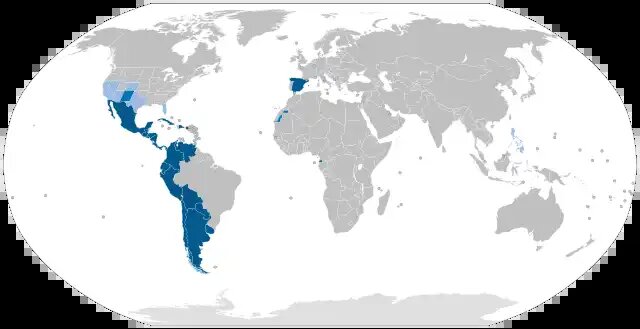
Spanish is the second most spoken native language in the world, but it's not one single language. The Spanish spoken in Madrid sounds different from the Spanish in Mexico City, which in turn differs from the Spanish you'd hear in Buenos Aires. Think of it like English in London, Austin, or Sydney. Same language, different flavors.
This variety exists because language is alive. It changes with the people who speak it. When Spanish colonizers arrived in the Americas, the language began a new journey. It mixed with hundreds of indigenous languages and was later shaped by waves of immigration from other parts of Europe.
Sounding Different
The most obvious differences between dialects are in their pronunciation. These phonetic quirks often give away where a speaker is from.
One major distinction is how the letters c (before e or i) and z are pronounced. In most of Spain, they make a "th" sound, like in the English word "think." This is called distinción. But in Latin America and some parts of Spain, these letters are pronounced like an "s." This is known as seseo. So, the word for shoe, zapato, is pronounced "tha-pa-to" in Madrid but "sa-pa-to" in Bogotá.
Another common variation involves the letters ll and y. In many dialects, these two letters are pronounced exactly the same, a phenomenon called yeísmo. The word for street, calle, sounds the same as cae ("he/she falls").
Finally, listen for the letter s at the end of a word or syllable. In the Caribbean and parts of South America, speakers often aspirate it, making a soft "h" sound, or drop it altogether. So, '¿Cómo estás?' might sound more like '¿Cómo etá?'.
Same Idea, Different Word
Vocabulary is another area where dialects diverge. You might know the right word in one country but draw a blank stare in another. These lexical differences are often influenced by local indigenous languages or cultural specifics.
| English | Spain | Mexico | Colombia | Argentina |
|---|---|---|---|---|
| Bus | autobús | camión | bus | colectivo |
| Avocado | aguacate | aguacate | aguacate | palta |
| Popcorn | palomitas | palomitas | crispetas | pochoclo |
| Pen | bolígrafo | pluma | esfero | lapicera |
You, and You, and You
Grammar also shifts from place to place. The most significant example is the second-person singular pronoun: how you say "you."
In most of the Spanish-speaking world, the informal "you" is tú. However, in some regions, particularly in Argentina, Uruguay, and parts of Central America, speakers use vos instead. This is called voseo.
Using vos also changes the verb conjugations. It's not just a different word; it's a different grammatical system for speaking to one person informally.
For the verb hablar (to speak): Tú form: tú hablas Vos form: vos hablás
These are just a few examples of the rich diversity within the Spanish language. Each dialect tells a story about its region's history, culture, and people. Understanding these variations is the first step to appreciating the full tapestry of the Spanish-speaking world.