Exploring the Zodiac Signs
Introduction to Astrology
What is Astrology?
Astrology is the practice of looking to the sky for meaning. It’s based on the idea that the movements of the sun, moon, and planets have an influence on our lives and the world around us. Think of it as a symbolic language, where the positions of celestial bodies at a specific moment in time create a kind of map.
This celestial map, known as a birth chart, isn't about predicting an unchangeable future. Instead, it's often seen as a tool for self-understanding, offering insights into personality, strengths, and challenges.
Astrology
noun
The study of the movements and relative positions of celestial bodies interpreted as having an influence on human affairs and the natural world.
The Birth of the Zodiac
The concept of the zodiac began thousands of years ago in ancient Mesopotamia. Babylonian astronomers were meticulous sky-watchers. While tracking the sun's yearly journey across the sky, they noticed it passed through a specific set of constellations. This path is called the ecliptic.
To make sense of this celestial movement, they divided the ecliptic into twelve equal 30-degree segments, creating a kind of celestial belt. Each segment was named after the prominent constellation within it. This became the zodiac, a coordinate system used to map the heavens.
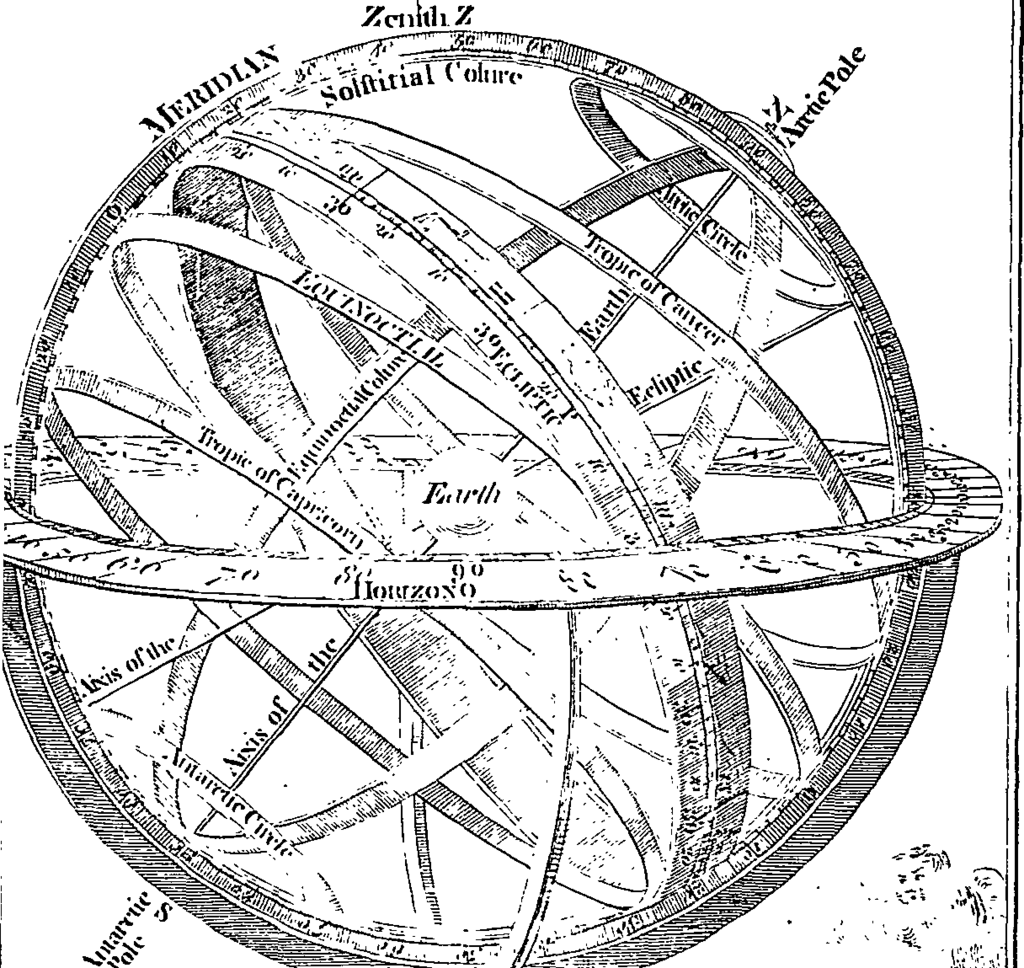
This system didn't stay confined to Mesopotamia. It traveled to ancient Egypt and was later adopted and greatly expanded by the Greeks. They synthesized Mesopotamian and Egyptian traditions, linking the zodiac signs to their rich mythology and weaving astrology into their philosophy and medicine.
Greek astrology synthesized Mesopotamian and Egyptian traditions, embedding the Zodiac into philosophical and medical frameworks.
The Zodiac's Framework
The zodiac is more than just twelve signs. It's a structured system with several layers of meaning. The fundamental building blocks are the elements and the modalities, which combine to give each of the twelve signs its unique character.
First, the signs are grouped into four classical elements: Fire, Earth, Air, and Water. Each element represents a basic type of energy or consciousness.
| Element | Represents | Signs |
|---|---|---|
| 🔥 Fire | Energy, passion, enthusiasm | Aries, Leo, Sagittarius |
| 🌍 Earth | Practicality, stability, the material world | Taurus, Virgo, Capricorn |
| 💨 Air | Intellect, communication, social connection | Gemini, Libra, Aquarius |
| 💧 Water | Emotion, intuition, imagination | Cancer, Scorpio, Pisces |
Next, the signs are categorized by three modalities, which describe how each sign expresses its energy. The modalities are tied to the changing seasons.
| Modality | Description | Season | Signs |
|---|---|---|---|
| Cardinal | Initiators, action-oriented | Start | Aries, Cancer, Libra, Capricorn |
| Fixed | Stabilizers, determined | Middle | Taurus, Leo, Scorpio, Aquarius |
| Mutable | Adapters, flexible | End | Gemini, Virgo, Sagittarius, Pisces |
Each of the twelve zodiac signs is a unique combination of one element and one modality. For example, Aries is a Cardinal Fire sign, making it a sign of active, initiating energy. Taurus is a Fixed Earth sign, giving it a stable and grounded nature. This framework provides a consistent logic for understanding the archetypes of the zodiac.
Ready to test your knowledge on these foundational concepts?
The concept of the zodiac, dividing the sun's path into twelve 30-degree segments, originated in which ancient civilization?
What is the name of the specific path through the constellations that the sun appears to follow over the course of a year?