Exploring the World of Trout
Trout Species Diversity
A Diverse Family
The word "trout" doesn't refer to a single type of fish. Instead, it's a common name used for many freshwater species in the salmon family, Salmonidae. These fish are spread across three main groups, or genera: Salmo (which includes Atlantic salmon), Oncorhynchus (which includes Pacific salmon), and Salvelinus (the chars). Though they share a family, each species has its own unique story, appearance, and native home.
Rainbow Trout
The rainbow trout (Oncorhynchus mykiss) is easily recognized by the broad, pinkish stripe running down its side, which gives it its name. Its body is typically blue-green or olive, with heavy black speckling along its back, and on its dorsal and tail fins. Some rainbow trout migrate to the ocean and are known as steelhead.
Native to the cold-water tributaries of the Pacific Ocean in North America and Asia, the rainbow trout is a survivor. Its hardiness and popularity with anglers have led to its introduction on every continent except Antarctica, making it one of the most widespread freshwater fish in the world.

Brown Trout
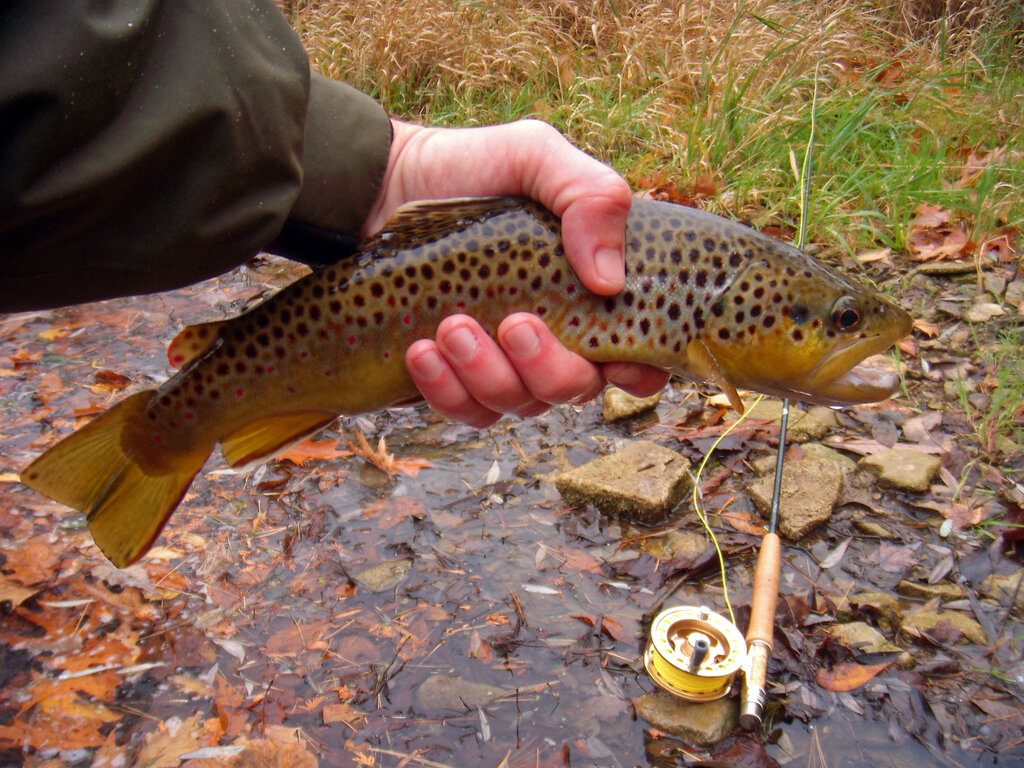
The brown trout (Salmo trutta) is a master of camouflage. Its color varies widely depending on its environment, ranging from silvery to a deep, brassy brown. Its body is covered in dark spots, often surrounded by lighter halos. Some spots, particularly along the sides, are a striking red or orange.
Originally from Europe, North Africa, and western Asia, the brown trout was introduced to North America in the 1880s. It has since established wild, self-sustaining populations across the continent and in many other parts of the world, often thriving in waters where native species have struggled.
Brook Trout
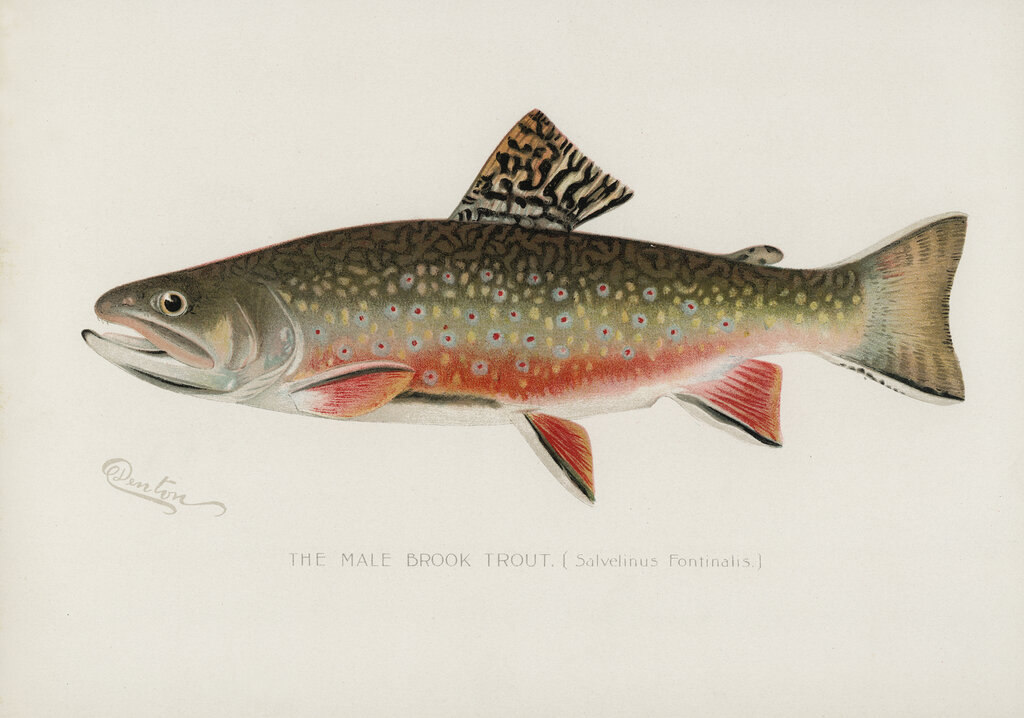
Despite its name, the brook trout (Salvelinus fontinalis) is technically not a trout. It’s a char. The key difference is in its coloration. While true trout have dark spots on a lighter body, char have light spots on a darker body.
The brook trout is one of the most colorful freshwater fish. Its back features a beautiful, worm-like pattern called vermiculation, which breaks up its outline from above. Its sides are sprinkled with red spots inside bright blue halos, and its lower fins are trimmed with a sharp, white edge. This fish is native to eastern North America, from small streams to large lakes.
Cutthroat Trout
The cutthroat trout (Oncorhynchus clarkii) gets its name from the distinctive red or orange slash marks on the underside of its jaw. This is the surest way to identify one. Its body color can be golden, gray, or green, and like the rainbow trout, it is part of the Pacific trout genus.
Native to the cold waters of western North America, the cutthroat is the most diverse trout species on the continent, with over a dozen recognized subspecies. Each subspecies is adapted to its specific watershed, from the coastal rainforests of the Pacific Northwest to the high-elevation streams of the Rocky Mountains.
An Interconnected Family Tree
These four fish highlight the diversity within the salmonid family. Evolutionary history places them in different branches of the family tree. The rainbow and cutthroat trout are both in the genus Oncorhynchus, making them more closely related to each other and to Pacific salmon.
The brown trout belongs to the genus Salmo, the same group as the Atlantic salmon. The brook trout, a char, is in the genus Salvelinus. Genetic studies show that the Salmo and Oncorhynchus genera are more closely related to each other than either is to Salvelinus. This branching pattern shows how different groups evolved after splitting from a common ancestor millions of years ago.
This quick look at just four species reveals the incredible variety among fish we call trout. Each one is a unique product of its evolutionary journey, shaped by the waters it calls home.