Exploring the World of Cores
Introduction to Core Concepts
What is a Core?
The word 'core' pops up in many different fields, from geology to computer science. While the specifics change, the basic idea stays the same. A core is the central, innermost, or most important part of something. Think of an apple. The core is the part in the middle that holds the seeds, the very essence of a future apple tree.
core
noun
The central or most important part of something.
This simple concept of a central, essential part helps us understand complex systems in the natural world and in the technology we build. Let's look at a few examples.
The Core of a Planet
In geology, the core is the very center of a planet. Earth, for instance, has a core made mostly of iron and nickel. It's the densest and hottest part of our world, a massive ball of metal right beneath our feet. This geological core is not just a passive lump; its dynamics generate Earth's magnetic field, which protects us from harmful solar radiation.
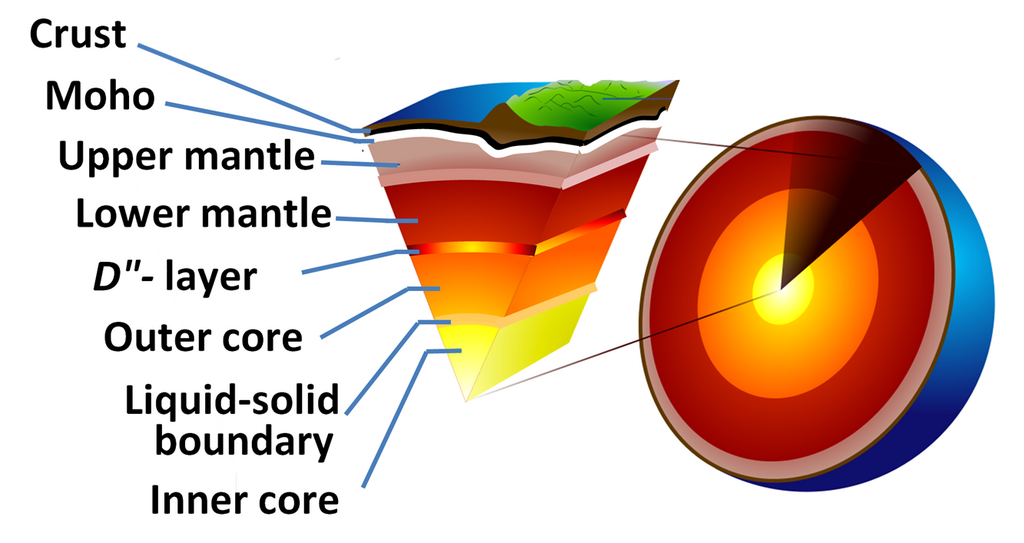
Just like the apple core contains the seeds, a planet's core is fundamental to its structure and behavior. It's the anchor around which all other layers—the mantle and the crust—are formed.
The Core of an Atom
Shrinking down to a microscopic scale, we find cores in physics as well. Every atom, the basic building block of matter, has a core. This is called the nucleus. The nucleus is a tiny, dense region at the center of the atom containing protons and neutrons. Almost all of an atom's mass is packed into this small core.
The electrons of the atom buzz around this central core. The properties of the nucleus, such as the number of protons it contains, determine what element the atom is. A core with one proton is hydrogen; a core with six protons is carbon. The core defines the atom's identity.
The Core of a Computer
In the world of technology, the term 'core' refers to the processing unit of a computer's central processing unit (CPU). A core is essentially the 'brain' of the CPU. It receives instructions and performs calculations to carry them out. For a long time, CPUs had only one core.
Today, most computers have multi-core processors. This means the CPU has two, four, eight, or even more cores. Each core can work on a different task simultaneously, making the computer much faster and more efficient at multitasking.
Whether it's at the center of a planet, an atom, or a processor, the concept of a core remains consistent. It is the fundamental, central component that defines the system and enables its function.
According to the text, what is the most consistent and fundamental meaning of the word 'core' across different fields?
What crucial function for life on Earth is generated by the dynamics of its geological core?
From planets to processors, the idea of a 'core' helps us understand the fundamental nature of complex systems.