Exploring the World of AI Agents
Introduction to AI Agents
What Makes an AI an Agent?
You're familiar with the broad field of artificial intelligence. Now, let's focus on a specific type of AI system: an agent. Think of an agent as an autonomous entity that acts on your behalf to achieve a goal. It’s not just a passive program that waits for commands; it actively perceives its environment, makes decisions, and takes actions.
Agent
noun
An autonomous entity that perceives its environment through sensors and acts upon that environment through actuators to achieve specific goals.
A simple chatbot that only responds to predefined keywords isn't truly an agent. An AI agent is more sophisticated. Its abilities are defined by a few key characteristics.
Core Characteristics
Autonomy: An agent operates without direct human intervention. You give it a goal, and it figures out the steps to get there. A thermostat is a simple agent; you set a desired temperature (the goal), and it autonomously turns the heat or AC on and off to maintain it.
Goal Orientation: Agents are designed with a purpose. A self-driving car's primary goal is to get from point A to point B safely and efficiently. All its actions—steering, accelerating, braking—are driven by that objective.
Perception: An agent must be able to sense its environment to make informed decisions. For a self-driving car, this includes data from cameras, lidar, and GPS. For a stock-trading agent, it means perceiving market data, news feeds, and economic indicators.
This continuous loop of perceiving, thinking, and acting is what allows an agent to function effectively in a dynamic environment.
Agents in the Real World
Agents are the action-takers within larger AI systems. They are the components that interact with the world, whether digital or physical. You encounter them every day.
- Virtual Assistants: Siri and Alexa are agents. Their goal is to answer your questions or perform tasks. They perceive your voice commands and act by searching for information or controlling smart home devices.
- Video Game NPCs: The non-player characters (NPCs) in a video game are agents. Their goals might be to patrol an area or interact with the player. They perceive the player's location and actions and react accordingly.
- Supply Chain Management: An AI agent might be tasked with optimizing a company's inventory. It perceives sales data, supplier availability, and shipping times to autonomously order new stock, aiming to minimize costs and avoid shortages.
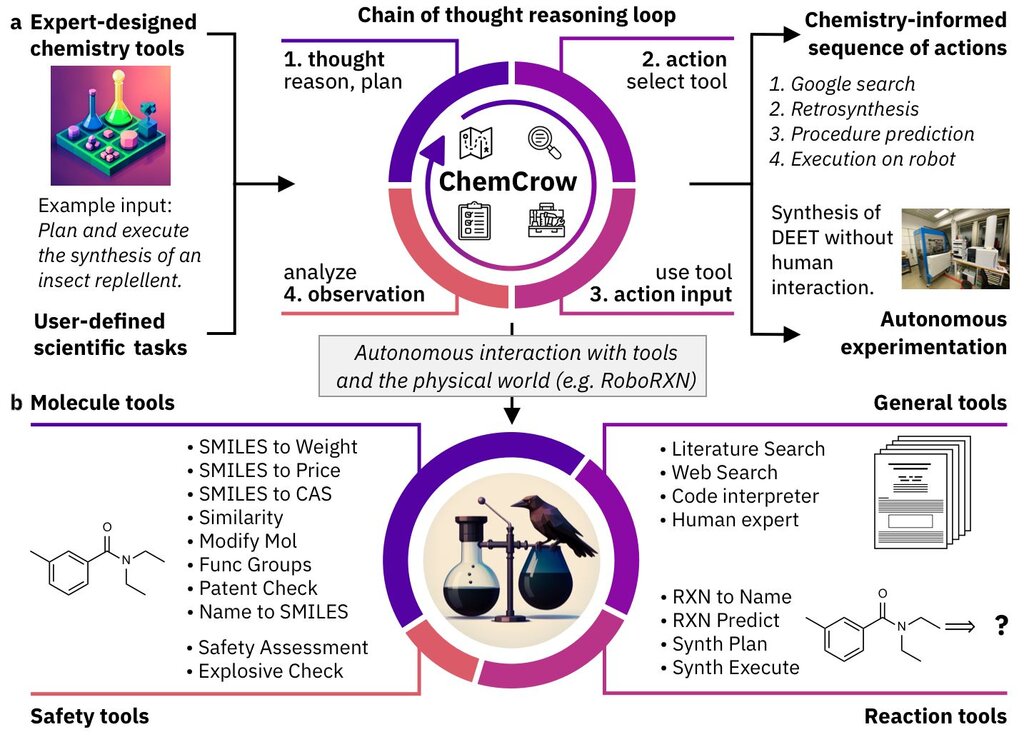
More advanced agents can tackle highly specialized goals. For example, AI agents are now being used in scientific research to autonomously design and execute experiments, accelerating the pace of discovery.
The key difference between a simple program and an agent is proactivity and autonomy. A program follows instructions; an agent pursues goals.
Now, let's check your understanding of these core concepts.
Which of the following best describes the core function of an AI agent?
A self-driving car uses cameras, lidar, and GPS to navigate traffic. Which core characteristic of an AI agent does this primarily demonstrate?
Understanding these characteristics is the first step to seeing how agents can be designed to handle increasingly complex and sophisticated tasks.