Exploring the Tarot
Introduction to Tarot
The Story in the Cards
Tarot is a deck of 78 cards, each with its own imagery and symbolism. At its core, it's a storytelling tool. The cards lay out a narrative that can help you explore complex situations, understand your own feelings, and see challenges from a new perspective. It’s less about predicting a fixed future and more about reflecting on the present moment to make empowered choices.
Tarot cards are a tool used to tap into our intuition and the collective unconscious.
Think of it as a visual language for your inner world. The images act as prompts, sparking insights and connecting you to deeper parts of yourself that you might not access in your day-to-day life.
From Game to Guidance
The journey of tarot cards didn't start with mystics in candlelit rooms. It began in the 15th century in Italy, where wealthy families commissioned artists to create elaborate decks for a card game called tarocchi. These early cards were hand-painted, expensive, and used for entertainment, not divination.
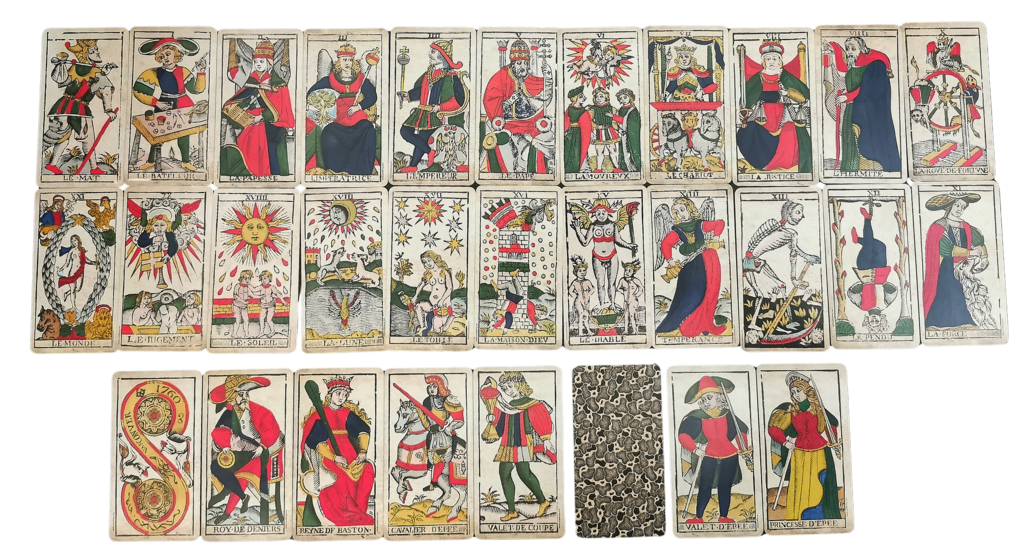
It wasn't until the late 18th century that the cards took on a more mystical role. French occultists began to connect the tarot's symbols to ancient Egyptian wisdom, Kabbalah, and other esoteric traditions. A key figure was Antoine Court de Gébelin, a French scholar who argued that the tarot held secret, ancient knowledge.
Following him, a fortune teller known as Etteilla (Jean-Baptiste Alliette) created the first tarot deck designed specifically for divination. From that point on, tarot's evolution was tied to spiritual and psychological exploration, especially with the creation of the influential Rider-Waite-Smith deck in 1909. This deck, with its fully illustrated Minor Arcana, made the cards more accessible and popular than ever before.
Anatomy of a Deck
A standard tarot deck contains 78 cards, divided into two main sections: the Major Arcana and the Minor Arcana.
Major Arcana: This consists of 22 cards, often called trump cards. They represent significant life events, spiritual lessons, and universal themes. Think of them as the major chapters in the story of a life.
This sequence is sometimes called "The Fool's Journey," depicting a soul's path from innocence (The Fool) to completion (The World).
Minor Arcana: These are the remaining 56 cards, which reflect the everyday situations, challenges, and people we encounter. They are divided into four suits, similar to a regular deck of playing cards.
| Suit | Element | Area of Life |
|---|---|---|
| Wands | Fire | Passion, creativity, action, willpower |
| Cups | Water | Emotions, relationships, intuition |
| Swords | Air | Thoughts, challenges, communication, intellect |
| Pentacles | Earth | Material world, finances, work, health |
Each suit contains ten numbered cards (Ace through 10) and four Court Cards: the Page, Knight, Queen, and King. The numbered cards typically show the progression of a situation related to their suit's theme, while the Court Cards can represent specific people, personality types, or roles we play in our lives.
Ready to test what you've learned about the fundamentals of tarot?
What was the original purpose of tarot cards when they were created in 15th-century Italy?
According to the modern understanding described, tarot is best viewed as a tool for:
Understanding the history and structure of the deck is the first step. It provides a framework for the stories the cards will tell.