Exploring the Summa Theologiae
Introduction to Thomas Aquinas
Who Was Thomas Aquinas?
Thomas Aquinas was born around 1225 in a castle in southern Italy. His family was noble and had big plans for him, likely a prestigious career as a military leader or a powerful abbot. But Aquinas had other ideas. Against his family's wishes, he chose a life of scholarship and prayer, joining the newly formed Dominican Order, a group dedicated to preaching and study.
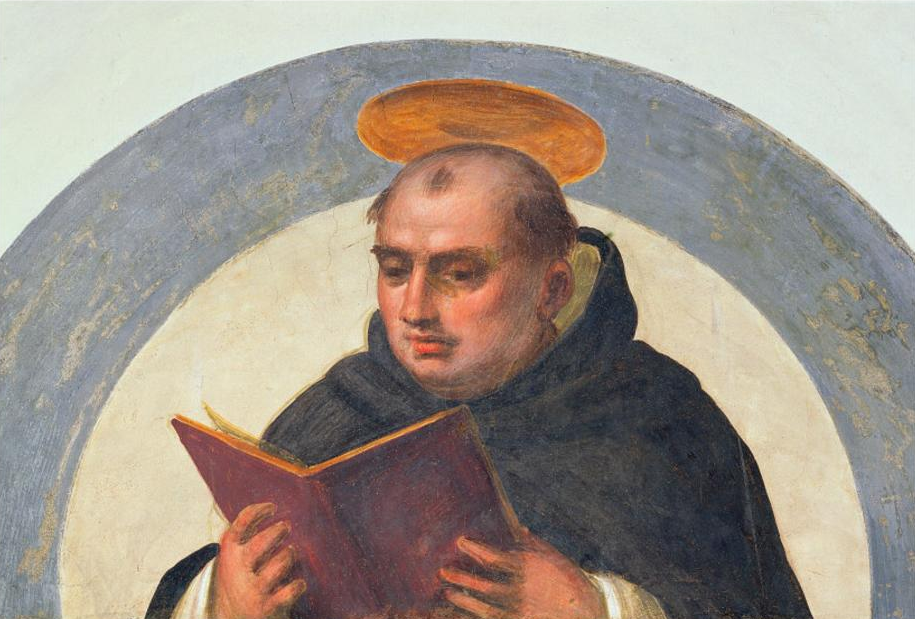
His family went to extreme lengths to change his mind, even reportedly kidnapping and imprisoning him for over a year. Their efforts failed. Aquinas remained steadfast, and eventually, he was allowed to pursue his calling.
He studied in Paris and Cologne under a brilliant thinker named Albert the Great. It was a pivotal time. Aquinas quickly became a master teacher and writer himself, spending most of his career at the University of Paris, which was the intellectual hub of Europe.
A World of Rediscovery
To understand Aquinas, you have to understand his world. The 13th century was a time of tremendous intellectual excitement in Europe. For centuries, many writings of the ancient Greek philosopher Aristotle had been lost to the West. Now, they were being rediscovered, often through Arabic translations and commentaries.
This created a major challenge. Aristotle's philosophy was a powerful system for understanding the natural world, logic, and ethics, all based on reason. How could this be reconciled with Christian faith and theology? For many, the two seemed incompatible. Aristotle's reason-based approach felt like a threat to faith-based doctrine.
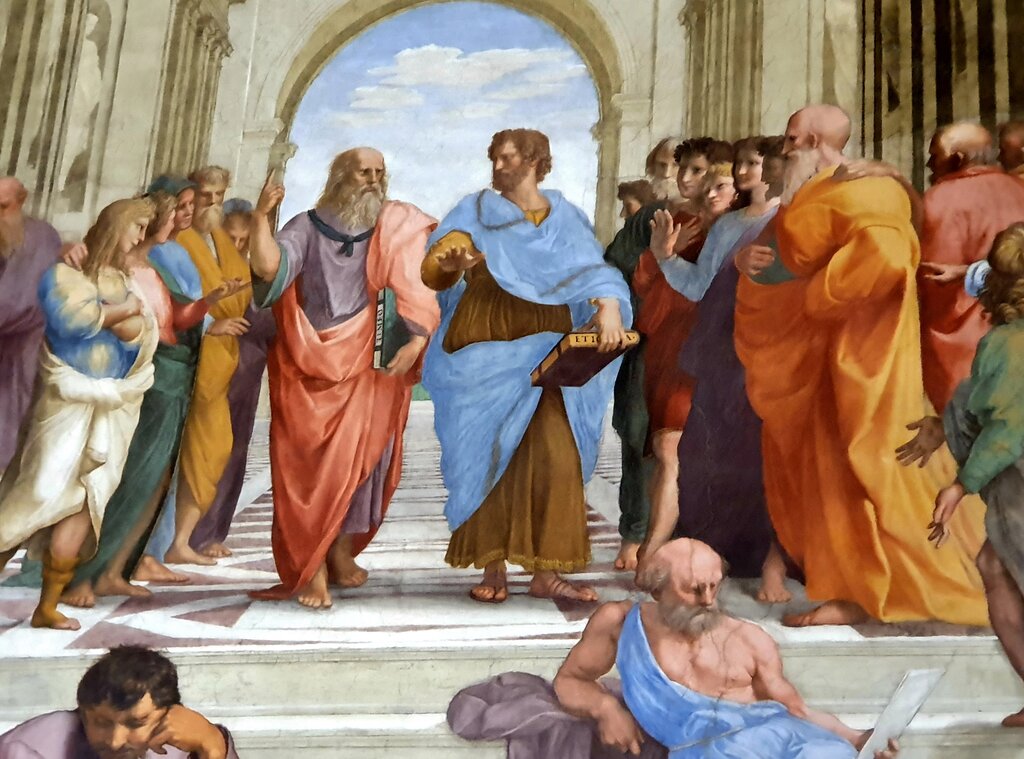
This debate raged in the newly formed universities, which were bustling centers of learning. Scholars flocked to cities like Paris to debate the biggest questions of the day. It was in this environment that a new method of thinking took hold: Scholasticism. And Thomas Aquinas would become its greatest master.
The Scholastic Method
Scholasticism wasn't a single philosophy, but a way of doing philosophy and theology. It was a method for learning and inquiry that prized logic, precision, and thoroughness. The goal was to use reason to explore and explain matters of faith.
Scholasticism
noun
A method of critical thought which dominated teaching in European universities from about 1100 to 1700. It emphasized dialectical reasoning to resolve contradictions and achieve a synthesis of knowledge.
A scholastic thinker wouldn't just state a belief. They would approach it like a detective solving a case. The typical format involved a few key steps:
-
Pose a Question: Start with a specific theological or philosophical problem, like "Does God exist?"
-
List the Objections: Systematically list all the strongest arguments against the position you intend to defend. This showed an honest engagement with opposing views.
-
State Your Position: Quote an authoritative source (like the Bible or a respected philosopher) to introduce the position you will argue for.
-
Give Your Argument: This is the core of the work. Here, the author lays out their own detailed, logical argument, step by step, to prove their case.
-
Reply to the Objections: Finally, go back to each objection listed in step two and refute it, showing why it is flawed or mistaken.
This rigorous method forced thinkers to be incredibly clear and to anticipate counterarguments. It was a structured debate on paper, designed to arrive at the most reasoned conclusion possible.
Aquinas's Major Works
Aquinas wrote an astonishing amount during his life, from commentaries on the Bible and Aristotle to short essays on specific topics. His most famous works are two massive summaries of theology, or summae.
The Summa contra Gentiles was written as a manual for missionaries, aiming to explain Christian faith on rational grounds to those who did not share it, particularly Muslims and Jews. It relies heavily on arguments from reason and philosophy.
His magnum opus, however, is the Summa Theologiae (Summary of Theology). This colossal work was intended as a comprehensive instructional guide for theology students. It uses the scholastic method to address virtually every major question of Christian theology, from the nature of God and the act of creation to morality and the person of Christ.
Its influence on Western thought is hard to overstate. In it, Aquinas masterfully synthesizes Christian doctrine with the philosophical rigor of Aristotle, arguing that faith and reason are not enemies. Instead, they are two different paths leading to the same truth.
His work built a bridge between the world of ancient Greek reason and the world of medieval Christian faith, creating a powerful intellectual framework that would shape philosophy and theology for centuries to come.
Ready to check your understanding?
What path did Thomas Aquinas choose for his life, against the wishes of his noble family?
The rediscovery of Aristotle's writings in the 13th century created a major intellectual challenge. What was the central conflict for thinkers like Aquinas?
Aquinas's life and the intellectual world he inhabited set the stage for his groundbreaking work. By embracing reason as a partner to faith, he provided a new and enduring way to explore the biggest questions of existence.