Exploring the States of Matter
States of Matter
The Four States of Matter
Everything around you is made of matter, from the chair you're sitting on to the air you're breathing. But matter isn't always the same. Depending on conditions like temperature and pressure, it can exist in different forms, or states. The most common states you'll encounter are solid, liquid, and gas. A fourth state, plasma, is the most abundant in the universe.
The state of matter is determined by how its particles—atoms or molecules—are arranged and how they move.
Solids, Liquids, and Gases
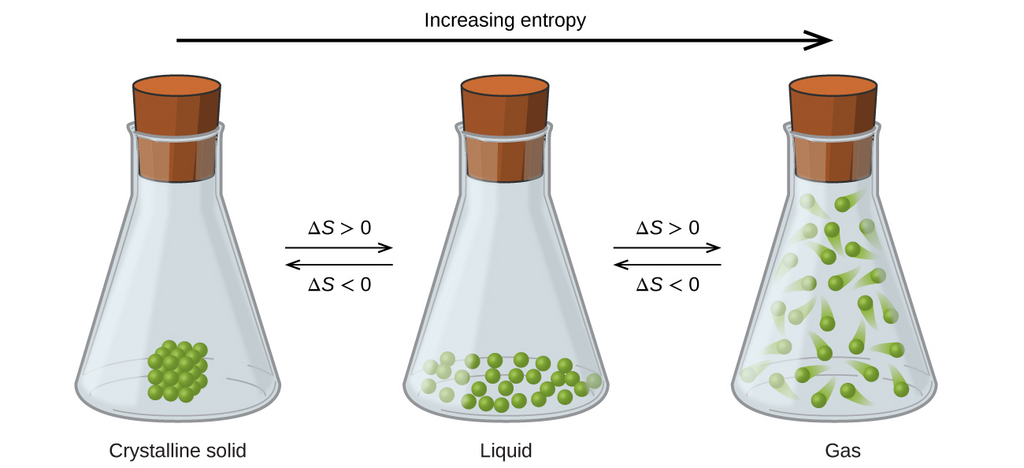
Let's start with the three states we see every day. A solid has a definite shape and a definite volume. Think of an ice cube. No matter where you put it, it stays an ice cube. Its particles are packed tightly in a fixed pattern, vibrating in place but not moving around.
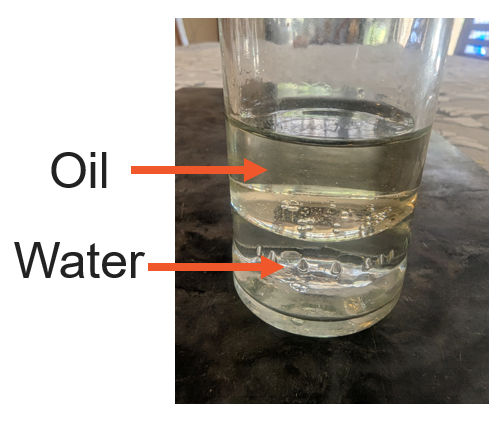
A liquid, on the other hand, has a definite volume but no definite shape. If you pour a liter of water from a tall glass into a wide bowl, you still have a liter of water, but it now takes the shape of the bowl. The particles in a liquid are close together but can slide past one another, allowing the liquid to flow.
Finally, a gas has neither a definite shape nor a definite volume. It will expand to fill any container it's in. The air in a room fills the entire room. If you release it from a scuba tank, it will spread out into the surrounding atmosphere. Gas particles are far apart and move around randomly and rapidly.
Plasma, the Star Stuff
The fourth fundamental state of matter is plasma. While less common on Earth, it's actually the most common state in the universe. Stars, including our sun, are made of plasma.
So, what is it? Plasma is a lot like a gas, but with a crucial difference. In a gas, the atoms are whole, with electrons orbiting the nucleus. To create plasma, you need to add a lot of energy—usually in the form of extreme heat. This energy is so intense that it strips the electrons away from their atoms. This process is called ionization.
Plasma is an ionized gas, a superheated soup of free-floating electrons and positively charged ions.
Because it's made of charged particles, plasma behaves very differently from a neutral gas. For example, it can conduct electricity and is strongly affected by magnetic fields. These unique properties are what allow stars to generate immense energy and what scientists are trying to harness for fusion power here on Earth.
Ready to check your understanding? Let's review what we've covered.
A substance takes the shape of its container but has a constant, definite volume. In which state of matter is this substance?
Which statement best describes the arrangement and movement of particles in a solid?
These four states—solid, liquid, gas, and plasma—are the fundamental building blocks for understanding the physical world.