Exploring the Numicon System
Introduction to Numicon
Numbers You Can Touch
Numbers can feel like ghosts. You can write the symbol '4' and say the word "four," but you can't hold it in your hand. This abstract nature of math is often the first hurdle for young children. How do you explain what a number is to someone who is still learning about the physical world around them?
Numicon is a hands-on, visual math program developed by Oxford University to help young learners understand numbers through shapes, patterns, and play.
This is where the Numicon system comes in. It's a multi-sensory approach designed to make numbers concrete. Instead of just symbols on a page, numbers are represented by distinct, colorful shapes. Each shape has a certain number of holes, corresponding to the number it represents. The shape for one has one hole, the shape for two has two holes, and so on, up to ten.
This structured imagery is key. Children can see that the '4' shape is one bigger than the '3' shape. They can feel the difference in weight and size. They can fit the '1' shape and the '3' shape together to perfectly match the '4' shape. Suddenly, addition isn't an abstract rule; it's a physical puzzle they can solve.
More Than Just Blocks
While the physical manipulatives are central, Numicon is built on a few core principles that go beyond playing with blocks.
The first is communication. The system encourages children to talk about what they're doing. They learn to describe numbers, explain how they solved a problem, and use mathematical language naturally. Instead of just finding an answer, they explore the why behind it.
By talking about numbers and their relationships, children build a deeper, more flexible understanding of math.
The second principle is exploring relationships. Because the shapes have a consistent structure, children begin to see patterns everywhere. Odd numbers have a piece that sticks out. Even numbers are rectangular. The '8' shape is just two '4' shapes. These discoveries, made through hands-on play, form the foundation for understanding concepts like multiplication and division later on.
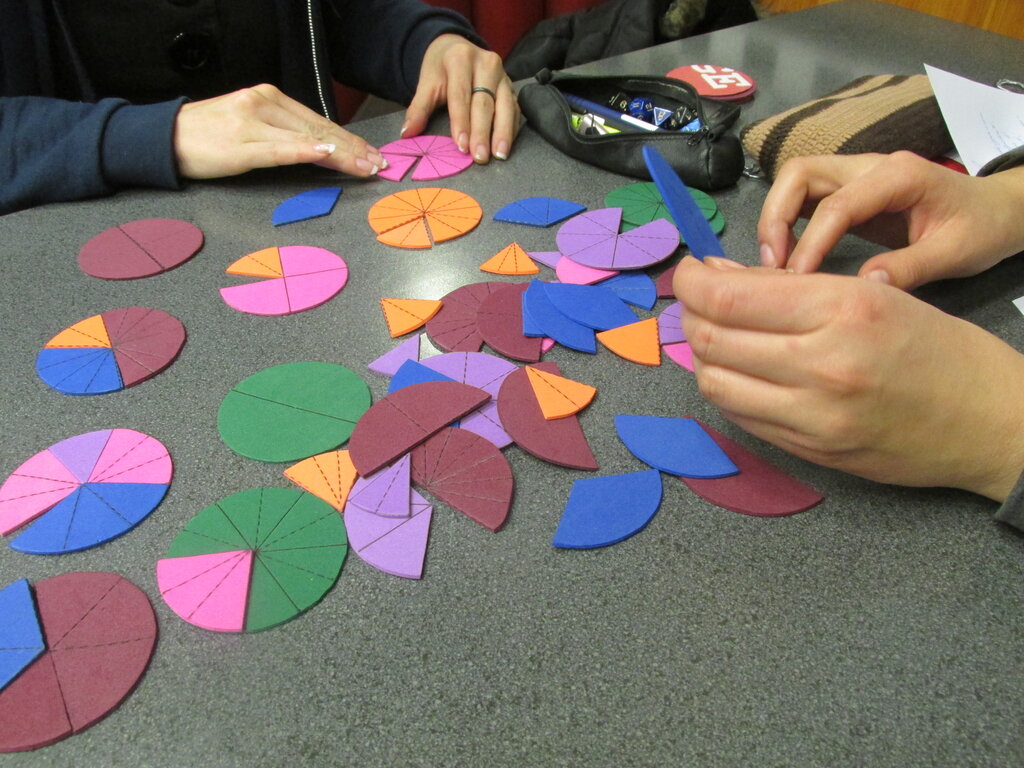
Finally, the goal is generalization. After working with the physical shapes, children move to pictorial representations and then to the abstract numbers themselves. The physical experience provides a mental anchor, helping them grasp that the symbol '5' represents the same quantity as the five-shape they held in their hands. This journey from concrete to abstract builds a robust number sense, which is the intuitive understanding of numbers and their relationships.
Now let's test your understanding of these core ideas.
What is the primary challenge in early mathematics that the Numicon system is designed to address?
According to the Numicon approach, how might a child physically discover that 3 + 4 = 7?
In short, Numicon helps children build a mental picture of what numbers look like, making math less about memorization and more about understanding.