Exploring the Landscape of AI Tools
AI Tool Landscape
From Theory to Toolbox
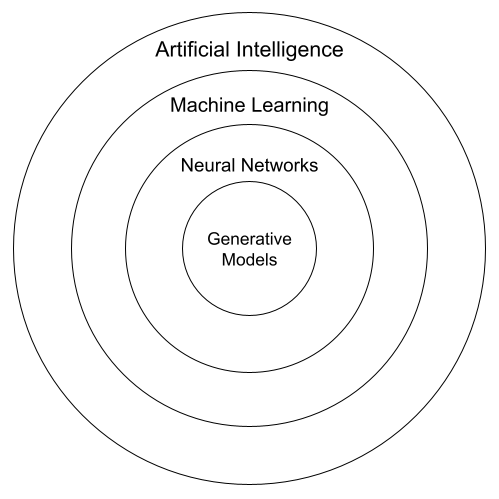
You understand the building blocks of artificial intelligence like machine learning and neural networks. But how do these concepts jump from theory into the real world? They become AI tools. An AI tool is a practical application of AI models and algorithms, packaged to solve a specific problem or perform a particular task. Think of it this way: knowing the principles of aerodynamics is different from flying a plane. The plane is the tool that puts the theory into action.
AI tools are the bridge between abstract concepts and tangible results. They take the complex inner workings of a particular and wrap it in an interface that lets you generate text, analyse data, or create an image. This is why the AI landscape is so vast and varied. There isn't one single “AI” you can use for everything.
Different problems demand different kinds of thinking, and the same is true for AI. An algorithm designed to predict stock market trends is fundamentally different from one that can write a poem. This specialisation is what makes the field so powerful. Each tool is a specialist, honed for a specific domain.
A Map of the AI World
To make sense of the thousands of tools available, it helps to group them by what they do. While there are many ways to categorise them, most AI tools fall into a few broad functional areas.
| Category | Primary Function | Common Examples |
|---|---|---|
| Generative AI | Creating new content | Writing assistants, image generators, code completion tools |
| Analytical AI | Finding patterns and insights in data | Business intelligence dashboards, predictive analytics software, fraud detection systems |
| Interactive AI | Engaging in human-like conversation | Chatbots, voice assistants, customer service bots |
| Functional AI | Automating processes and tasks | Robotic process automation (RPA), smart home devices, autonomous vehicles |
These categories aren't mutually exclusive. A sophisticated customer service tool might use interactive AI to chat with a user, analytical AI to understand their purchase history, and generative AI to draft a helpful email response. The lines often blur, but thinking in these categories helps navigate the options.
Enhancing Human Capability
Ultimately, AI tools are amplifiers. They extend our own abilities, allowing us to work faster, find insights we might have missed, and explore creative avenues that were previously impractical. A designer can use an image generator to brainstorm dozens of concepts in minutes. A scientist can use an analytical tool to sift through massive datasets to find correlations that would take a human lifetime to spot.
This is where foundational concepts like (NLP) become tangible. The theory of NLP powers the interactive chatbots and generative text assistants we use every day. Similarly, the principles of computer vision are what allow functional AI tools to identify objects in the real world, from a self-driving car navigating traffic to a quality control system on a factory line.
The goal isn't to replace human intelligence, but to augment it. AI tools handle the repetitive, the complex, and the time-consuming, freeing up our cognitive resources for strategy, creativity, and critical thinking.
As you continue, we'll move from this high-level map to exploring the specific continents and countries within it. Understanding these broad categories is the first step toward choosing the right tool for the right job.