Exploring the Human Brain's Complexity
Neural Communication
The Brain's Chemical Conversation
Neurons are the superstars of the nervous system, but they don't work alone. For the brain to do anything, from breathing to solving a puzzle, its billions of neurons must communicate with each other. They pass messages in a relay race of electrical and chemical signals. The critical handover point in this race is a microscopic space called the synapse.
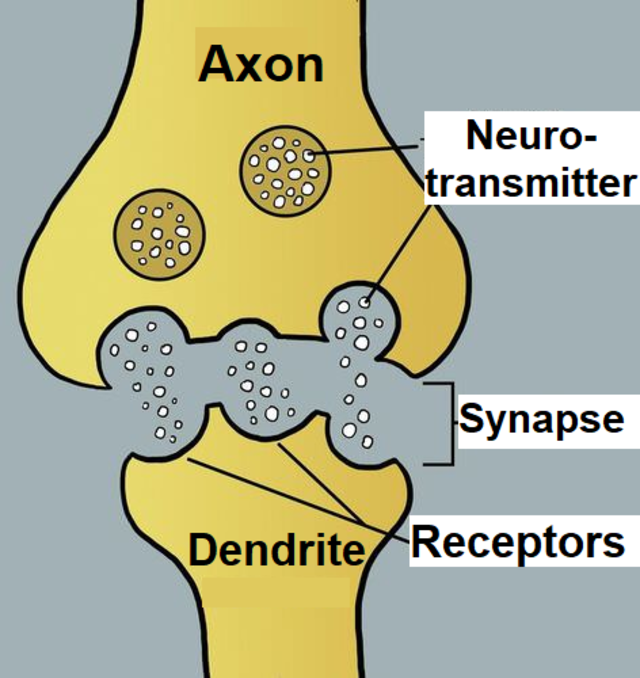
The synapse isn't a physical connection. It's a tiny gap, the synaptic cleft, separating the axon terminal of one neuron (the presynaptic neuron) from the dendrite of another (the postsynaptic neuron). Since the electrical impulse, or action potential, can't jump this gap, the neuron sending the signal converts it into a chemical one.
Crossing the Gap
The process of crossing this synaptic gap is called synaptic transmission. It happens in a few lightning-fast steps.
First, an action potential travels down the axon and reaches the axon terminal. This electrical jolt acts like a key, opening special channels that allow calcium ions to flood into the terminal. This influx of calcium is the trigger.
In response, tiny sacs called synaptic vesicles, which are filled with chemical messengers called neurotransmitters, move toward the edge of the axon terminal. They fuse with the cell membrane and release their contents into the synaptic cleft.
These neurotransmitter molecules drift across the tiny gap. On the other side, the postsynaptic neuron is studded with receptors, which are specialized proteins. Each receptor is shaped to fit a specific neurotransmitter, like a lock and key.
When a neurotransmitter binds to its receptor, it causes a change in the postsynaptic neuron. It might open an ion channel, causing the neuron to become excited and more likely to fire its own action potential. Or, it could have the opposite effect, inhibiting the neuron and making it less likely to fire. This entire sequence, from electrical signal to chemical release to a new electrical signal, happens in less than a thousandth of a second.
Once the message is delivered, the neurotransmitters are cleared from the synapse to end the signal. They might be broken down by enzymes, reabsorbed by the presynaptic neuron (a process called reuptake), or simply diffuse away.
Meet the Messengers
Neurotransmitters aren't a one-size-fits-all solution. There are over 100 known types, each with a unique role in shaping our thoughts, emotions, and actions. They can be broadly categorized as either excitatory or inhibitory.
- Excitatory neurotransmitters rev up the brain, encouraging neurons to fire. They're the gas pedal of the nervous system.
- Inhibitory neurotransmitters calm things down, preventing neurons from firing. They act as the brakes.
The balance between these two types of signals is crucial for a properly functioning nervous system. Let's look at some of the most important players.
| Neurotransmitter | Primary Role | Type | Associated With |
|---|---|---|---|
| Glutamate | Excitation | Excitatory | Learning, Memory |
| GABA | Inhibition | Inhibitory | Calming, Sleep |
| Dopamine | Reward, Movement | Both | Motivation, Focus |
| Serotonin | Mood Regulation | Inhibitory | Happiness, Sleep |
| Acetylcholine | Muscle Contraction | Excitatory | Attention, Memory |
Glutamate is the most common excitatory neurotransmitter in the brain. It's essential for learning and forming new memories. Think of it as the brain's main 'on' switch.
Conversely, GABA (gamma-aminobutyric acid) is the primary inhibitory neurotransmitter. It helps to reduce neuronal excitability, producing a calming effect. Many anti-anxiety medications work by enhancing the effects of GABA.
Dopamine is famous for its role in the brain's reward system. It's released when we experience something pleasurable, motivating us to repeat the behavior. It's also critical for controlling voluntary movement.
Serotonin is often called the 'feel-good' chemical because of its significant impact on mood, well-being, and happiness. It also helps regulate the sleep-wake cycle and appetite.
Acetylcholine was the very first neurotransmitter discovered. It plays a key role at the neuromuscular junction, where it triggers muscle contraction, but it's also important for attention and memory within the brain.
The delicate balance of these chemical messengers is vital for mental and physical health. When neurotransmitter levels are too high or too low, it can lead to a wide range of issues. For instance, low levels of serotonin are linked to depression and anxiety, while the loss of dopamine-producing neurons is the hallmark of Parkinson's disease.
What is the primary function of the synapse in the nervous system?
What is the immediate trigger for synaptic vesicles to release neurotransmitters into the synaptic cleft?
This intricate dance of chemicals across synapses is the foundation of every thought and action. It's how the brain processes information, forms memories, and orchestrates our entire experience of the world.