Exploring the Forms of Energy
Introduction to Energy
What is Energy?
Everything that happens in the universe, from a star exploding to a person blinking, involves energy. But what is it? At its core, energy is the ability to cause change or do work.
In physics, work is done when a force acts on an object and causes it to move. Pushing a box across the floor is work. Lifting a weight is work. Energy is what you need to make it happen.
While there are many forms of energy, they all fall into two main categories: energy of motion and stored energy. These are known as kinetic and potential energy.
Energy in Motion
Anything that is moving has kinetic energy. The faster an object moves, the more kinetic energy it has. The more massive an object is, the more kinetic energy it has, too. A bowling ball rolling down the lane has kinetic energy. So does a feather drifting in the wind, though the bowling ball has much more.
Kinetic Energy
adjective
The energy an object possesses due to its motion.
We can calculate kinetic energy with a simple formula that relates an object's mass () and its velocity ().
Notice that velocity is squared in the equation. This means that an object's speed has a much bigger impact on its kinetic energy than its mass. If you double the mass of an object, you double its kinetic energy. But if you double its speed, you quadruple its kinetic energy.
Stored Energy
The second category is potential energy. This is energy that is stored, ready to be used. It’s called potential energy because it has the potential to be converted into other forms of energy, like kinetic energy.
Potential Energy
adjective
The energy an object has because of its position or state.
A common type of potential energy is gravitational potential energy. This is the energy an object has due to its height in a gravitational field. A book sitting on a high shelf has more gravitational potential energy than the same book on a low shelf. A roller coaster car at the very top of a hill is packed with potential energy.
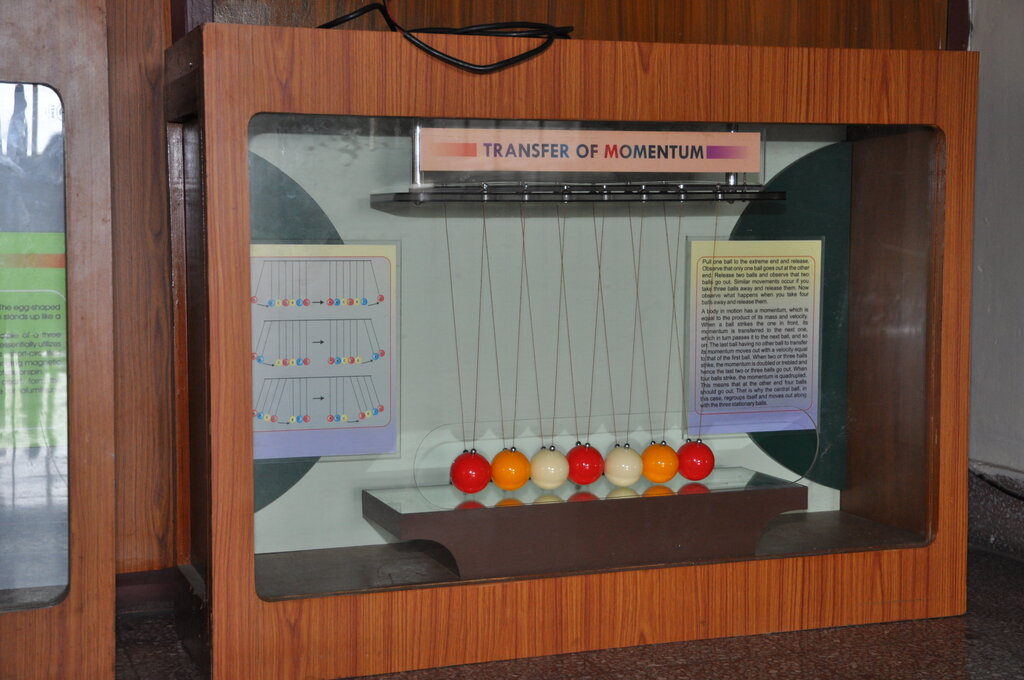
The formula for gravitational potential energy depends on the object's mass (), the acceleration due to gravity (), and its height ().
This formula tells us that the higher an object is, and the more massive it is, the more stored energy it has. If that book falls off the high shelf, its potential energy will be converted into kinetic energy as it picks up speed on its way down.
Kinetic and potential energy are two sides of the same coin. One is about doing, and the other is about the possibility of doing.
At its most fundamental level, what is energy?
A roller coaster car paused at the very top of its highest hill is an example of what primary form of energy?
Understanding these two fundamental types of energy is the first step in exploring the physics of how our world works.