Exploring the Epistle to the Ephesians
Introduction to Ephesians
Who Wrote Ephesians?
The letter to the Ephesians opens by naming the apostle Paul as its author. For centuries, this was accepted without question. Paul had a deep connection to Ephesus, a bustling city in what is now Turkey. He lived and taught there for over two years, establishing a thriving Christian community.
However, modern scholars debate whether Paul himself wrote it. The writing style and vocabulary in Ephesians are different from letters we are certain Paul wrote, like Romans or 1 Corinthians. It has a more formal, almost hymn-like quality. The theological focus is also slightly different, emphasizing the universal Church—the collective body of all believers—more than the specific struggles of a local congregation.
Some suggest a disciple of Paul wrote the letter after his death, capturing the essence of his teachings for a new generation. This was a common practice in the ancient world and wasn't seen as deceptive. Regardless of who held the pen, the letter is deeply rooted in Pauline thought and was accepted into the New Testament for its powerful message.
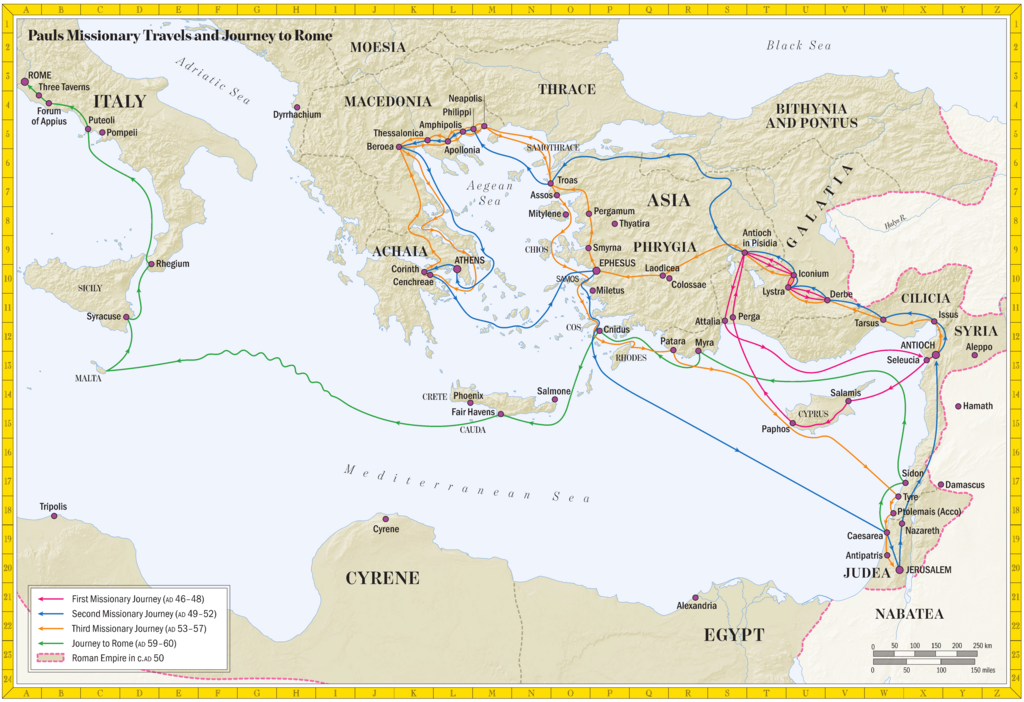
The World of Ephesus
To understand Ephesians, you have to understand the city of Ephesus. In the first century, it was a major port and a vibrant center of commerce, politics, and religion in the Roman province of Asia. People from all over the Mediterranean world passed through its streets.
The city's identity was dominated by the Temple of Artemis (also known by the Roman name, Diana), one of the Seven Wonders of the Ancient World. This massive temple was a major pilgrimage site and a powerful economic engine. The worship of Artemis, along with dozens of other pagan gods and the Roman emperor, was woven into the fabric of daily life.

For the early Christians in Ephesus, this was a challenging environment. They were a tiny minority in a sea of paganism. Refusing to participate in civic festivals honoring other gods or in the imperial cult could lead to social isolation and suspicion. They were charting a new identity, separate from the dominant culture that surrounded them.
Purpose of the Letter
Unlike many of Paul's other letters, Ephesians doesn't seem to address a specific crisis or controversy. Instead, it reads more like a sermon or a circular letter, meant to be shared among several churches in the region.
The letter's primary purpose is to broaden the believers' understanding of God's cosmic plan. It paints a grand picture of what God has accomplished through Jesus Christ. A central theme is unity: the breaking down of the wall that separated Jews and Gentiles, uniting them into one new body, the Church.
Ephesians reminds its readers—mostly non-Jewish converts—of their new identity. They were once outsiders, but now they are full members of God's household. The letter aims to build their confidence and give them a sense of belonging to something vast, eternal, and divinely orchestrated.
The letter reassures a small, culturally pressured community that they are part of God's grand, universe-spanning purpose.
This focus makes Ephesians a unique and vital part of the New Testament. It offers a soaring vision of the Church's identity and its role in the world, a message that resonated deeply with its original audience and continues to inspire readers today.
Why do some modern scholars question whether the apostle Paul wrote the letter to the Ephesians?
What was the most prominent religious feature of the city of Ephesus during the first century?