Exploring the English Language
Origins of English
Germanic Roots
The story of English begins after the Roman Empire pulled out of Britain in the early 5th century. With the Romans gone, the island became vulnerable to seafaring groups from Northern Europe.
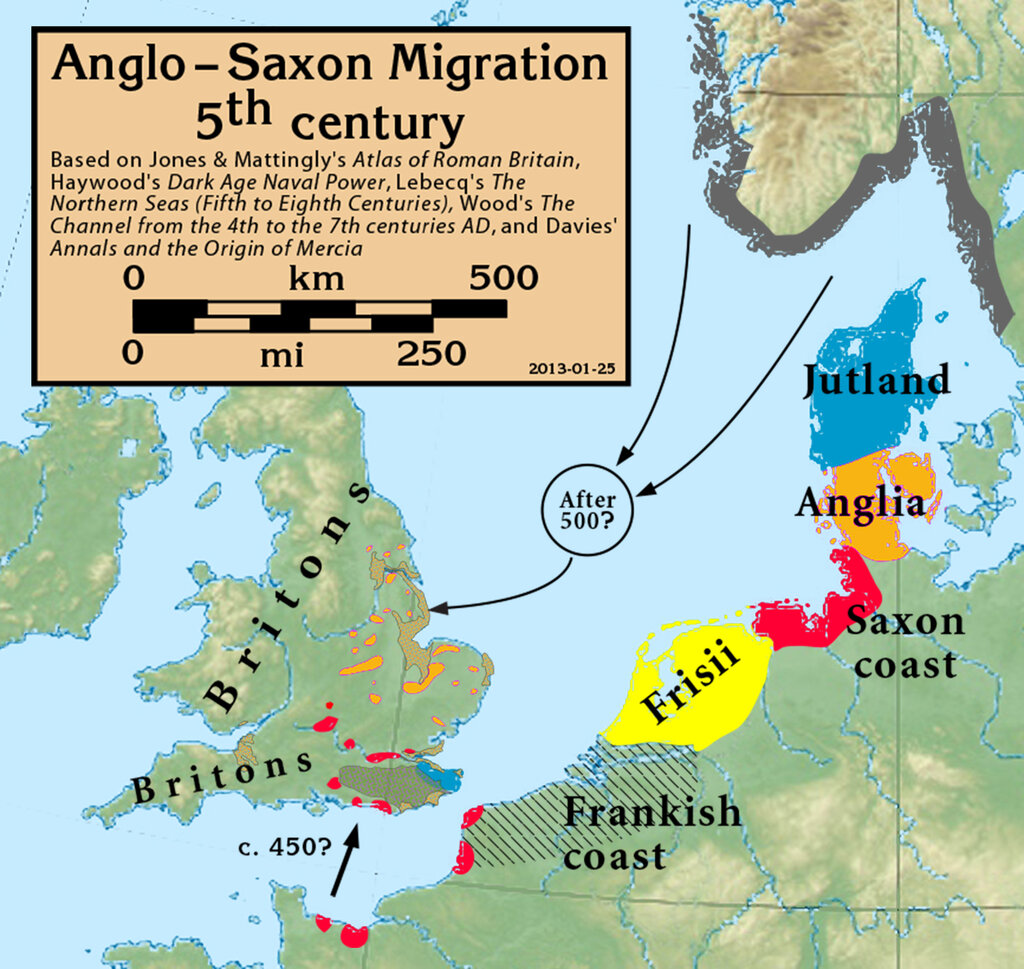
These groups, primarily the Angles, Saxons, and Jutes, came from what is now Denmark and northern Germany. They brought their West Germanic dialects with them. Over time, these dialects merged in their new home, creating a distinct language: Old English, or Anglo-Saxon.
This wasn't a single, uniform language. It had several dialects, corresponding to the different kingdoms the settlers established. The language of this period is almost unrecognizable to modern English speakers. It had a complex grammar with noun cases and gendered nouns, similar to modern German.
## Old English Example (Beowulf)
Hwæt! We Gardena in geardagum,
þeodcyninga, þrym gefrunon,
hu ða æþelingas ellen fremedon.
Viking Visitors
Starting in the late 8th century, a new group arrived: the Vikings. These Norsemen, speakers of Old Norse, began raiding and eventually settling large parts of England, particularly in the north and east. This area became known as the Danelaw.
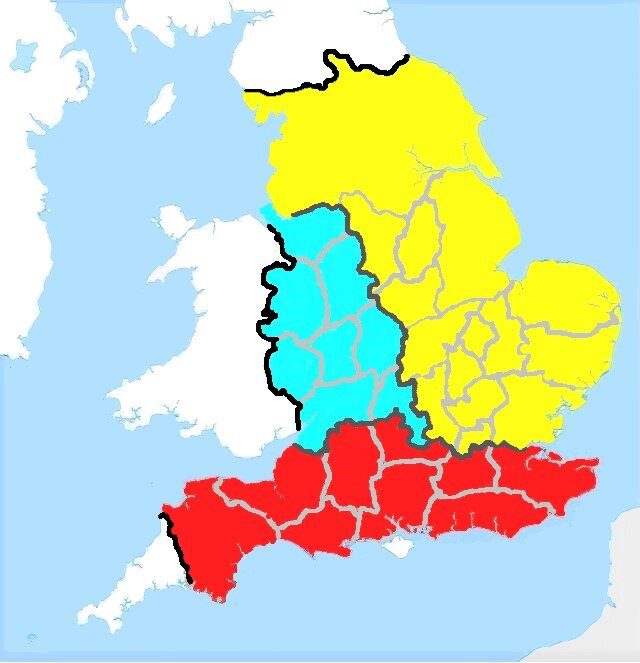
The Vikings didn't replace Old English. Instead, the two languages coexisted and mixed. Since Old English and Old Norse were related Germanic languages, they shared many basic words. But where they differed, English often borrowed from the Norse. This contact had a profound effect on the language.
Many core words in our vocabulary come from Old Norse, including sky, skin, leg, give, and take. Even pronouns like they, them, and their are Norse borrowings that replaced their Old English counterparts.
The interaction also helped simplify English grammar. As speakers of the two languages tried to communicate, the complex noun endings of Old English began to fall away, with word order and prepositions becoming more important for conveying meaning.
The Norman Conquest
The single most transformative event in the history of English happened in 1066. William, Duke of Normandy (a region in France), invaded England and seized the throne. This Norman Conquest brought a French-speaking ruling class to England.
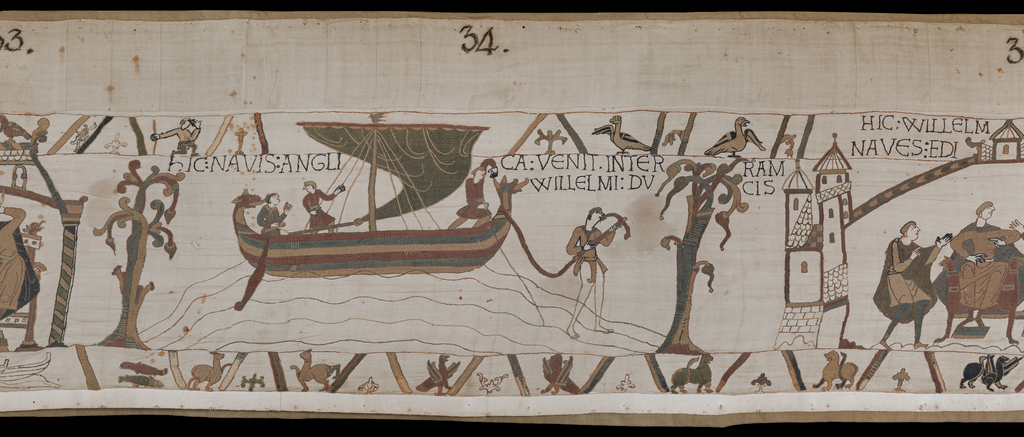
William the Conqueror and his band of Normans brought with them Norman French, which became the language of the court, government and the upper class for the next three centuries.
For the next 300 years, England was a country with a linguistic split. The aristocracy, the courts, and the government used Anglo-Norman French. The common people continued to speak English. Latin remained the language of the church and scholarship.
This divide set the stage for a massive influx of French words into English. While the common folk kept the simple, everyday words of Germanic origin, words related to power, law, fashion, art, and cuisine were adopted from French. This is why we have pairs of words like cow (from Old English) but beef (from French), or pig and pork.
| Anglo-Saxon Origin | Norman-French Origin |
|---|---|
| house | mansion |
| ask | demand |
| holy | sacred |
| kingly | royal |
| sheep | mutton |
The combination of a simplified Germanic grammar from the Old English and Norse period, plus this enormous new vocabulary from French, created a new form of the language. Old English was gone. The era of Middle English had begun.
Now, let's test your understanding of how English evolved.
Which group of invaders brought their West Germanic dialects to Britain, which would eventually form the basis of Old English?
The interaction between Old English and Old Norse speakers, particularly in the Danelaw, had what major effect on the language?
The English we speak today is a hybrid, a testament to centuries of migration, invasion, and cultural exchange. Its grammar is fundamentally Germanic, but its vocabulary is a rich tapestry woven with threads from French, Norse, and Latin.