Exploring the Dinosaur Eras
Introduction to the Mesozoic Era
The Age of Reptiles
The Mesozoic Era was a vast stretch of time, lasting from about 252 to 66 million years ago. It's famously known as the 'Age of Dinosaurs,' but it was also a period of dramatic geological and climatic change that reshaped the entire planet. This era is divided into three distinct periods, each with its own unique character.
The three periods of the Mesozoic Era are:
- Triassic Period
- Jurassic Period
- Cretaceous Period
Together, these three periods tell the story of a world in motion. The continents were not where they are today. At the start of the Mesozoic, they were fused into a single, massive supercontinent.
A World Drifting Apart
At the dawn of the Triassic period, nearly all of Earth's landmass was clumped together in a supercontinent called Pangaea. This created a world with immense deserts in its interior and a single global ocean, Panthalassa, surrounding it.
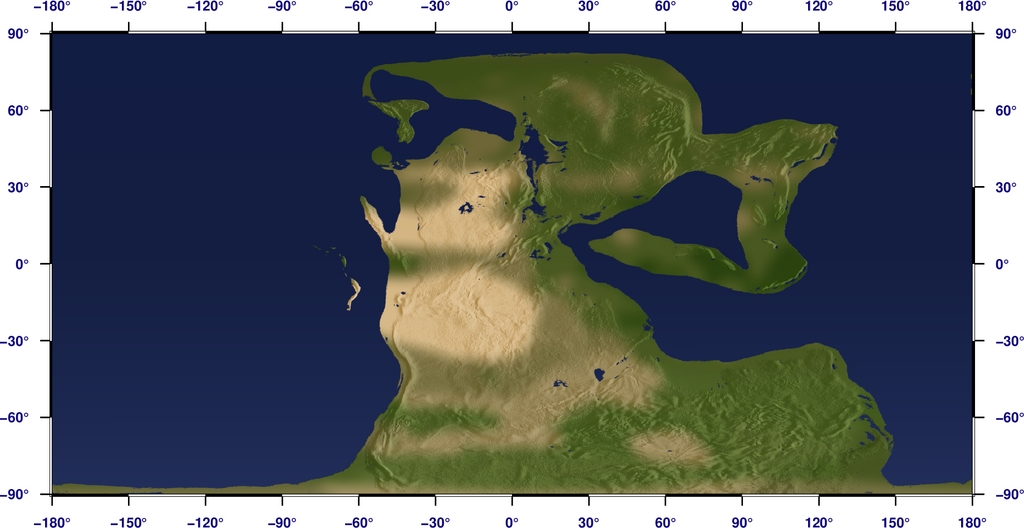
But this giant landmass didn't last. Deep within the Earth, tectonic forces began to pull Pangaea apart. This process of rifting started during the Triassic and continued throughout the Mesozoic. Huge cracks formed in the crust, and magma welled up to create new seafloor.
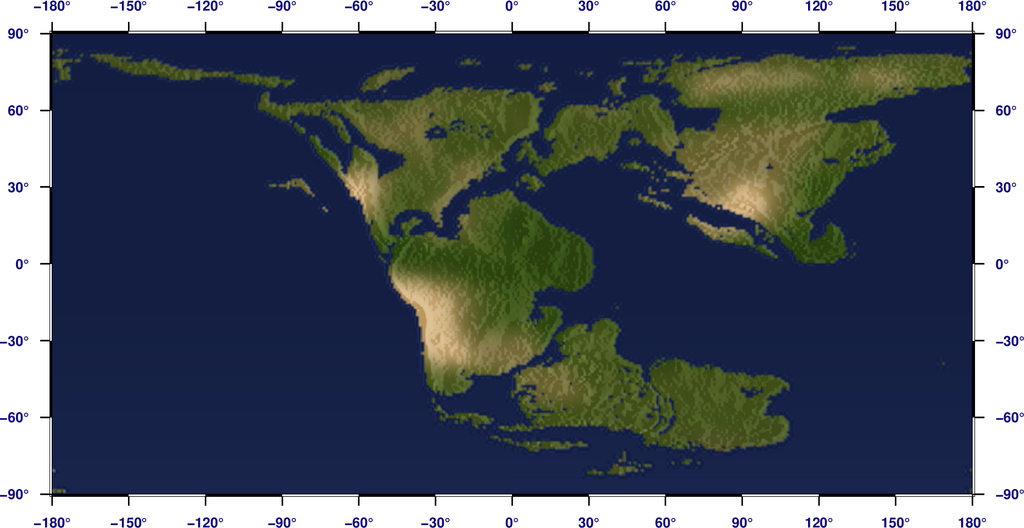
Over millions of years, Pangaea split into two smaller supercontinents: Laurasia in the north and Gondwana in the south. As they drifted apart, new oceans began to form, most notably the Atlantic Ocean. This continental breakup had profound effects on life, isolating populations of plants and animals and setting them on separate evolutionary paths.
A Greenhouse Planet
The climate during the Mesozoic Era was generally much warmer than it is today. There were no polar ice caps, and sea levels were significantly higher, flooding many low-lying continental areas. This created shallow, warm seas perfect for marine life.
While the era as a whole was warm, the climate wasn't uniform. The Triassic was largely hot and dry, especially in the vast interior of Pangaea. During the Jurassic, as the continents separated and new seas formed, the climate became more humid and subtropical. The Cretaceous period was even warmer, featuring lush, widespread forests that reached close to the poles.
The next three geologic periods fall within the Mesozoic Era, which saw the rise and fall of the dinosaurs, the first true birds, and the first angiosperms (flowering plants).
These dynamic conditions—shifting continents and a warm, changing climate—created the perfect stage for the evolution and diversification of life, including the reign of the dinosaurs. Now, let's check your understanding of this transformative era.
The Mesozoic Era is often referred to by what popular nickname?
Pangaea, the supercontinent at the start of the Mesozoic Era, eventually split into which two smaller supercontinents?