Exploring the Dark Web
Introduction to the Dark Web
The Web's Three Layers
Most of us only see a tiny fraction of the internet. Think of the web as an iceberg. The part floating above the water is what everyone can see. This is the surface web.
The surface web includes everything a standard search engine like Google or DuckDuckGo can find and index. It's the collection of public-facing websites you visit daily, like news sites, blogs, and online stores. But this is just the tip of the iceberg.
Beneath the surface lies the deep web. This is the largest part of the internet, and it isn't sinister. It’s simply the content that isn't indexed by search engines. You access the deep web all the time. It includes your email inbox, online banking portal, private social media profiles, and any content behind a paywall or login screen. This information is hidden from public view for privacy and security.
At the very bottom, in the darkest depths, is a small, specific part of the deep web called the dark web.
The dark web is part of — but not the same as — the deep web.
The dark web is intentionally hidden and requires special software to access. Its defining feature is anonymity.
How Anonymity Works
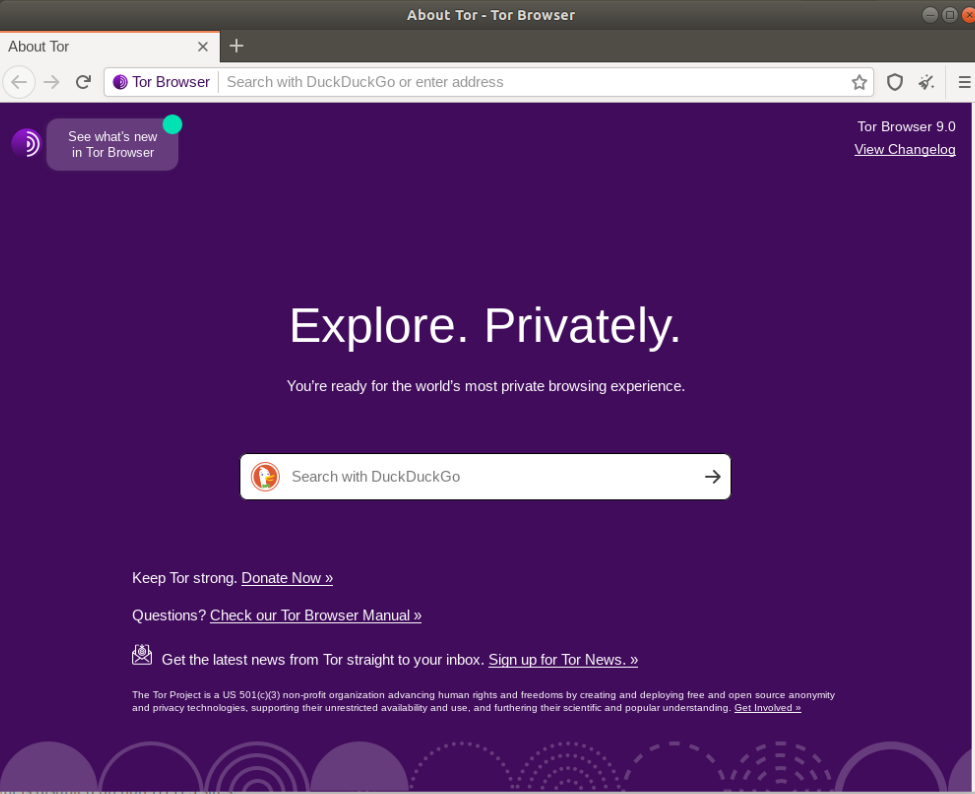
The dark web achieves anonymity through a technology called onion routing. The most popular network that uses this is called Tor (The Onion Router).
Imagine you want to send a secret message. Instead of sending it directly, you place it in a box, lock it, and give it to a courier. This courier doesn't know the final destination. They only know to deliver it to a second courier. The second courier takes the box, puts it inside another locked box, and passes it to a third courier.
This process repeats several times. Each courier only knows the person before and after them. By the time the message reaches its destination, it's been wrapped in multiple layers of security, and its original starting point is impossible to trace. Onion routing works similarly with your internet traffic. It encrypts your data in multiple layers and bounces it through a random series of volunteer-operated servers, called nodes or relays.
This layered encryption is why it's called onion routing. Each relay in the chain only decrypts one layer, revealing the location of the next relay, not the final destination or the original source. This makes it extremely difficult for anyone to track a user's activity. Websites on the dark web also use this network to hide their location, often using special .onion web addresses.
What's on the Dark Web?
The dark web has a notorious reputation because its anonymity can be exploited for illegal activities. Marketplaces for illicit goods, forums for extremists, and other criminal enterprises do exist there.
However, anonymity is a tool, not an inherently evil concept. The dark web is also used for legitimate and important purposes. Whistleblowers, journalists, and political activists in oppressive regimes use it to communicate securely and share information without fear of being identified and punished. It allows people to bypass censorship and access a free, open internet when their governments restrict it.
For many, it's a vital tool for privacy and free speech in a world of increasing surveillance.
Now, let's check your understanding of the web's different layers.
Using the iceberg analogy, which part represents the largest portion of the internet?
Which of the following is an example of content found on the deep web?
Understanding these distinctions helps demystify a part of the internet that is often misunderstood. The web is far more than what we see on the surface.