Exploring the Concept of Hell
Introduction to Hell
The Word for the Underworld
Nearly every culture has a story about what happens after we die. These stories often feature an underworld, a realm where souls go after leaving the earthly plane. The modern English word for this place, “hell,” carries strong connotations of fire and punishment, but its origins are more neutral.
Hell
noun
An underworld or place of suffering and punishment in the afterlife, as described in various religious and mythological traditions.
The word comes from the Old English hel, which is related to the Proto-Germanic verb helan, meaning “to hide” or “to conceal.” This root gives us a clue about the original concept: it was simply a hidden, unseen world, a place for the dead. The idea of it being a place exclusively for torment came later.
A Place for the Dead
Before hell was a place of punishment, the underworld was often just a final destination. In Greek mythology, most souls went to Hades, a gloomy, shadowy kingdom. It wasn't pleasant, but it wasn't designed for torture, either. Similarly, the Norse underworld, Helheim, was a cold, dark place for those who didn't die in battle, not necessarily a realm of eternal suffering for the wicked.
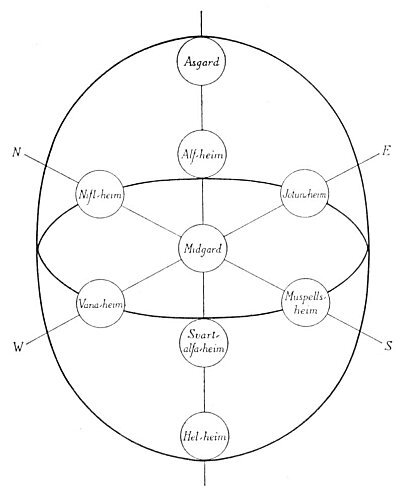
These early myths of a journey to the land of the dead provided a rich foundation for later religious and literary traditions. The idea of a hero descending into the underworld and returning is a powerful one that has been revisited countless times.
To construct this infernal space, Dante drew on his deep learning of Greek and Roman myth, in which mortal characters such as Odysseus, Orpheus, Theseus, and Hercules all visit the underworld and return to tell the tale.
A Moral Compass
So how did the underworld get its fiery reputation? Over time, the concept evolved to play a key role in eschatology, the part of theology concerned with death, judgment, and the final destiny of the soul. Hell became a tool for teaching morality.
The idea is simple: good actions are rewarded in the afterlife, and bad actions are punished. The threat of eternal damnation served as a powerful deterrent against sin and a way to enforce a community's moral code. It offered a sense of cosmic justice, ensuring that evil deeds would not go unpunished, even if the culprits escaped justice in life.
This framework of reward and punishment in the afterlife provides answers to fundamental questions about justice, fairness, and the consequences of human actions.
As these ideas developed, so did the vivid imagery of hell. It was no longer just a shadowy realm but a place of specific, often gruesome, punishments tailored to the sins committed on Earth. This concept of a structured, punitive afterlife would become central to several major world religions, shaping art, literature, and the moral imagination for centuries.
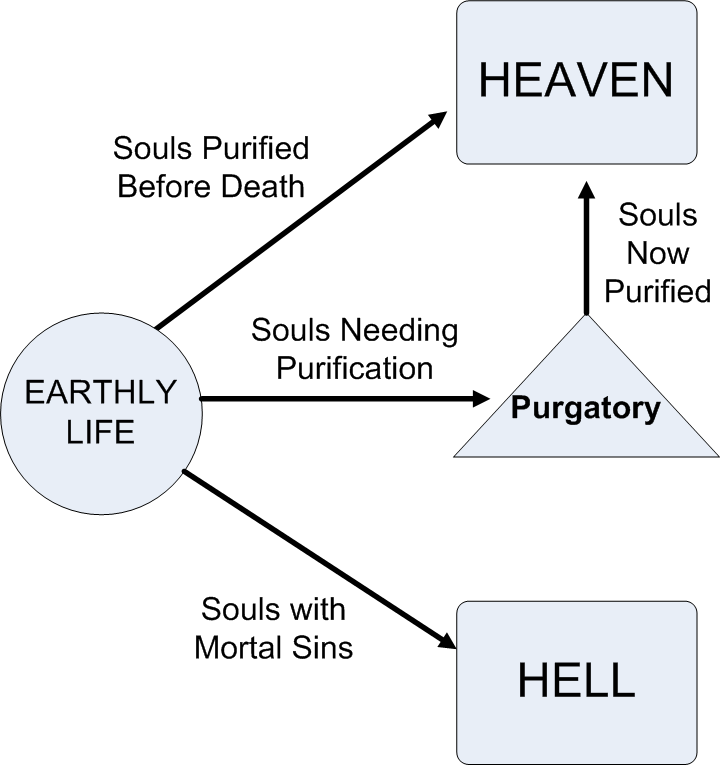
Now, let's review what we've covered about the basic concept of hell.
The English word “hell” is derived from a Proto-Germanic root word with what meaning?
According to the text, how did early underworlds like the Greek Hades or Norse Helheim primarily function?
This foundational idea of an underworld, whether as a neutral resting place or a site of eternal judgment, appears in cultures all over the world. It reflects a universal human need to make sense of life, death, and morality.