Exploring the Bible
Bible Structure
The Bible's Blueprint
The Bible isn't a single book. It's better to think of it as a library—a collection of 66 individual books written by many different authors over a long period. This library is split into two major sections: the Old Testament and the New Testament.
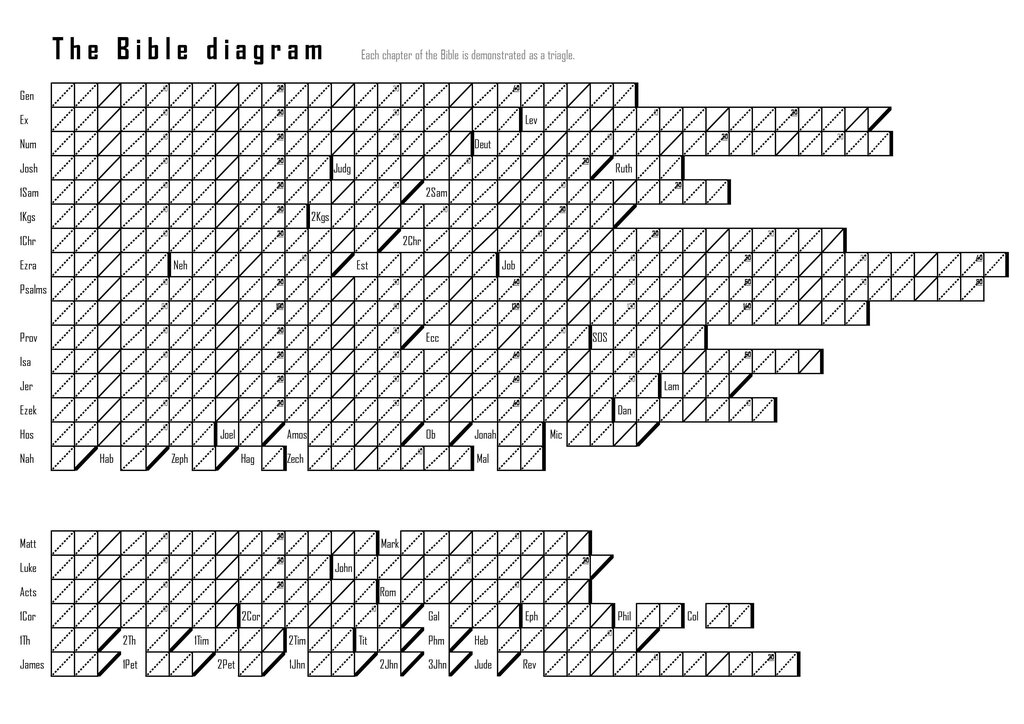
This structure helps us navigate the text and understand how different parts relate to one another. The books are not arranged in chronological order, but are instead grouped by their type or genre. Let's look at the layout of each testament.
The Old Testament
The Old Testament makes up the first and larger portion of the Bible, containing 39 books. It tells the story of God's relationship with the people of Israel before the time of Jesus. It's organized into four main sections.
| Section | Content | Books |
|---|---|---|
| The Pentateuch | The foundational laws and the story of creation and Israel's beginnings. Also called the Torah or the Law. | Genesis, Exodus, Leviticus, Numbers, Deuteronomy |
| Historical Books | The history of the nation of Israel, from their entry into the promised land to their exile. | Joshua, Judges, Ruth, 1 & 2 Samuel, 1 & 2 Kings, 1 & 2 Chronicles, Ezra, Nehemiah, Esther |
| Wisdom Literature | A collection of poetry, proverbs, and philosophical writings that explore questions about life, suffering, and God. | Job, Psalms, Proverbs, Ecclesiastes, Song of Solomon |
| Prophetic Books | Messages from God delivered through prophets, calling Israel to faithfulness and speaking of future events. | Isaiah, Jeremiah, Lamentations, Ezekiel, Daniel, Hosea, Joel, Amos, Obadiah, Jonah, Micah, Nahum, Habakkuk, Zephaniah, Haggai, Zechariah, Malachi |
These groupings help us see the different ways the story and teachings of the Old Testament are presented, moving from law and history to poetry and prophecy.
The New Testament
The New Testament is a collection of 27 books that focus on the life and teachings of Jesus Christ and the formation of the early Christian church. Like the Old Testament, it's divided into sections based on the type of writing.
| Section | Content | Books |
|---|---|---|
| The Gospels | Four accounts of the life, ministry, death, and resurrection of Jesus. | Matthew, Mark, Luke, John |
| History | The story of the apostles and the spread of the early church after Jesus's ascension. | Acts |
| The Epistles | Letters written by apostles and early church leaders to churches and individuals, offering instruction and encouragement. | Romans, 1 & 2 Corinthians, Galatians, Ephesians, Philippians, Colossians, 1 & 2 Thessalonians, 1 & 2 Timothy, Titus, Philemon, Hebrews, James, 1 & 2 Peter, 1, 2, & 3 John, Jude |
| Prophecy | A book of apocalyptic prophecy about the end times. | Revelation |
Understanding this two-part structure and the divisions within each testament is the first step to navigating the Bible. It provides a map that helps you know where you are and what kind of literature you're reading, whether it's a historical account, a poem, or a letter.
The Bible is best described as a single, cohesive book written by one author.
The two main sections of the Bible are called the _______ and the _______.